Author

Saturday, February 07, 2026 | Daily Newspaper published by GPPC Doha, Qatar.
 Tawfik Lamari
Tawfik Lamari
Tawfik Lamari is an editor at Gulf Times. He has several years of mainstream media experience in fortes such as culture, health, social issues, environment and has covered various events across MENA.
Gulf Times
Qatar
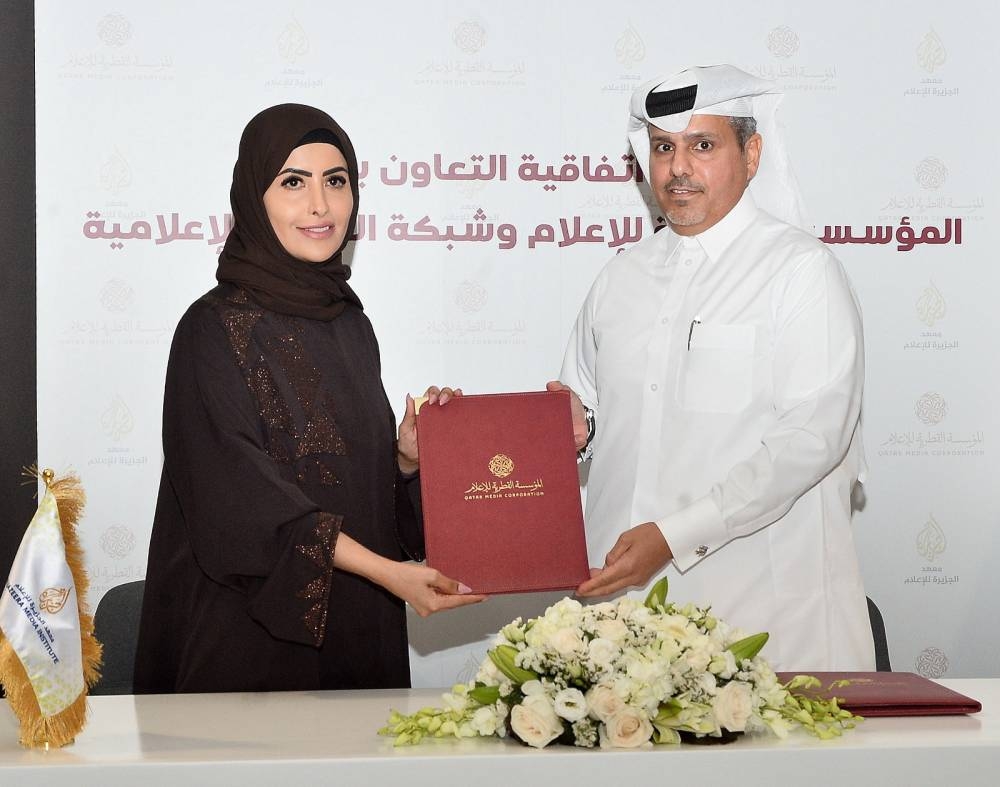
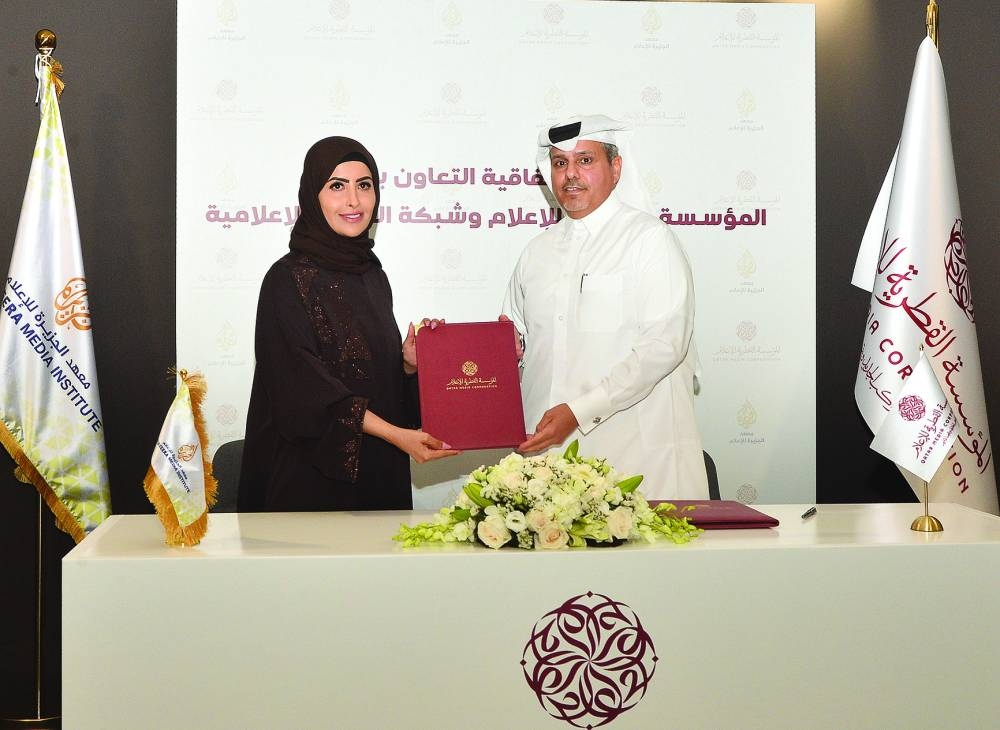
QMC signs cooperation agreement with Al Jazeera Media Network

The Qatar Media Corporation (QMC) announced the signing of a cooperation agreement with Al Jazeera Media Network, represented by the Al Jazeera Media Institute, this Thursday morning at the Corporation's headquarters in the Channel 37 building, in the presence of several officials from both sides. This agreement aims to enhance cooperation in the fields of training, media production, and the development of national competencies through the design and implementation of specialized training programmes, providing practical training within the studios and facilities of the Al Jazeera Media Institute, in addition to organizing workshops and providing development consultations in technical, technological, and strategic aspects. The agreement was signed on behalf of the QMC by Abdullah Ghanem al Binali al Mohannadi, Director of the International Cooperation Office at the Corporation, and on behalf of the Al Jazeera Media Network by Ms. Iman Al Amri, Director of the Al Jazeera Media Institute.

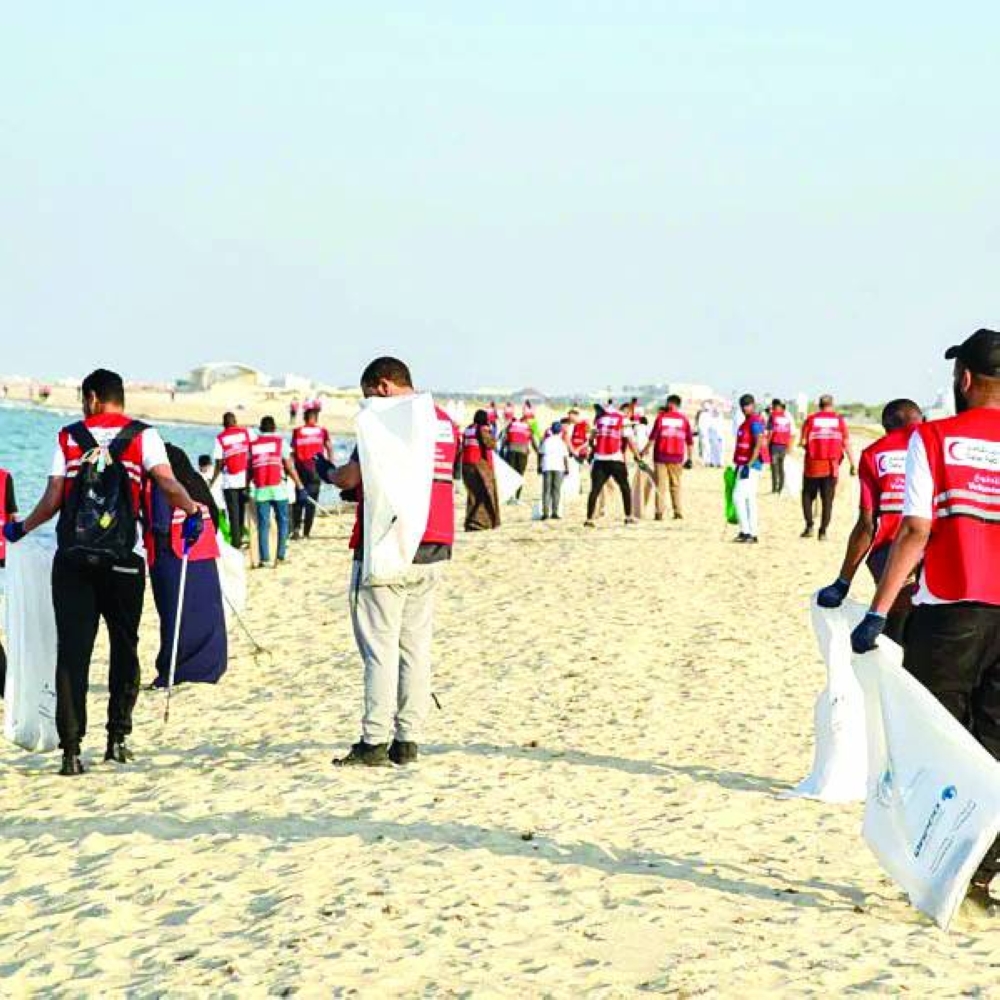
File photo of a cleanup event.
Qatar
QM relaunches ‘Qatar Smiles’ heritage sites cleanup campaign

Qatar Museums (QM) has announced the relaunch of its environmental and awareness programme “Qatar Smiles”, which invites the public to participate in a series of volunteer activities to clean up archaeological and heritage sites across the country.Registration will open on September 15.The programme aims to integrate environmental and cultural aspects by engaging citizens, residents, and visitors, in practical initiatives that combine the joy of learning about Qatar’s rich history with contributing to its protection by cleaning up heritage sites that are a fundamental component of national identity.The programme places special emphasis on sustainability.Waste is collected in recyclable bags, sorted and transported to recycling facilities by the Seaside Collective.This makes “Qatar Smiles” a dual-impact initiative: environmental on the one hand, and educational and awareness-raising on the other.The QM emphasises that the “Qatar Smiles” programme reflects its strategy of engaging the local community in heritage protection and promoting a sense of environmental responsibility.It added that such initiatives are no less important than restoration and conservation efforts.The programme is led by experts and gives people a direct sense of partnership in protecting national heritage.The QM is expected to reveal a detailed schedule of activities and locations where the programme will be implemented in the coming period, with registration open for those interested through qm.org.qa/en/calendar/qatar-smiles-cleanups-on-archaeological-and-heritage-sites/The “Qatar Smiles” initiative has become a bridge connecting the past and the present, giving participants the opportunity to explore the beauty of Qatari heritage on the one hand, and to contribute to shaping a cleaner and more sustainable environmental future on the other.

QPC Press Card comprehensive health insurance
Qatar
QPC begins issuing membership cards

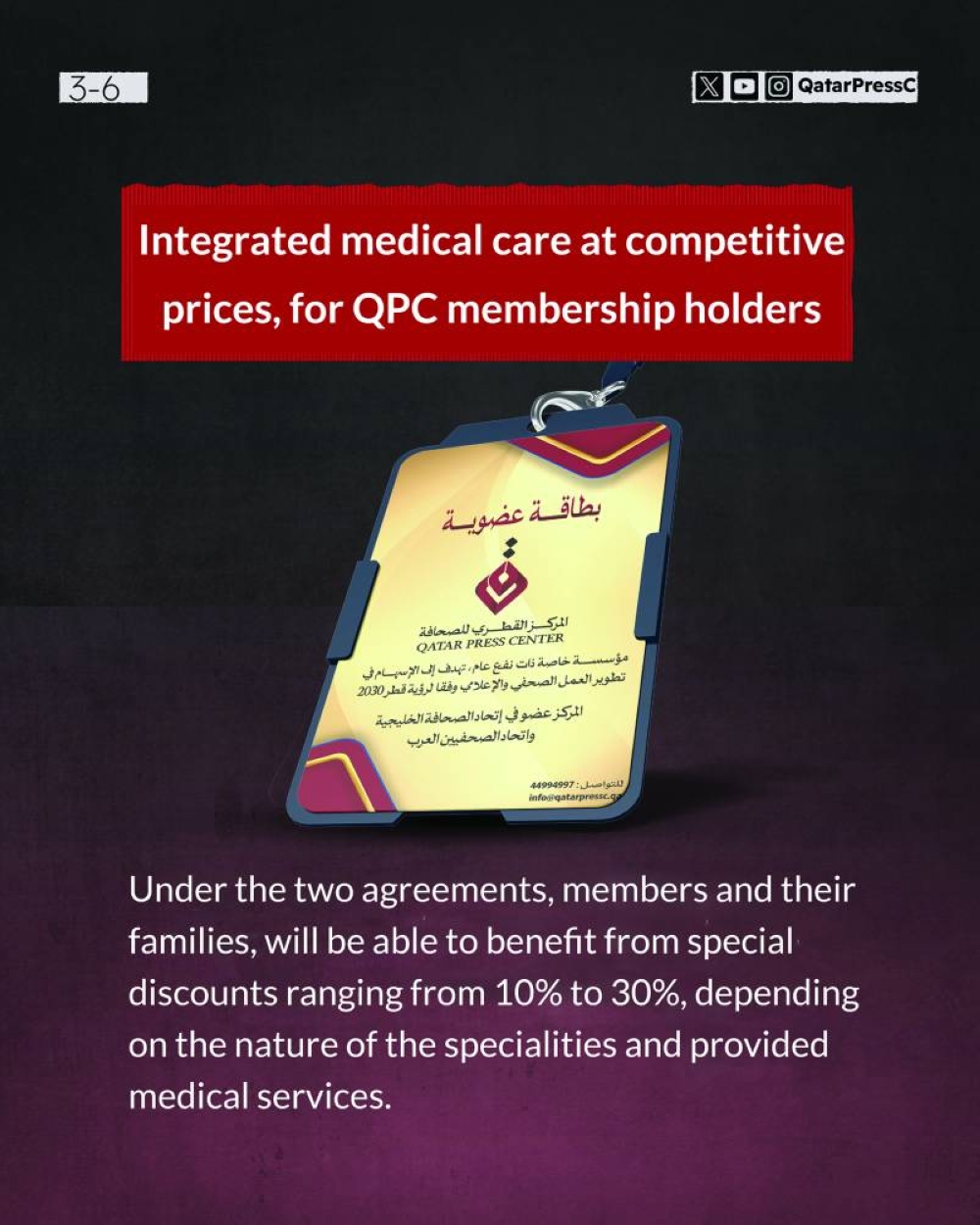
The Qatar Press Center (QPC) has begun issuing and distributing membership cards to journalists and media professionals working in various media and press organisations.The Center's Director General, Sadiq Mohammed al-Ammari, confirmed that membership is of two types: the first is for prominent figures, pioneers, and senior media professionals, including Nasser Mohammed al-Othman, Dean of the Qatari Press, and others who have made significant contributions to the progress of journalism and media in Qatar.The second is general membership for journalists and media professionals. The Director General explained that the Center's membership includes all journalists and media professionals working in Qatari print, audio, and visual media outlets, as well as a number of radio stations, among others.He noted that the first phase of membership in the Center includes journalists, media professionals, producers, broadcasters, and anyone directly involved in journalistic work. He noted that the second phase of membership registration will include support positions, including photographers, proofreaders, graphic designers, and directors, thus ensuring that the Center's membership provides a comprehensive umbrella for all those involved in media work in Qatar.Al-Ammari explained that the Center's membership cards represent a means of identification and a certified identity containing reliable data to facilitate journalistic and media work.He noted that membership provides cardholders with certain benefits, discounts, and special prices for cardholders and their families regarding medical services in hospitals, private centers, and other facilities. Agreements have also been made with a number of distinguished hotels to offer special rates for accommodation, restaurants, and fitness centers. He noted that many stores and companies will join the discount programme in the coming period.The Director General emphasized that the QPC represents an umbrella for advancing journalistic and media work and a meeting place for all those working in the journalistic and media fields in Qatar, through intensive activity and growing local, Gulf, Arab, and international media partnerships.

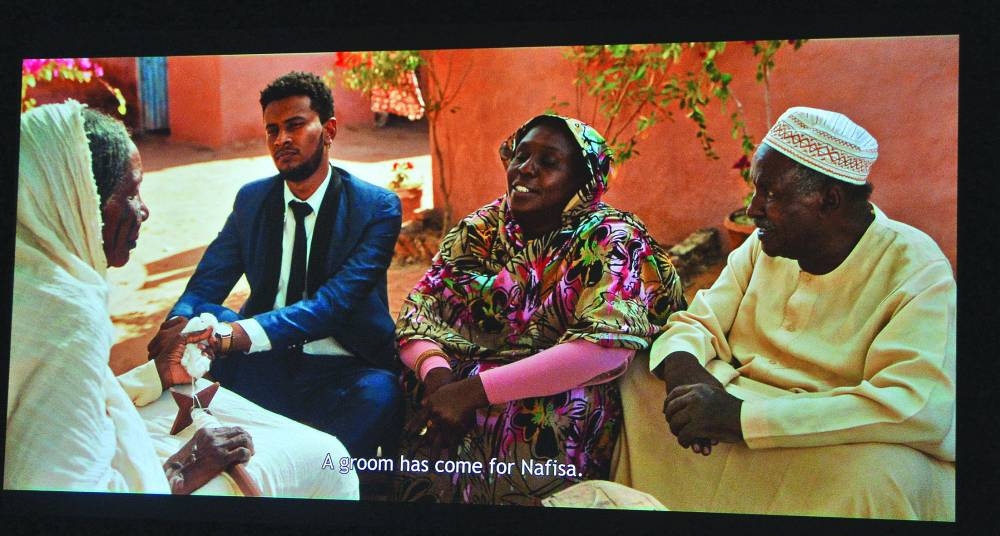
A scene from Al Sit
Qatar
‘Your Ghosts Are Mine’ Screened at MIA

Doha Film Institute (DFI) has presented a film series at the Museum of Islamic Art (MIA), featuring a curated selection of works from the acclaimed exhibition 'Your Ghosts Are Mine: Short film programme.’The evening session's lineup showcased a selection of six short films from around the world, celebrating a dense narrative form that carries powerful messages through intense scenes, allowing viewers to explore a diverse spectrum of human, social, and artistic issues.Sh'hab (Arabic for meteor) directed by Amal al-Muftah is a young Qatari filmmaker, was the first short drama to be screened. It was about a mischievous 8-year-old girl would do anything to spend time with her father and older brother at sea in the old village of Al Wakrah. In an effort to keep her home and safe, her mother begins to share with her the most elaborate mythological tales about falling stars. But this only stokes the little girl's imagination further, and she sets out to find one at night in an enchanting tale about childlike curiosity and wonder.Then Al-Sit (Arabic dialect for grandmother) was an interesting short drama directed by Suzannah Mirghani, a Sudanese-Russian writer. It took place in a cotton-farming village in Sudan, where the 15-year-old Nafisa has a crush on Babiker, but her parents have arranged her marriage to Nadir, a young Sudanese businessman living abroad. Nafisa’s grandmother Al-Sit, the powerful village matriarch, has her own plans for Nafisa’s future. But can Nafisa choose for herself? A compassionate story from Sudan about women—both powerless and powerful—exploring both ends of the social chain and how these roles might be changing in a modernizing world.The other four films were shorter with dramas like in “I am Afraid to Forget Your Face” directed by Cairo born Sameh Alaa, which was about the story of a man battling a great deal of adversity while in search of redemption, reunion and closure.To be followed by “And Then They Burn the Sea” by Filmmaker Majid Al-Remaihi who ruminates on the experience of witnessing his mother’s gradual and terminal memory loss over the course of many years.The nine minute long “Don't Get Too Comfortable” is a heartfelt, introspective letter to Shaima al-Tamimi, a Yemeni-East African filmmaker’s deceased grandfather. The letter questions the continuous pattern of movement amongst Yemenis in diaspora.The closing animation drama “Night” is based on the true story of a mother the filmmaker met in Palestine, it is a haunting and superbly crafted stop-animation about war, bereavement, and unimaginable sorrow.These screenings align with the Foundation's vision to explore the "power of cinema," not only as an entertainment tool, but also as a means of storytelling, broadening audience horizons, and deepening interconnectedness between communities.

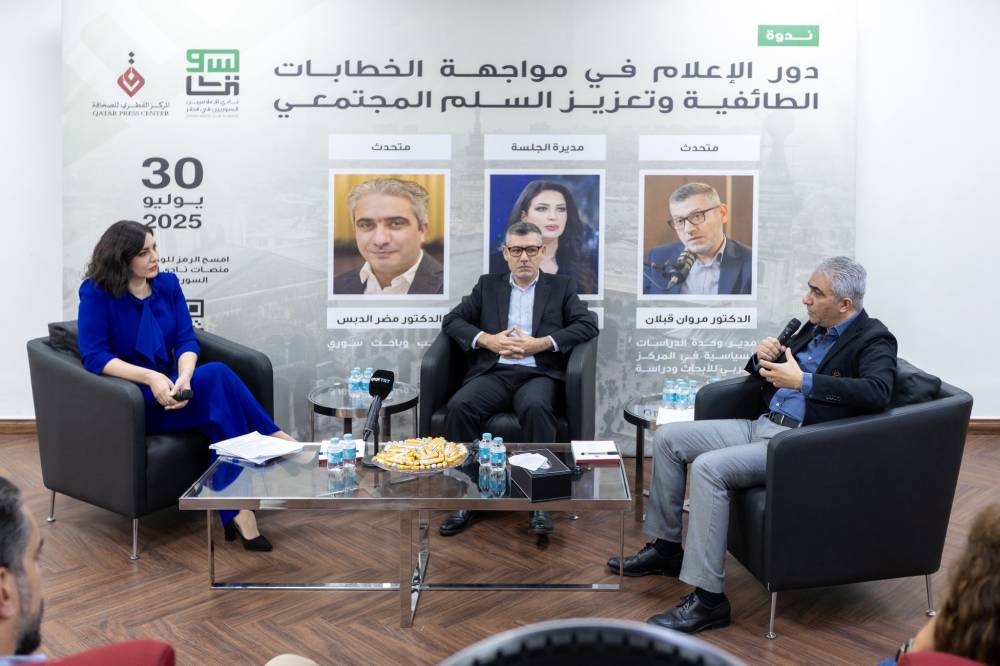
From left: Rula Haidar, Dr Marwan Qabalan, Dr Mudar al-Dibs
Qatar
Syrian Media Club, QPC hold seminar on sectarian rhetoric among Syrians

A seminar was held at the Qatar Press Center (QPC) in which a select group of researchers and intellectuals participated. Speakers included Dr Marwan Qabalan, Director of the Political Studies Unit at the Arab Center for Research and Policy Studies, and Dr Mudar al-Dibs, a Syrian writer and researcher. It was moderated by media personality Rula Haidar.Haidar emphasised that the seminar was held at a critical time following a significant escalation in sectarian rhetoric among Syrians, particularly in the wake of the events in Sweida, which she described as a "breaking point," reflecting the depth of the crises Syrians are experiencing at this sensitive stage.Dr Qabalan emphasied that sectarian discourse in Syria is not a recent phenomenon, but rather has deep roots in the country's history, albeit to varying degrees.He pointed out that the former Syrian regime worked to taint national identity with a single ideological colour, which led to a major rift in the relationship between state and society.He explained that the Syrian military establishment has witnessed major defections since the beginning of the revolution, among the reasons for which were the sense of marginalisation felt by large segments of the population due to their lack of representation in state institutions.He noted that the alliances that emerged to confront the regime during the revolution were not sectarian, but rather encompassed diverse sectarian factions. This demonstrates that the division in Syria was, at its core, social and class-based rather than sectarian. It was more of a conflict between the countryside and the city, which controlled the regime.He explained that the absence of social justice and the monopolisation of power and wealth by a particular group led to a state of general discontent, which quickly transformed into a clear sectarian divide after the outbreak of the Syrian revolution, especially with the regime's use of this rhetoric as a means of defense and fragmentation of the revolutionary street.Dr Qabalan pointed out that one of the most prominent manifestations of the crisis today is the weakness of a unifying national identity, resulting from the absence of a state of justice and law. Citizens feel that the relationship between them and the state is purely administrative, limited to routine transactions and interests.He explained that the Syrian state, despite everything it has been through, has remained institutionally viable. He noted that basic services, such as electricity, have not been interrupted, indicating that institutions continue to function, even if their effectiveness is weak.He warned that the absence of the state does not only mean the absence of institutions, but also the absence of a state of citizenship, equality, and equal opportunity, which forces citizens to resort to sub-identities such as sect or tribe in search of protection and belonging.In this context, he emphasized that the current regime must succeed in its mission, warning against the occurrence of uncontrollable chaos, as has happened before. He called on all segments of the Syrian population to stand behind the new regime and help it achieve stability.Dr al-Dibs emphasised that sectarian rhetoric cannot arise in a sound political context. Where real politics exist, sectarian and tribal tendencies naturally collapse. He said: "What we are experiencing today is a direct result of the collapse of the nation-state project and the decline of political discourse in favour of identity-based and emotional discourse."He believed that the moment of sectarian rhetoric's explosion — as evidenced by the events in Sweida — reflects the fragility of Syrian national identity. He warned that transforming every historical or symbolic event into a sectarian occasion is extremely dangerous and weakens any unity.

Members of the panel.
Qatar
Destruction of Gaza sports revealed at QPC seminar

The Qatar Press Centre (QPC) organised a seminar on “Israeli Violations against Palestinian Sports” as part of a series of sports journalism talks, which was attended by media professionals and those interested in sports and humanitarian affairs. The seminar was moderated by sports journalist Ali Issa, the chairman of the QPC’s Sports Committee. Palestinian journalist Ahmed Rajoub and Palestinian broadcaster Hassan Badr participated, providing field testimonies and documented information on the extent of the damage to Palestinian sports as a result of the Israeli aggression, from October 7, 2023, to the present day. The seminar reviewed details of the targeting of players and facilities, the destruction of clubs, stadiums, and halls, the media blackout, and the difficulties facing Palestinian sports media. Issa emphasised that the seminar is replete with information, data, and statistics that provide a vivid picture of the extent of the systematic targeting of Palestinian sports, which has resulted in the destruction of sports infrastructure, hindered the development of athletes, and shattered their lives and dreams. Rajoub said that Palestinian sports is not immune to the suffering of the Palestinian people, but rather are an integral part of this suffering. He pointed out that the Israeli occupation has caused the systematic destruction of this vital sector, with more than 600 Palestinian athletes killed since October 7, 2023. Sporting activities have come to a complete halt, not only in Gaza, but also in the West Bank and Jerusalem, with the exception of some events hosted by Qatar and some Arab countries. Rajoub revealed the death of more than 250 football players in Gaza and more than 25 players in the West Bank. In July alone, he said, the death toll was 43. All 23 Palestinian volleyball players, including 10 members of the Palestinian national team, were killed, in addition to more than 25 basketball players, 15 taekwondo exponents, 10 gymnasts, 10 judoka, 51 scouts, and 26 karatekas. Rajoub also noted the killing of technicians, administrators, and federation heads, such as Volleyball Federation head Mohammed al-Dalu, Bodybuilding Federation head Kamel al-Yazidi, and Nayef al-Hattab, the head of the Shuja’iyya Club. He added that sports media was not immune to these losses, as more than 10 sports journalists – most of whom had transitioned to working in general journalism – lost their lives. Rajoub said that some sports commentators who used to travel between stadiums were killed despite their lack of involvement in any political activity. He pointed out that the Palestinian football team is the only one capable of representing Palestine at present, thanks to its presence outside the country since the beginning of the Israeli aggression. Regarding facilities, Rajoub explained that more than 95% of sports facilities have been completely destroyed, including 29 of the 35 indoor gymnasiums. Twenty-three football fields have been damaged, 19 of which were completely destroyed. Some stadiums, such as Yarmouk, Palestine, and Al-Durra, have been converted into shelters. A total of 58 sports club headquarters have been destroyed, leaving only six clubs unscathed. Three swimming pools, 15 outdoor basketball courts, and 17 five-a-side football fields have also been destroyed. All purebred Arabian horses in Palestinian stables have also been killed. Rajoub, who deemed what happened to be a complete destruction of Palestinian sports in every aspect, stressed that rebuilding will need to begin from scratch, given the fading passion among athletes after these massive losses. He emphasised that the Palestinian national team brings together players from both inside and outside the country, adding that they receive significant public support from Palestinians, Qataris, and all Arab peoples. Commenting on Palestine’s Olympic status, Rajoub noted that some Palestinian athletes were unable to represent their country in Arab championships. In what he considered to be the selective application of standards, he cited the participation of an Israeli player who took part in the war and won a medal in Paris, despite the published evidence against him.

Gulf Times
Qatar
QPC course focuses on media's role and state protocol

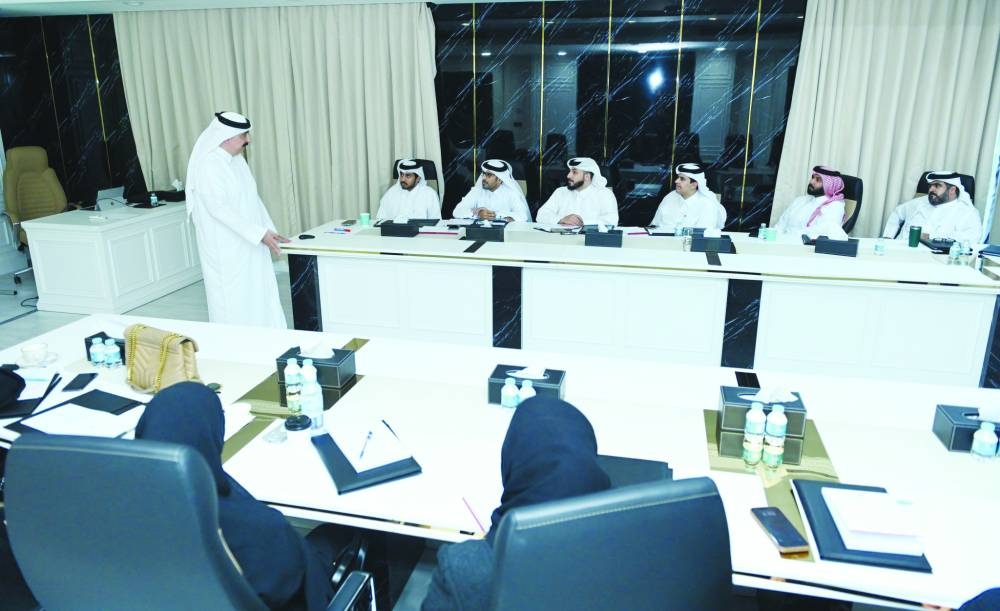
The Qatar Press Centre (QPC) has concluded a course on "The Role of the Media in Promoting the Message of State Protocol", presented by Dr Omar Ghanem.The course, which was attended by 20 participants, representing ministries and state institutions, addressed the role of the media in strengthening international relations and countering misleading and false news that seeks to undermine these relations.Dr Ghanem noted that the course served as a forum for communication with various segments of society.“The course was attended by workers in both the public and private sectors, as well as media professionals and journalists,” he said. “Therefore, the academic material took into account the professional diversity of the participants, with the aim of informing them of the practices of state protocol, as a large part of this area is not clear to public opinion.”“The course focused on the role of the media in promoting the message of state protocol, as it is the authority that can defend national interests with high professional values and raise community awareness in the face of foreign media misinformation campaigns,” Dr Ghanem said.He discussed the definition of protocol, noting that some non-practitioners have contributed to misinterpreting protocol and etiquette.Dr Ghanem concluded that protocol is the rules of the state, while etiquette is the rules of society.Protocol is defined by guidelines, while etiquette is defined by polite behaviour or courteous conduct.Therefore, he said, etiquette requires protocol guidelines to ensure it is on the right track.He addressed the course's topics, saying: "The course covered four topics, the most important of which was the foundation of protocol from a historical, ethical, and civilizational perspective.”“Some of the confusion surrounding the origin of the rules that contributed to shaping the guidelines discussed by members of societies in this field was resolved,” he added.Dr Ghanem also focused on the Eastern origin of protocol and how Islam contributed to strengthening this image, drawing on what is stated in the Holy Qur'an and the Prophet's biography, as well as the results of the righteous predecessors in shaping the message of state protocol.Many of the methodologies used in Western presidential palaces are now protocols derived from the East.The second topic addressed Qatari state protocol and its basic components, and how its five pillars work: the flag, the national anthem, the state emblem, the emir's images, and the state's precedents system.These components, Dr Ghanem stressed, must be familiarised with by specialists and others, so that they have sufficient knowledge of how to deal with them.The third topic addressed how the media contributes to supporting state protocol and confronting foreign media disinformation campaigns, which confuse public opinion and misinterpret certain actions to undermine community morale.Positively, Dr Ghanem said, media contribution in support of state protocol reinforces the message of welcoming guests, especially during state visits where the media is a key pillar.The fourth section addressed skills related to handshaking, appearance, and proper behaviour, with a focus on what is unique to Qatari society, such as majlis hospitality.At the end of the course, the trainees called for an advanced training course in state protocol to gain a deeper understanding of diplomatic dealings and the mechanisms and rules of effective diplomatic communication.

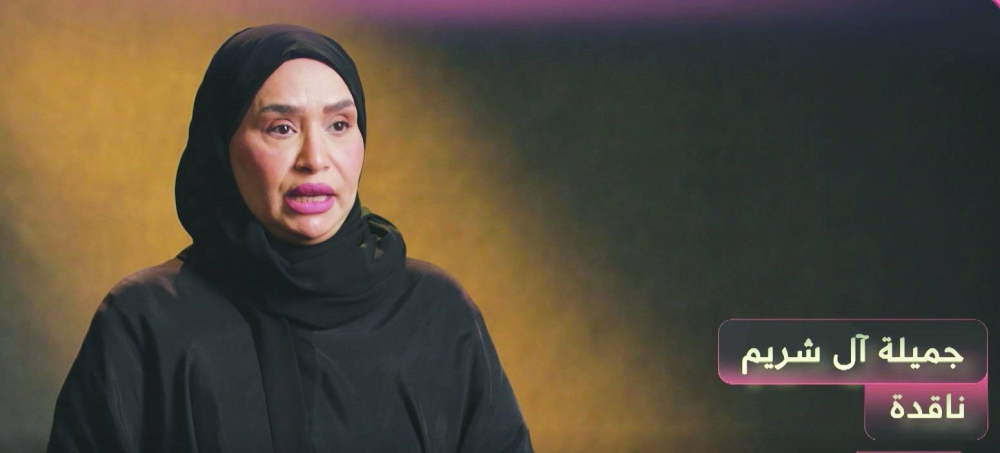
Artist and critic Jamila al-Shereem.
Qatar
Qatari cultural icons feature in Alaraby 2 'Eshroun' programme

Qatar has made an impression in the programme *Eshroun (Arabic for 20), broadcast on Alaraby 2, with notable participation that goes beyond the involvement of Qatari artistic and cultural figures in commentary and voting across the episodes.Several Qatari cultural landmarks and personalities were also selected among the best in the Arab world in categories including visual arts, theater, libraries, and archaeology.The Qatar National Library (QNL) stood out in the episode dedicated to the best Arab libraries, recognised as one of the region’s leading knowledge institutions due to its unique collection of books and manuscripts, and its pivotal role in promoting knowledge and supporting scientific research in Qatar and beyond.Additionally, the Al Zubarah archaeological site was included among the top Arab heritage landmarks, in recognition of its historical and cultural significance and its designation as a Unesco World Heritage Site.In the visual arts episode, artists Yousef Ahmad and Hassan al-Mulla were named among the top 20 Arab visual artists for their contributions that reflect Qatari identity and have enriched the Arab art scene.In the episode focused on theatre, the play *Umm al-Zein was featured for its relevance to the social transformations taking place in Qatar at the time of its performance.Alongside these recognitions, Qatari intellectuals and artists offered commentary during the episodes, including theatre critic Hassan Rashid, artist and critic Jamila al-Shereem, visual artist Hanadi al-Darwish, and writer and novelist Huda al-Nuaimi.A number of Qatari cultural and artistic figures participated in the voting for nominated works and individuals.These included Mohammed Yaqoub al-Yousef, Ibtisam al-Saffar, Abdullah al-Mulla, Moza al-Ishaq, and Mohammed al-Shahwani.The programme *Eshroun presents a list of the top 20 Arab icons in the fields of culture and the arts in each episode, based on votes from a select group of Arab critics and professionals.Hosted by media personality Maya El Hajj, the show airs every Sunday at 8pm on Alaraby 2, with all episodes available on demand through the “Alaraby Plus” app.

File photo: OPTIONAL FOR ILLUSTRATION
Qatar
Al Jazeera Institute to launch Field Media Diploma

The Al Jazeera Media Institute is to launch a Field Media Diploma at its headquarters in Doha from September 13 to October 16, as part of its ongoing efforts to develop and qualify media cadres according to the latest standards. The diploma will consist of 150 training hours in the evening over five weeks, focusing on practical application and direct interaction. The institute believes that modern field work in the media requires journalists to combine accurate and objective reporting with creative and innovative methods. This makes familiarity with television production methods and an understanding of the professional differences between different forms an essential skill for every journalist. The diploma targets journalists, media workers, and media college students, as well as those with previous experience in journalism or documentary film production, with preference given to those with relevant university qualifications. The programme covers four main tracks: exploring the relationship between reality and creativity in television production; pre-production (research, writing, and team planning); production (filming plans and applying realism and creativity techniques); and post-production (story building, editing, and processing visual and audio materials). The training team will include field journalists, directors, and experts in television report production, documentaries, and editing, in addition to trainers in journalistic writing and visual storytelling. This will enable trainees to learn about the latest professional practices and modern techniques in all stages of media work. The intensive professional diplomas offered by the Al Jazeera Media Institute focus on meeting labour market requirements through practical training and interaction with experts. This contributes to bridging knowledge gaps, enhancing trainees’ readiness, and building professional relationships, in line with the institute’s strategy to develop media cadres and enhance their competitiveness.

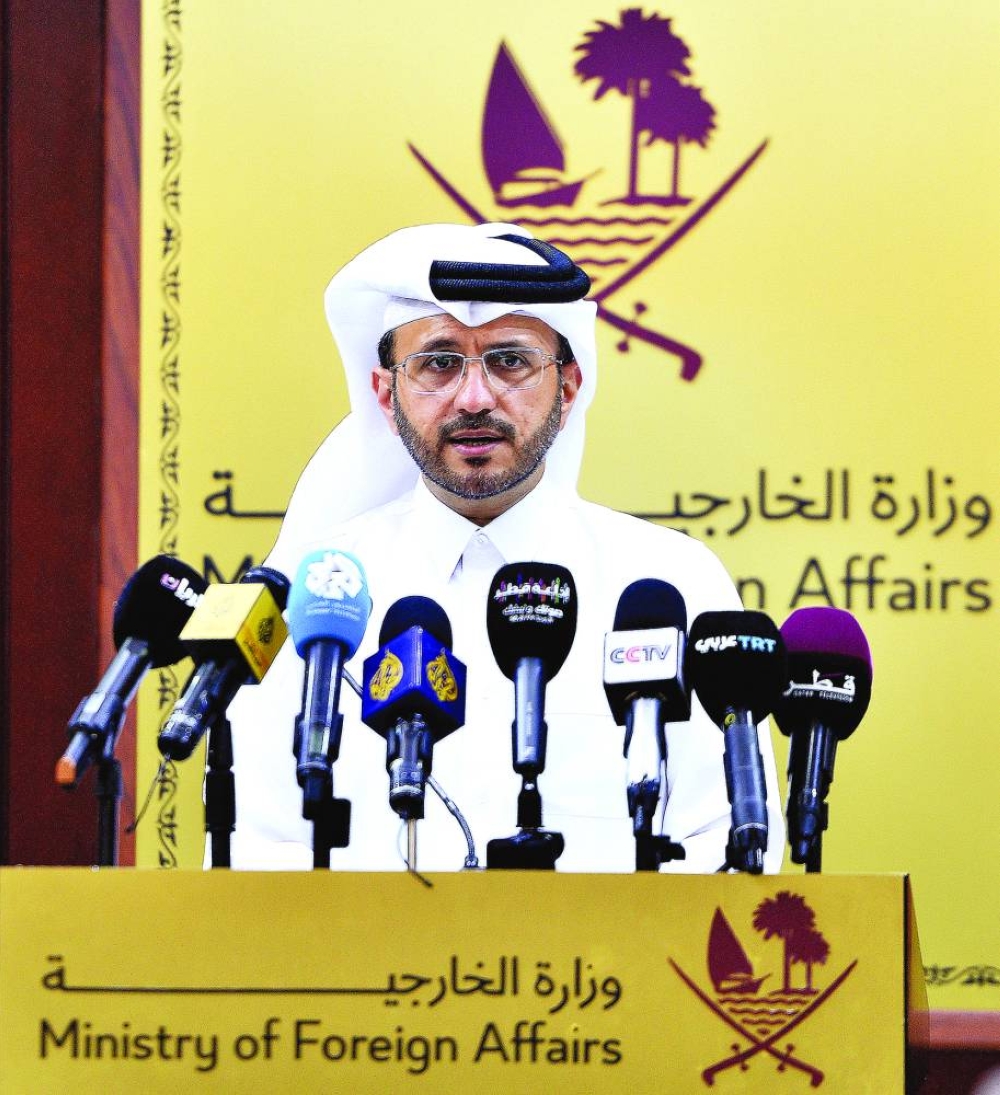
"The negotiations are still in the first phase, which is specifically about reaching an agreement of principle ahead of negotiations that will begin, God willing, in the next phase," Al-Ansari said. PICTURE: Shaji Kayamkulam
Qatar
Intensive talks for Gaza truce are ongoing in Doha: MoFA

Gaza ceasefire negotiations remain in their "early stage" after more than a week of talks, even as mediators step up efforts to broker a truce between Israel and Hamas, Qatar's foreign ministry spokesman Majed al-Ansari told reporters Tuesday."Discussions on the framework agreement are still ongoing. Both delegations are present here in Doha, and the mediators are intensifying efforts to reach an agreement," al-Ansari said during his weekly media briefing."The negotiations are still in the first phase, which is specifically about reaching an agreement of principle ahead of negotiations that will begin, God willing, in the next phase," he said.The Qatari spokesman insisted: "We believe there is no stalemate," adding there was no set timeframe for the talks.As long as there are meetings in Doha, this means that the negotiations are ongoing, he said.Qatar has been mediating indirect negotiations between Palestinian resistance movement Hamas and Israel alongside Egypt and the United States.Al-Ansari declined to comment on specific meetings held in the United States between high-level Qatari officials and US Middle East envoy Steve Witkoff.He said that he did not have a specific timetable for Witkoff's visit to Doha.On another note, Dr al-Ansari welcomed the ceasefire announcement in the southern Syrian city of Sweida. He said, "Qatar is in constant contact with the Syrian government on various issues."In response to a question about the Israeli raids on the Syrian province, al-Ansari condemned "Israel's irresponsible policies in the region" and the raids targeting Syria and Lebanon.He added: "We cannot accept the absence of accountability for Israel's absurd behaviour in the region. There must be international intervention to stop Israel's absurd behaviour in the region."Al-Ansari noted that "communications are ongoing with our brothers in Syria to provide security and economic support."

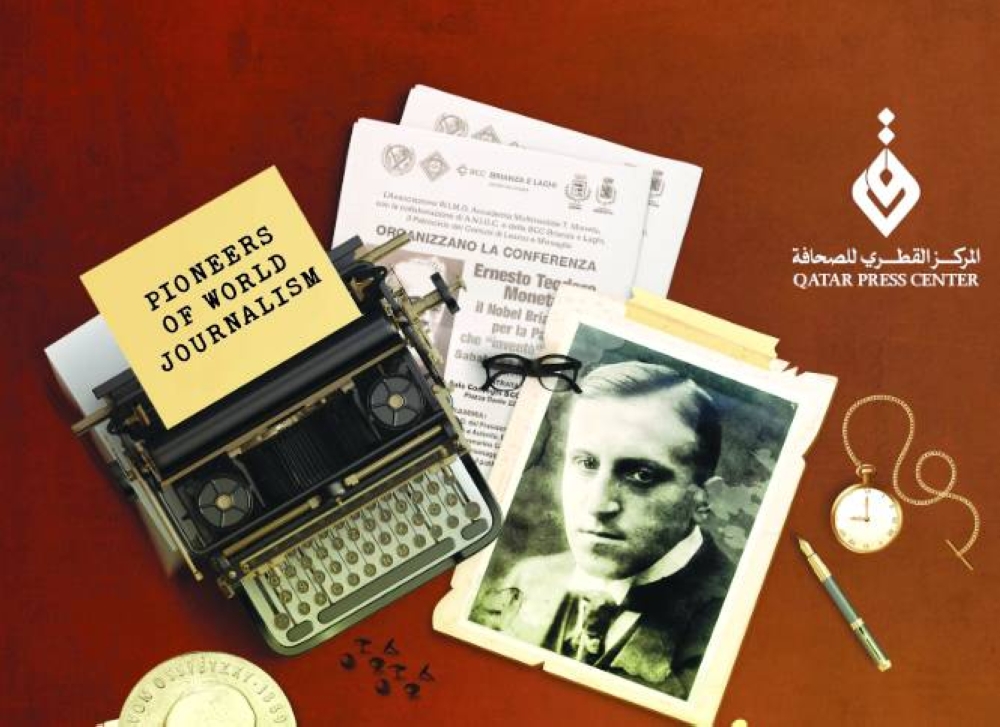
Carl von Ossietzky
Qatar
QPC highlights journalist denied the Nobel Peace Prize

In a series highlighting prominent figures who have left their mark and contributions in the development of journalism and media, the Qatar Press Centre (QPC) has continued its "Pioneers of World Journalism".The centre is showcasing the stories of media figures, their successes, and their inspiring experiences for generations of journalists and media professionals.Among these is Carl von Ossietzky, the German journalist and activist who won the Nobel Peace Prize in 1935, despite being arrested on charges of high treason for publishing information related to Germany's secret military rearmament.Ossietzky was born in Hamburg, Germany, in 1889.At high school, he was not a distinguished student, and he left school at the age of 17 to become a government administrative official.Ossietzky soon pursued a career in journalism and succeeded in it.His first journalistic article was published in the pages of the newspaper *Free People.Ossietzky later wrote on topics about theatre, women's issues, and the early problems of automobile use. He also focused on political and cultural developments during the Weimar period.On July 5, 1913, he wrote an article criticising a pro-military court ruling in Erfurt, and was subsequently summoned to appear before the court.His opposition to Germany's military policy in its final years and its armaments led him to become a pacifist, opposing all forms of war and violence.In 1916, he was drafted into the army despite his deteriorating health and was forced to join the army during WWI.The massacres left him frightened and alarmed.Ossietzky became a voice against militarism and Nazism, becoming the secretary of the German Peace Society in Berlin, where he founded the monthly *Mitteilungsblatt, which first appeared in 1920.He also became a regular contributor, under the pseudonym Thomas Mörner, to the monthly *Moinsten Monatsheften.Ossietzky later served as foreign editor of the *Berliner Volkszeitung, the Berlin people's newspaper, known for its anti-war, neutral, and democratic editorial policy.He joined the *Tagebusch, a political weekly, in 1924.In the same year, Siegfried Jacobson took over as editor of *Die Weltbühne.During his tenure, a series of investigations were published on Germany's violation of the Treaty of Versailles by rebuilding its air force and training pilots in the Soviet Union.He also published an article by Walter Kreiser.However, Ossietzky, as the editor-in-chief, was tried for high treason and sentenced to 18 months in prison.He was mistreated in prison by the guards, forced to perform hard labour despite suffering a heart attack. He also contracted tuberculosis, and the government refused to release him.In 1934, his colleagues in the German League supported the idea of nominating him for the Nobel Peace Prize.The Nobel Committee praised him as a defender of freedom of expression and a symbol of peace.This was the first time the award was given to an individual at odds with his country, and it helped mobilise public opinion in the fight against Nazism.When he was announced as the winner of the Nobel Prize in 1935, the German government prevented him from traveling to Norway to receive his award.The German press was also prohibited from commenting on the award.Ossietzky remained under constant surveillance until his death from tuberculosis in a Berlin hospital in 1938, after five years in prison.

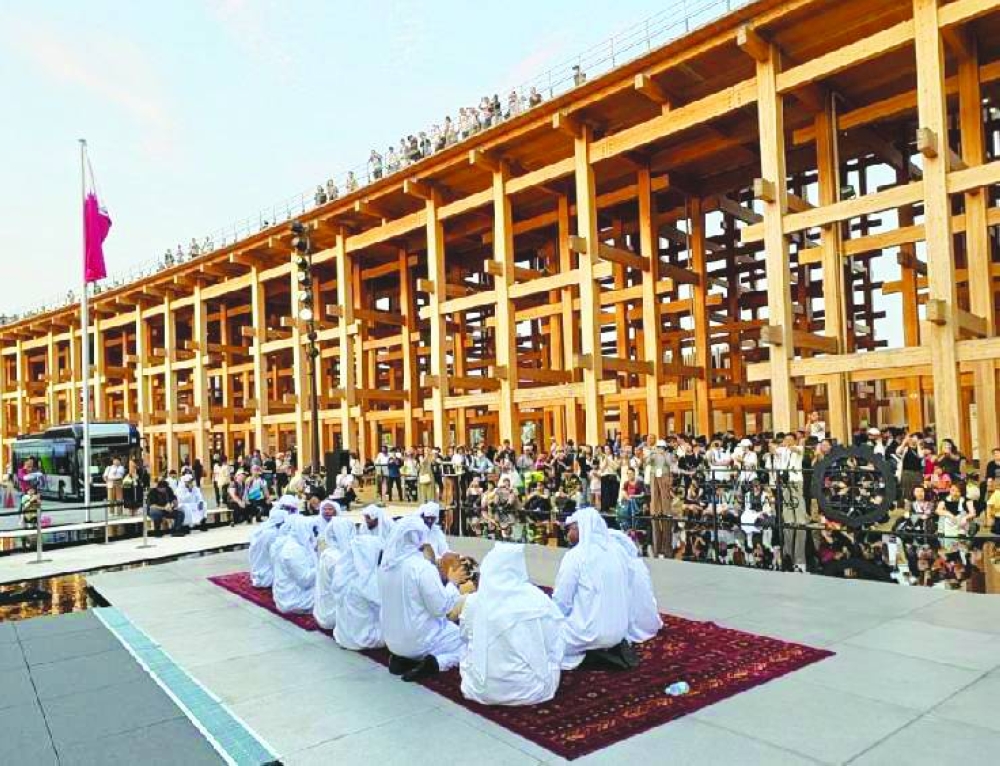
Qatari artists' performance attracts spectators at Expo 2025 - Osaka
Qatar
Qatari folk arts event dazzles visitors at Expo 2025 Osaka

Following the remarkable success of the Qatari Ardha event, part of the Ministry of Culture's participation in the Qatar Pavilion at Expo 2025 Osaka in Japan, the audience continued to receive positive feedback, given the diversity and beauty of the Qatari performances. The "Folk Arts" event dazzled visitors with the rhythms and distinctive performances of the Qatari participants, who presented their heritage in a manner that was well-received and admired by the audience.Amidst the crowd, distinguished folk arts performances were presented, including the "Fajri" art performed by artist Omar Bou Saqr, along with other folk arts performed by the participating band.Folk arts attracted significant interest from the Japanese audience at the Qatari Pavilion.Folk arts are among the oldest arts in the region, characterized by group performance, diversity, and authenticity.These events are part of the Qatari Ministry of Culture's participation program, including the Qatari Ardha and musical performances at the Qatar Pavilion at Expo 2020. These events underscore the ability and presence of Qatari arts and heritage to engage people. This reflects the Ministry of Culture's vision of promoting communication, cultural exchange, and preserving heritage.The performances were met with widespread interaction from visitors, who expressed their admiration for the beauty of the rhythms and the harmony of the performance. Attendees stood in long lines to take photos and record videos of this art form, which carries Qatar's rich heritage to Japan.This participation is also part of the Ministry of Culture's efforts to promote understanding and cultural exchange, and to present performances and events that express Qatari heritage at international forums.It is worth noting that Expo 2025 Osaka is one of the most prominent global events, attracting wide participation from various countries and serving as an international platform for exchanging knowledge, highlighting diverse cultures, and future initiatives in development, innovation, and the arts.

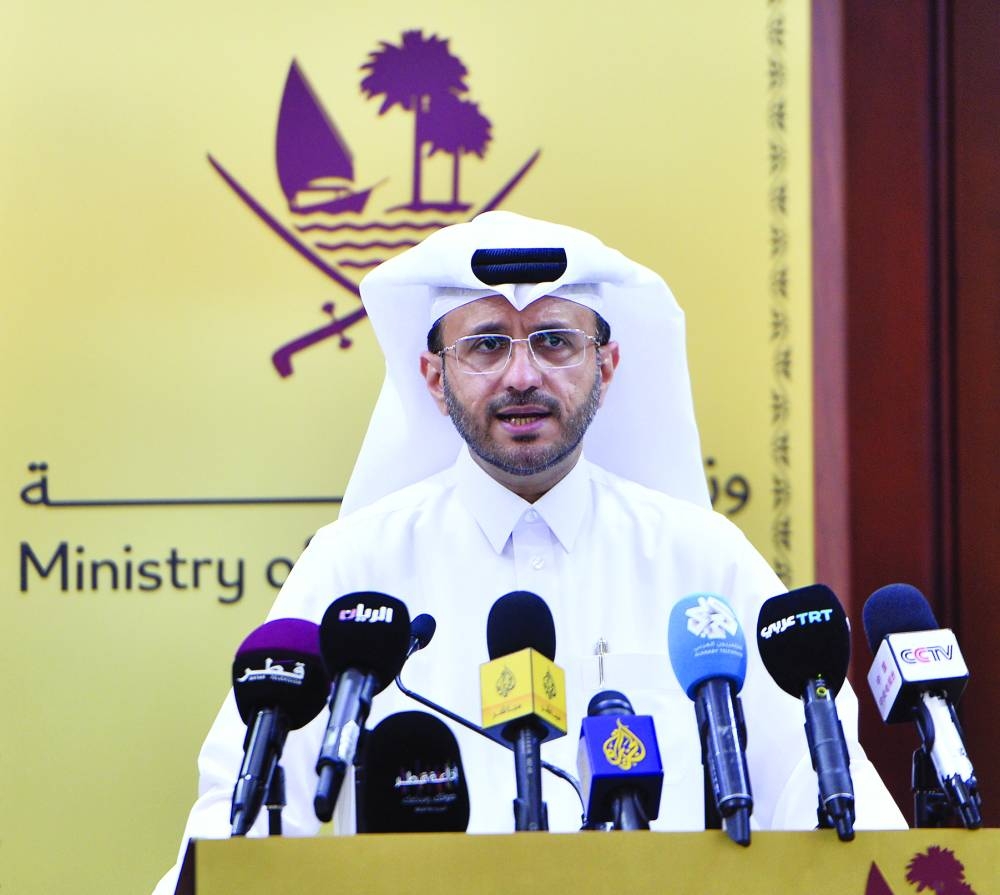
Dr Majed al-Ansari stated that talks are being held with each delegation separately to establish a negotiation framework, adding that while detailed discussions have not yet begun, there are positive early signals.
Qatar
Qatar is trying to bridge gaps in Gaza truce talks

Qatar is engaging with Israel and Hamas over the ‘framework for talks’, Dr Majed al-Ansari, Advisor to the Prime Minister and Official Spokesperson of the Ministry of Foreign Affairs (MoFA), said.During the weekly media briefing Tuesday, he said that Qatar’s mediation efforts aim to end the ongoing war and humanitarian crisis in Gaza.Dr Majed al-Ansari stated that talks are being held with each delegation separately to establish a negotiation framework, adding that while detailed discussions have not yet begun, there are positive early signals.He also stressed that it is too early to predict outcomes, and that the process requires time and continued international co-ordination.The spokesperson for the MoFA said: "Israeli and Hamas delegations are in Doha. Mediator teams from Qatar and Egypt are holding separate talks with both sides to bridge gaps on key issues."A framework is being developed to support faster, more effective negotiations, but it’s still early to assess progress."Dr al-Ansari noted that the process to reach a deal requires time and a clear timeline for achieving results cannot be provided.He added: “I don’t think that I can give any timeline at the moment, but I can say right now that we will need time for this.” He said that mediators—Qatar, Egypt and the United States—are currently trying to bridge the gaps between Hamas and Israel in order to reach a deal.

Gulf Times
Qatar
QPC launches a series of specialised courses

As part of its commitment to expanding the circle of photography and videography professionals, the Qatar Photography Center (QPC), affiliated with the Ministry of Culture, has launched a series of specialised courses at its headquarters in Katara Cultural Village Foundation.The course "How to Make a Picture Last," presented by trainer Saleh al-Marri, was held Monday and will be conducted Tuesday too.The course covers several topics, including: how a photographer views a scene with an artistic vision, the correct use of lines within the composition, and image analysis as a basic approach to understanding creative photography. It also covers the steps to build a meaningful photography project, as well as interactive practical exercises.Abdulaziz al-Kubaisi, Deputy Director of the QPC, said: “These courses have been carefully designed within an annual schedule. During the summer, the focus is on courses targeting beginners, teaching them the basics of photography, lightroom, and lighting. Advanced courses, such as portrait photography and nature photography, will then be offered”.He explained that photography is an easy and enjoyable hobby, and that everyone can develop their skills through mobile phones, which have made it easier for all to enter the field of photography. He noted that enhancing this talent is achieved through training and skill development, which the centre is keen to implement.He said lighting is an essential element in photography for high-quality images, noting that mornings and afternoons are the best times for photography. He emphasised that talent is essential, but learning the rules is even more essential.Al-Kubaisi stated that the QPC aims to develop the hobby of photography, encourage photographers, enhance their capabilities, and develop their artistic talents in this field, in addition to keeping pace with technological developments, while maintaining its core identity as a platform for photography.He said: “In addition to that, it is keen to strengthen its cooperation with international companies such as Canon, Nikon, Fuji, Sony, and others. Thanks to these partnerships, the Qatari photographer has become an ambassador and certified trainer for them, in addition to the important role played by the Ministry of Culture through organising exhibitions and events, perhaps the most prominent of which is the Doha Photography Festival last year, and the launch of the Doha Photography Award on the sidelines of this festival."All of these factors have led to supporting photographers, advancing the artistic scene, and developing the photography movement within the country, in addition to discovering the creativity of Qatari youth in this field, through courses, workshops, competitions, and exhibitions throughout the year.”

Gulf Times
Qatar
QPC concludes political analysis course

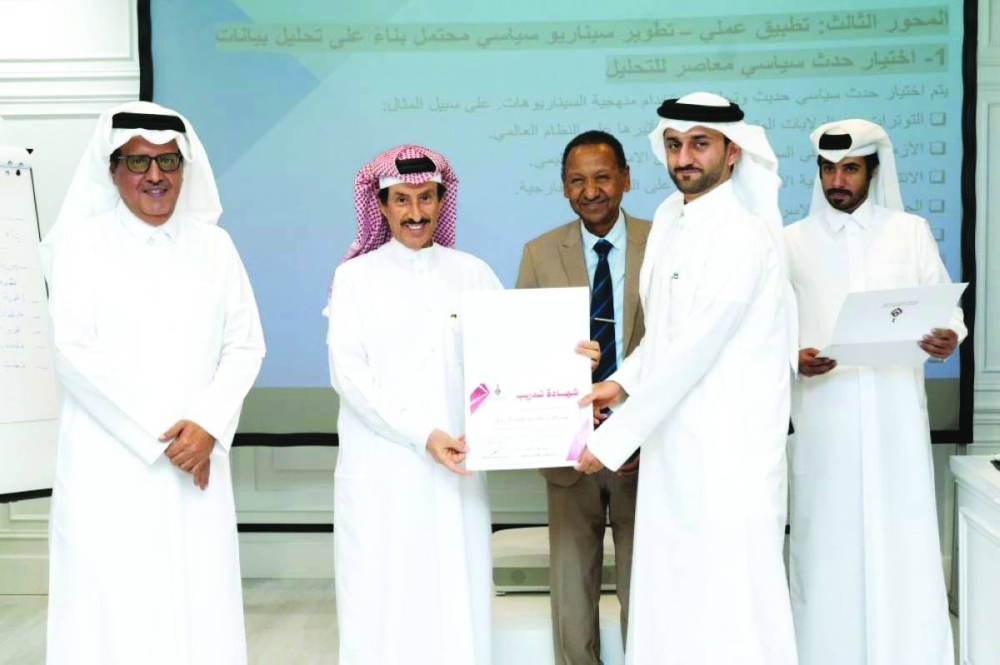
The Qatar Press Center (QPC) has organised a political analysis course that was presented by Dr Mustafa Osman al-Amin, Head of the Department of Islam and International Affairs, Professor of International Relations at Hamad Bin Khalifa University, and former Sudanese minister of foreign affairs.With 20 participants in attendance, Prof Saad bin Mohammed al-Rumaihi, Chairman of the Board of Directors of the Qatar Press Center (QPC), distributed certificates to the participants and presented the center's shield to Dr Mustafa Osman al-Amin.Dr al-Amin emphasized that political analysis has become an academic discipline and method taught at the world's most prestigious universities as a branch of political science. It has gained importance in light of the political developments witnessed by the world, the struggle between major powers, and the succession of political crises and natural disasters. All of these issues require careful analysis to raise awareness among the general public and to understand the reality of what is happening in the world.He explained that political analysis helps decision-makers understand reality and develop strategies for the future. He noted that political analysis varies between descriptive analysis, which describes the current situation; interpretive analysis, which explains the reasons behind what happened; and predictive analysis, which enables decision-makers to make appropriate decisions, either to confront developments, contain them, or fully address them.Prof al-Rumaihi spoke about the centre's role in qualifying personnel in specialised fields, noting that the 'political analysis' course aligns with the centre's vision of building a solid knowledge base capable of interpreting and analyzing events according to scientific and professional foundations, contributing to the production of informed and influential political content.He thanked Dr Mustafa Othman al-Amin for presenting the course and his keenness to cooperate with the centre to enhance political awareness through scientific and methodological tools. Sadiq Mohammed al-Ammari, director-general of the QPC, announced the centre's readiness to organise an advanced course in political analysis in response to trainees' requests to develop their skills, especially since most participants hold positions that require a deeper understanding of political dimensions, qualifying them to analyze current events.The director-general said: "The centre will continue to offer more specialized courses in the coming period, including new courses in media protocol, AI, advanced political analysis, and news presentation, to hone the skills of those working in the field of journalism and media with the latest global developments in the profession." The participants appreciated the efforts of the centre in offering courses that meet the needs of all groups, whether students or employees.

Qatari women artists to join Akoje Residency in Scotland
Qatar
Qatari women artists to join Akoje Residency in Scotland

Qatar Museums has announced the selection of artists Zainab al-Shibani and Maryam al-Humaid to participate in the Akoje Residency programme, in collaboration with Mathaf: Arab Museum of Modern Art, which is being held at Dumfries House, the headquarters of the King's Foundation in Scotland.This participation marks a significant achievement on both the artistic and cultural levels, as Zainab and Maryam will be the first artists from the Southwest Asia and North Africa (SWANA) region to be selected to participate in this prestigious programme, which aims to support artists from around the world by providing them with a space to live, create, and engage with diverse artistic and cultural environments.The Akoje Residency programme, in collaboration with the King's Foundation, aims to provide a fertile environment for contemporary artists to develop their creative projects and engage with local Scottish culture within the inspiring historical and natural setting of Dumfries House. This house is a cultural landmark sponsored by the King's Foundation.During the residency, the two artists will have the opportunity to focus on their artistic practice, away from the hustle and bustle of daily life, exploring new paths of creativity and artistic experimentation, and engaging with the local and international art community.This collaboration between Akoje Residency and Qatar Museums reflects the commitment of cultural institutions in Qatar to empowering and supporting artists from the region on the international stage. It also underscores the importance of cultural exchange in building bridges between communities and promoting global artistic dialogue.The participation of Zainab al-Shibani and Maryam al-Humaid in this programme represents a qualitative step towards empowering female artists from the region and enhancing the cultural presence of SWANA creators on the international stage.At a time when the world is reconsidering cultural representation and geographical diversity in the global art scene, this residency serves as a platform that celebrates two female voices offering contemporary visions rooted in local culture, yet intersecting with universal human and aesthetic issues.This achievement not only highlights individual talent, but also reflects a shift in cultural policies towards greater inclusion of artists from non-Western backgrounds, calling for a reshaping of contemporary art narratives from a more pluralistic and equitable perspective.It also demonstrates the importance of institutional partnerships that bring together the Global South and established cultural institutions in Europe to create equitable opportunities for knowledge and creative exchange.

QPC officials with writers and guests at the event.
Qatar
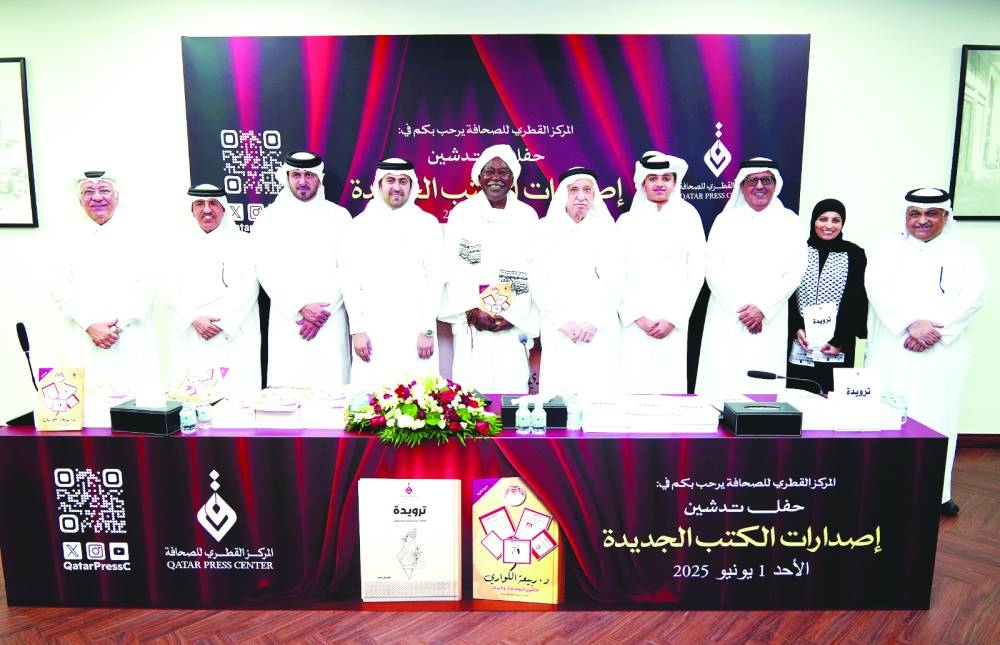
QPC hosts book signing ceremony

The Qatar Press Center (QPC) organised a book signing ceremony for Dr Rabia al-Kuwari, Lover of Journalism and Heritage, by journalist Babiker Issa, and Tarweeda, by journalist Hadeel Saber. The book by Saber includes a collection of political articles on the Palestinian reality and the repercussions of the aggression on Gaza. These books are part of a series of books recently published by the centre.The ceremony was held at the centre’s headquarters, attended by a large number of journalists, media professionals, and intellectuals. This comes as part of the centre’s commitment to enriching its press library with a selection of books that shed light on pioneers of Qatari journalism and support the Palestinian cause.Sadiq Mohammed al-Ammari, Director-General of the Qatar Press Center, said: “Today we are witnessing the launch of two new books, the first about the late Dr Rabia bin Sabah al-Kuwari, Professor of Journalism and Media at Qatar University, prepared by journalist Babiker Issa.”He added: “The second book is Tarweeda by colleague Hadeel Saber, a journalist with Al Sharq newspaper, and it includes a series of distinguished political articles about Palestine, which were published over the recent period.”Journalist Babiker Issa said: “Talking about the late Dr Rabia al-Kuwari is long and cannot be contained in one book, given his contributions, achievements, and rich academic and journalistic legacy.” He added: “The book is 350-page long, and this is just a small part of what we have tried to shed light on.”He emphasised that Dr al-Kuwari had a passion for children’s literature from an early age, and preceded many of his media colleagues in this field. He had many positive influences in many areas. He noted that writing the biography of Dr Rabia al-Kuwari was the idea of the Qatar Press Center, which seeks to document the biographies of prominent figures and pioneers of Qatari journalism throughout history.He noted that he had reviewed many of the late Dr al-Kuwari’s works, having met a large number of Qatari figures and documented their biographies with great depth. He often focused on the period before oil extraction, and he had made numerous attempts to record popular proverbs and many other sayings.Journalist Hadeel Saber said that the word “Tarweeda” refers to a type of Palestinian folklore song that first appeared under the British occupation and was used as an incomprehensible code so that the colonisers could not understand its words. “Tarweeda” was also used to pass private messages between detainees in occupation prisons and their families.She explained that the book is a collection of political articles that coincided with the Israeli aggression on the Gaza Strip, specifically in the period following the Al-Aqsa Intifada on October 7. She noted that the 50 articles were the simplest weapons of resistance, expressing their stance on the suffering and struggle of the people of Gaza, the legitimate rights of the Palestinians, and the justice of the Palestinian cause, which represents the cause of all Arabs.A number of attendees expressed their admiration for the books on display, commending the quality of their content, the importance of their topics, and the role they play in documenting the media landscape and strengthening the presence of Qatari journalism in the intellectual and cultural arena. They noted that the Qatar Press Center plays a significant and important role in enriching cultural and media life in Qatar through these distinguished initiatives.

A scene from The Captain
Qatar
The Captain unfolds contemporary human conflict at the Doha Theater Festival

The 37th Doha Theater Festival hosted the performance of the play "The Captain.” This profound and complex theatrical experience departs from the traditional style of performance and opens a vast intellectual space.It touches upon questions of existence, leadership, and identity, and unfolds the files of contemporary human conflict in a dramatic and philosophical framework based on symbolism and metaphor, addressing both the conscience and the mind.The play, whose script was written by Dr Khaled al-Jaber and directed by Ali Mirza Mahmoud, is a dramatic adventure that invites involvement and raises human problems and their complexities, engaging the audience in an internal confrontation with their own anxieties, questions, and fragility.It's not a story to be told, but a crisis lived out on stage, its features defined by sea storms, conflicting positions, and characters searching for a captain—meaning, authority, leadership, sovereignty, control, and a safe haven to lean on in a turbulent sea.The events take place on a ship adrift, amidst an endless ocean, in an emergency situation that seems to have begun long ago and remains unclear when or how it will end. Leadership is absent, and the passengers suddenly find themselves without a captain or anyone to steer the ship.Here, the crisis erupts not from outside, but from within. With the absence of a leader, divisions begin to emerge, and anxiety turns into a fierce intellectual struggle among the passengers over who has the right to command and who can save the ship from the mysterious fate that awaits it.Each character represents an intellectual or visionary trend, and a broad debate takes place between them that transcends the ship's boundaries, reflecting contemporary Arab and human reality.Through this conflict, the gradual collapse of trust, the rise of suspicion, and the disintegration of understanding are explored, making the ship a grand metaphor for modern society, at a pivotal moment that confronts everyone with their shared destiny.Director Ali Mirza Mahmoud chose to take the script to its maximum visual and aural impact, providing the viewer with a complete sensory theatrical experience.The stage is not merely a space for the audience to be entertained; it becomes the ship itself. The viewer not only watches, but also engages in the experience, feeling the ground sway beneath them, hearing the waves, seeing the darkness, and breathing the tension.Ali Mirza said: “Every sound of a wave, every tear in the sails, every spot of light, we designed it to be an unspoken sentence. The play is inundated with silent emotion and an inner turmoil that doesn't need to be spoken to be understood.”