Author

Tuesday, February 10, 2026 | Daily Newspaper published by GPPC Doha, Qatar.
 Tawfik Lamari
Tawfik Lamari
Tawfik Lamari is an editor at Gulf Times. He has several years of mainstream media experience in fortes such as culture, health, social issues, environment and has covered various events across MENA.
Gulf Times
Qatar
590 students compete for seats at Qatar School of Science and Technology

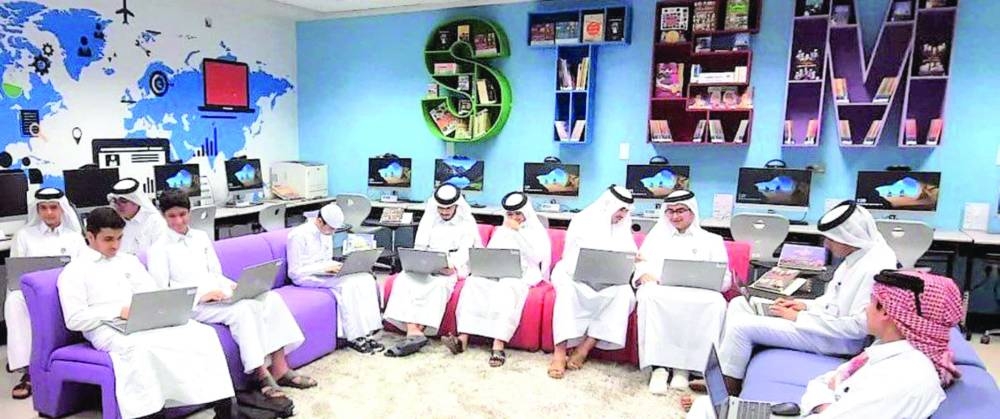
The increasing demand for Qatar School of Science and Technology reflects a noticeable shift in students' orientation towards scientific and technological disciplines.The school provides a modern educational environment that supports innovation and creativity, providing students with opportunities to explore fields such as programming, robotics, engineering, and the natural sciences, with a focus on developing critical thinking and problem-solving skills.The increase in the number of applicants for the Qatar Science and Technology Secondary School for Boys reflects the success of awareness-raising efforts to encourage students to pursue scientific careers. Some 590 students are taking the admission tests for the new academic year 2025-2026.Experts believe this demand calls for greater investment in developing science schools, increasing enrollment capacity, and expanding the establishment of specialised educational institutions to meet the growing demand. They emphasised that strengthening these pathways represents a fundamental step towards achieving sustainable development, building a knowledge-based economy, and enriching the labour market.The Qatar Science and Technology Secondary School for Boys is a leading educational institution that aims to prepare a generation of outstanding students in the fields of science, technology, engineering, and mathematics (STEM).The school accepts Qatari students entering the ninth grade and offers them a specialised educational programme focused on developing their scientific and technical skills.The school is an interactive learning environment that fosters innovation and creativity, providing students with opportunities to explore diverse fields.It relies on modern curricula that focus on developing critical thinking and problem-solving skills, essential for future academic and professional success.For the 2024-2025 academic year, 450 students applied for admission to the school, and 64 were selected after passing various assessment stages, including tests in mathematics, English, and higher-order skills, as well as personal interviews.The school places great importance on excellence and leadership. This is because it has won the Sheikha Hessa Salem Al-Sabah Award for Educational Leadership at the Gulf level, reflecting its commitment to providing quality education that keeps pace with global developments.The Qatar Science and Technology Secondary School for Boys is a role model in specialised education, contributing to the preparation of a generation capable of competing in the global labour market and contributing to the development of society.

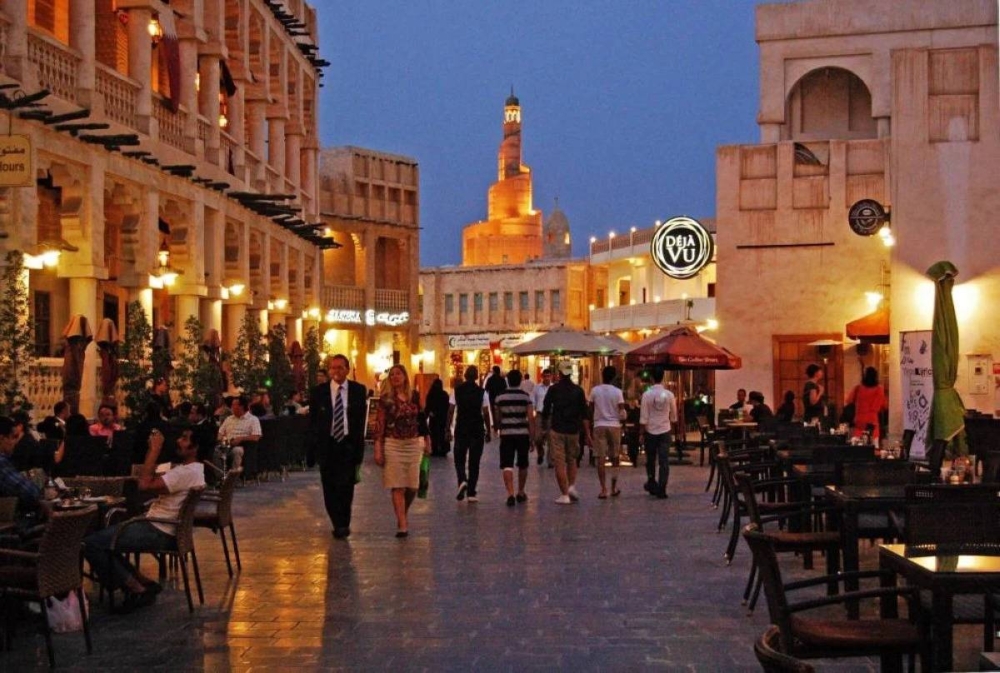
Screen shot of Souq Wakif
Qatar
Doha among 15 friendliest cities for expats: InterNations

InterNations, a travel analytics platform, has released a list of the world’s friendliest cities for expats. On the top of the list is the Spanish city of Malaga, Doha is among the 15 friendliest cities in the world for expats alongside Mexico City, Alicante, Valencia, Ras Al Khaimah, Bangkok, Madrid, Panama City, Nairobi, Muscat, Dubai, Riyadh, Melbourne, Australia, and Abu Dhabi.The platform asked expats around the world to rate their city based on how welcoming it was, how friendly the locals were, and how easy it was to make friends. Expats were asked if they had found a personal support network in their new home, whether they were happy with their social life, and how easy it was to make local friends.Malaga, located on Spain’s sun-drenched Costa del Sol, has officially topped the list of the world’s most welcoming destinations for expats. Mexico City, the capital of Mexico, came in next on the list.Doha was named the Arab Tourism Capital for 2023, a remarkable achievement for Qatar, cementing its prominent position on the global tourism map. By offering exceptional hospitality and exemplary treatment to its guests, Qatar has demonstrated to the world its authenticity, heritage, and celebration of diverse cultures and unique experiences. As well as its ability to organise major events, such as the FIFA World Cup.

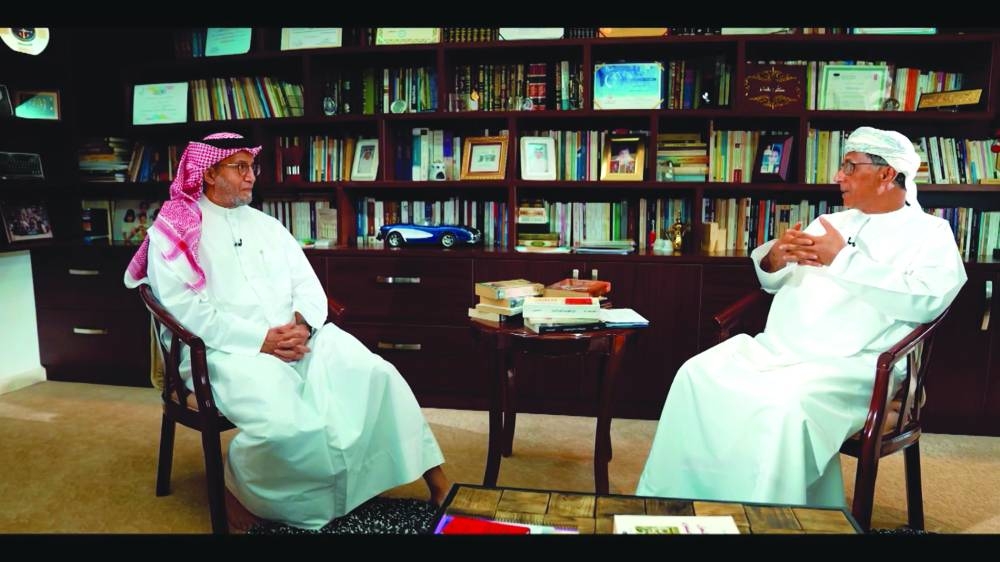
From left novelist Abdulaziz al-Mahmoud interviewed by Dr Mohammed Alyahyai
Qatar
Qatari novelist al-Mahmoud to feature in Faces from the Gulf episode airing Thursday

In a special episode of Wojouh Mina Alkhaleej (Faces from the Gulf), Alaraby 2 TV features Qatari novelist Abdulaziz al-Mahmoud in an in-depth conversation that reveals hidden chapters of his creative and intellectual journey.Al-Mahmoud — recognised as one of the leading literary figures in the Gulf — revisits formative experiences from his life.Beginning with his upbringing in Qatar under the guidance of his grandfather, a prominent religious figure of his era. The episode traces his evolution from studying aerospace engineering to his eventual transition into journalism and literature.The interview also offers exclusive insights into al-Mahmoud’s interactions with influential political figures in the Islamic world. Among them: his behind-the-scenes efforts to prevent a boycott of the Islamic Conference held in Doha. Including a revealing conversation with a senior political leader, whose identity al-Mahmoud discloses during the episode.The conversation also explores his bold line of questioning in an interview with an Arab president later overthrown by popular uprising.Hosted by Omani novelist and academic Dr Mohammed Alyahyai, the episode explores the intersection of historical knowledge and literary craft.Highlighting al-Mahmoud’s deep passion for history and the way it enlightens his novels. He also criticises the scarcity of high-quality literary translations in the Arab world and the challenges this poses to readers seeking access to global literature.This episode is part of Faces from the Gulf, the weekly series that documents the living memory of the Gulf region through the voices of its cultural, artistic, and intellectual pioneers. Each episode invites viewers into the personal narratives of remarkable individuals whose stories reflect the broader transformations of the region.The episode featuring Abdulaziz al-Mahmoud is to air Thursday, May 1, 2025, at 19:00 Doha time on Alaraby 2 TV.

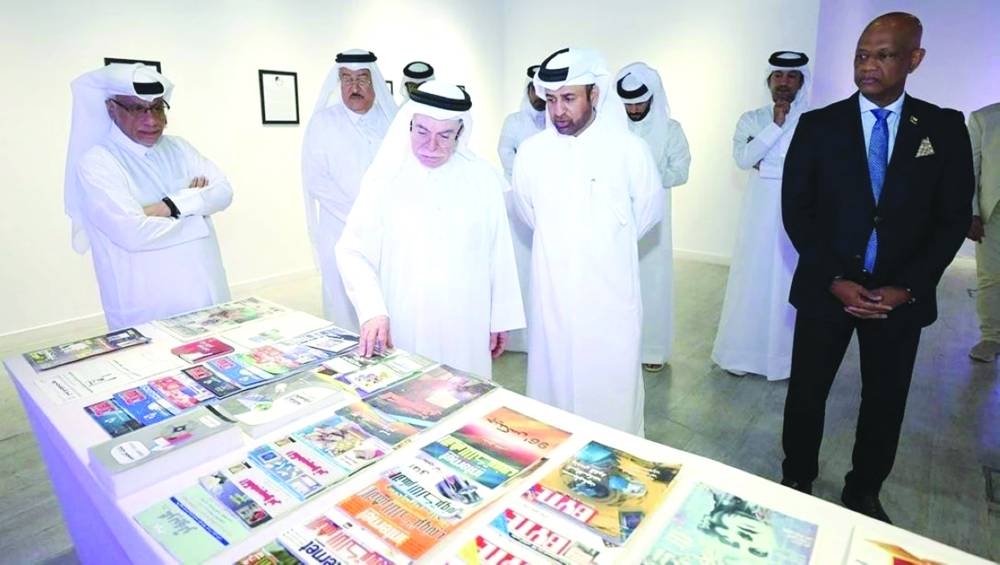
Abdulrahman al-Sunaidi with Katara general manager Prof Dr Khalid al-Sulaiti.
Qatar
Katara hosts exhibition on the history of computers

The “History of Computers” exhibition continues at Katara Cultural Village in Hall 2 of Building 18.The exhibition, which features collections from researcher and Al-Sunaidi Computer Museum owner Abdulrahman al-Sunaidi, documents the history of computers and their development over the decades and highlights the major transformations witnessed by this technology, which has become an integral part of our daily lives.The exhibition, which runs until May 6, aims to raise awareness among younger generations about the importance of technological development in the field of computing and to explore the transformations this industry has undergone, leading up to the era of vast digital space and the Internet.Visitors will find various models of old and new computers, along with documents and artifacts that chronicle the history of the introduction of computers to Qatar.The role of early Qatari pioneers in establishing a computer culture and spreading its use, both within institutions and among individuals, are also featured, complete with brief biographies.Al-Sunaidi said that this exhibition features all things related to computers, both software and hardware, and publications.He added that the exhibition also features rare displays from companies that had a name and reputation in the field of computers.Al-Sunaidi thanked Katara for hosting this exhibition.

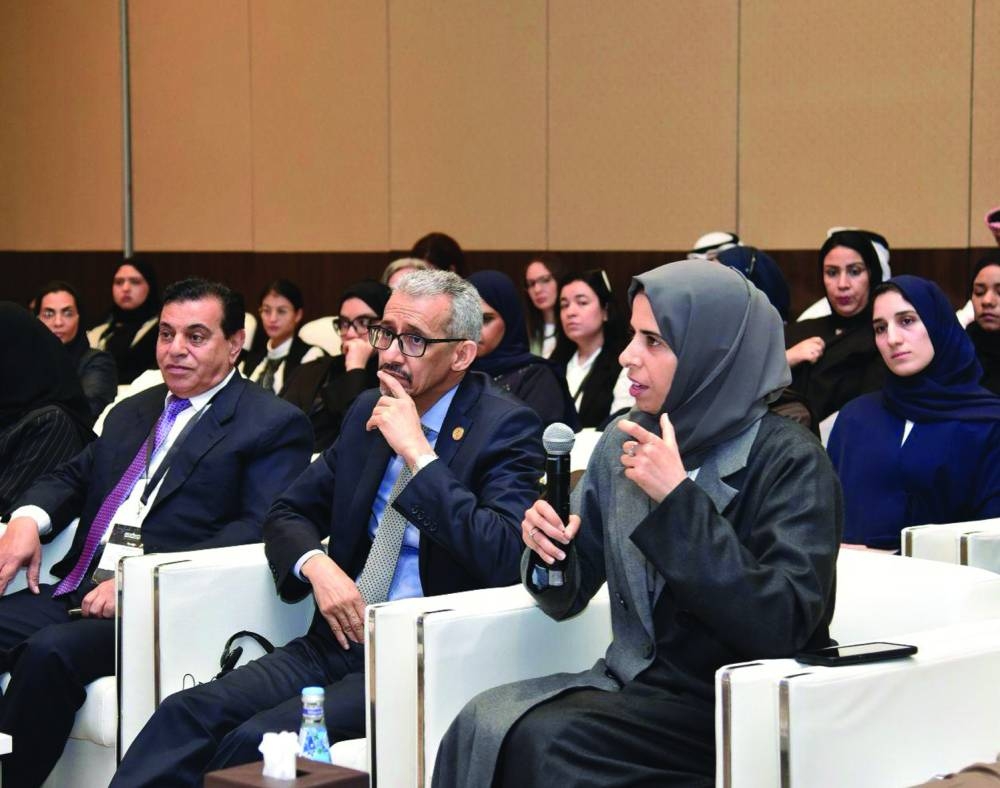
HE Lolwah bint Rashid AlKhater during a session of the conference
Qatar
1st International Orientalism Conference concludes

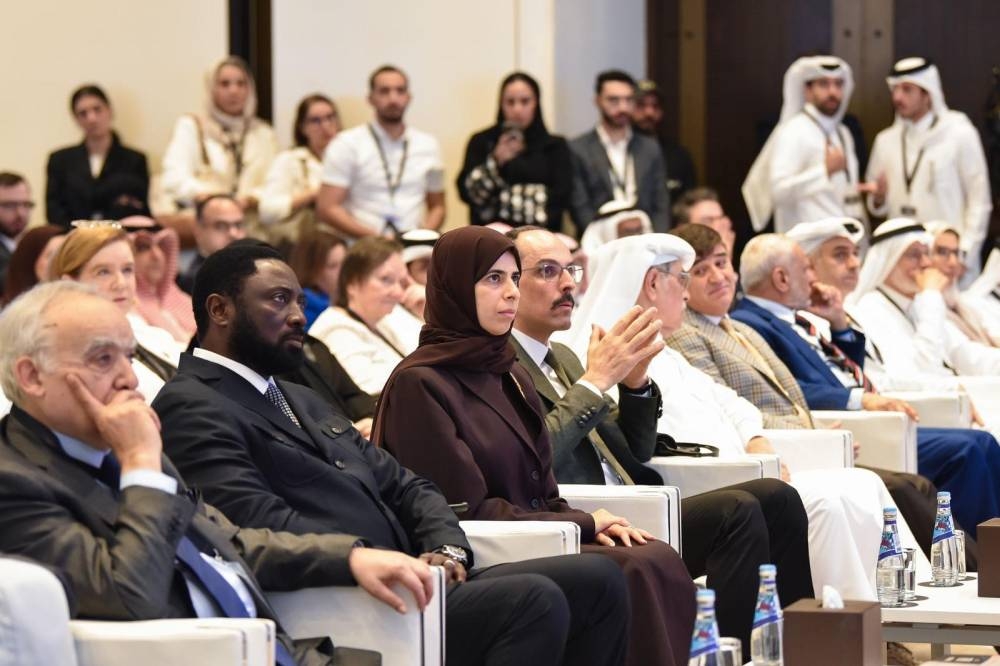
The first International Orientalism Conference concluded Sunday in Doha.The conference was organised by the Ministry of Education and Higher Education (MoEHE) and the Qatar Debate Centre, in partnership with the Permanent Committee for Organising Conferences at the Ministry of Foreign Affairs (MoFA), and in co-operation with academic institutions including Qatar University, Hamad Bin Khalifa University, and the Doha Institute for Graduate Studies, along with leading international institutions such as Leiden University of the Netherlands, the Institute for Advanced Studies in Sarajevo, and Dagestan State University.HE the Minister of Education and Higher Education Lolwah bint Rashid AlKhater, who is also the conference chair, said that the conference's vision seeks to create a safe space for in-depth and serious intellectual discussions, free from sensitivities.It also emphasised the importance of breaking free from the nihilistic polemic between East and West, which it describes as a war, deconstructing the East-West dichotomy, and approaching the human experience from different civilisational dimensions.In an effort to enrich the intellectual landscape surrounding Orientalism, the conference aims to re-read and analyse the concept of Orientalism from a contemporary perspective, not as an ancient field of knowledge, but as a present and influential intellectual framework, although in its various forms.The conference focused on promoting dialogue between civilisations, dismantling prevailing stereotypes, and posing thorny questions to move Orientalism from the sphere of ideological tensions and preconceived biases to the realm of sound scholarly debate and research.The inaugural conference was attended by an elite group of thinkers, researchers, and specialists in Orientalism, numbering more than 300 participants representing 50 countries.High-profile figures included Turkish thinker and politician Dr Ibrahim Kalin, Lebanese Minister of Culture Ghassan Salamé, Gambian Minister of Foreign Affairs and International Co-operation Dr Mamadou Tangara, and Lebanese Deputy Prime Minister Dr Tarek Mitri.The conference also opened its doors to 1,300 people who interacted and enriched the discussions in the conference sessions over the course of two days.Qatar's hosting of this conference is the culmination of its pioneering efforts to promote cultural and civilisational dialogue among the world's peoples.It reinforces its position as a global beacon of thought, culture, and education, and a bridge of communication between cultures and peoples, at a historic moment when humanity needs to build bridges of understanding and co-operation more than ever.

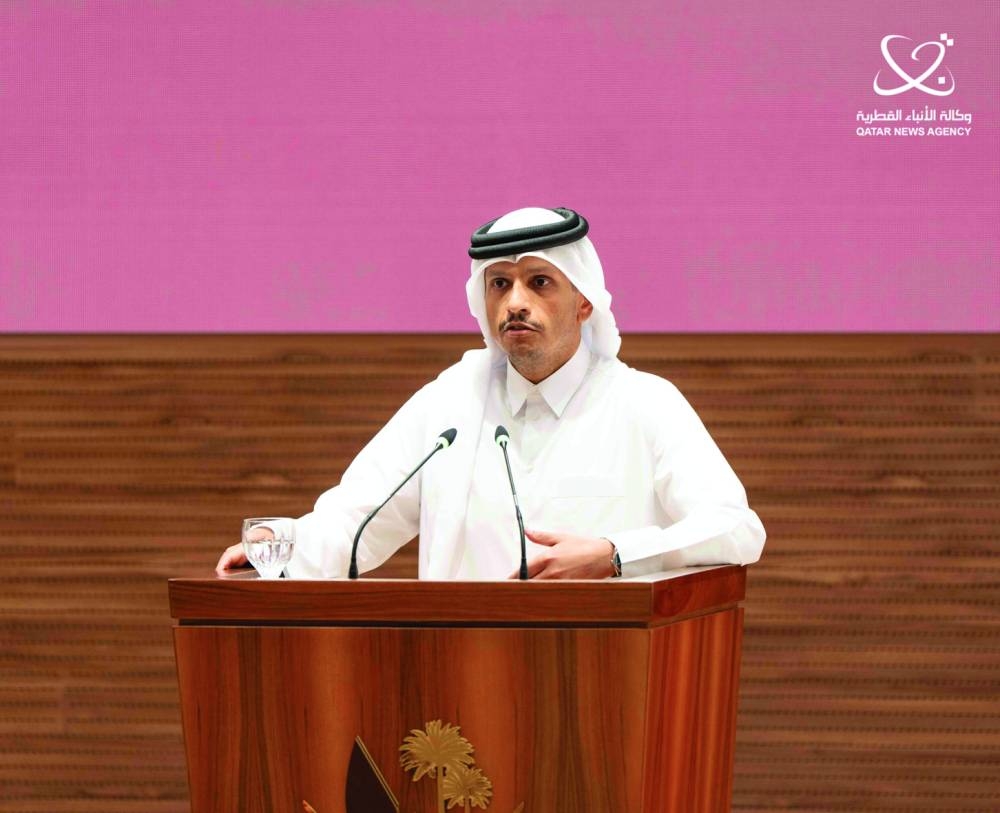
HE the Prime Minister and Minister of Foreign Affairs Sheikh Mohammed bin Abdulrahman bin Jassim al-Thani addressing the press conference.
Qatar
Qatar, Turkiye stress need to end Gaza war, support Syria

HE the Prime Minister and Minister of Foreign Affairs Sheikh Mohammed bin Abdulrahman bin Jassim al-Thani and his Turkish counterpart, Hakan Fidan, have stressed the need to end the war in Gaza and support stability in Syria.This came during a joint press conference at the conclusion of talks held by Fidan in Doha Sunday.HE Sheikh Mohammed stressed that Qatar cannot accept the starvation of the Palestinian people or the use of starvation as a weapon, emphasising the continuation of mediation to end the war.He pointed out that "the goal of the current negotiations on Gaza is to release prisoners and end the war." He explained that he discussed with his Turkish counterpart Israel's resumption of its aggression on the Gaza Strip.Noting that Qatar will continue its efforts with its partners to end the war in the Strip, he said: "We have been working with Egypt as a single team since the beginning of the crisis in Gaza and are constantly in contact with them."We worked in our mediation to bring viewpoints closer together, but we were met with a torrent of malicious rumours."He noted that "Qatar is transparent in its dealings, and the facts have proven the allegations against it to be false."HE the Prime Minister and Foreign Minister pointed out that Hamas has repeatedly and publicly affirmed its willingness to return all hostages, adding, "We are exerting our efforts to bring the parties back to the ceasefire agreement in Gaza."He said Israel wants the release of all prisoners with no prospect of ending the war on Gaza, noting that "Hamas is ready to release all hostages in exchange for the release of prisoners, subject to conditions that Israel may reject."HE Sheikh Mohammed said: "Last Thursday, we noticed some progress in the positions of the parties regarding the ceasefire negotiations," noting that "when Doha announced its suspension of its role in the negotiations last November, it was with the aim of halting the provocation against it."He welcomed Oman's efforts in mediating between Iran and the United States.HE Sheikh Mohammed also affirmed that Qatar will continue its efforts to support peace and the reconstruction process in Syria.Allegations against Qatar are nothing but propaganda: PMAnswering a question from Gulf Times Editor-in-Chief Faisal Abdulhameed al-Mudahka about allegations that Qatar was behind the protests on American campuses and Netanyahu’s statements and the ‘Qatargate’ issue, HE the prime minister said: "All talk about Qatar being behind the student demonstrations in the United States is nonsense."HE Sheikh Mohammed said: ""Our relationship with American universities is limited to educational institutions located in Doha, and any funding provided by Qatar to educational or research institutions is open to everyone and within transparency.""What the press has dubbed 'Qatargate' is nothing more than a propaganda term used for political purposes and has no basis in truth.""We have been working with our brothers in Egypt as one team since the beginning of the crisis in Gaza, and we are in constant contact and coordination with our brothers in Egypt.""Some marginal politicians who spread lies about Qatar have forgotten that Qatar itself helped secure the release of over 100 hostages in Gaza, achieved a ceasefire, and consistently works to promote international peace and security.""We are a peace-loving nation and a genuine Arab Gulf state. We will not break out of this mould, no matter how many accusations are hurled at us."HE Sheikh Mohammed also noted that "Qatar's contracts with an American telecommunications company aim to counter a public relations campaign against us in Israel."For his part, Turkish Foreign Minister Hakan Fidan said that the strategic partnership with Qatar contributes to supporting regional stability, noting that Qatar has made significant efforts which are commendable, emphasising that the entire region is indebted to it.He said: "We will continue to maintain close dialogue and co-ordination with Qatar," noting that "Turkiye is co-ordinating with the Qatari side to achieve stability in Syria and rid it of terrorism."He also noted that his country "will continue its efforts to ensure that the Palestinian and Israeli people live in security and safety based on the two-state solution," adding, "the key to a just peace in the region is the two-state solution."He said that Turkish efforts in Qatar complement Qatari-Egyptian efforts to end the war on Gaza, stressing that "Hamas will accept any agreement that includes a two-state solution."He continued, "Our priority is to revive the ceasefire and see food aid reach the Gaza Strip," noting that the Palestinian side has expressed its agreement to a ceasefire in Gaza, but Israel is being stubborn and refusing.Regarding Syria, Fidan said that the current sanctions are hindering stability there, stressing that efforts are being made with his country's partners to lift the sanctions.He said in this regard, "There are those who want to exploit the current situation in Syria, and we stand in the way of those who want to do so." He noted that his country "wants to see an environment that grants equal rights to all ethnic and religious components of the Syrian people."He also emphasized that "Turkiye will not accept any interference that violates Syrian sovereignty, and we reject any party bearing arms outside the framework of the state." He noted that his country "waits for the Kurdistan Workers' Party to heed the call to lay down its arms and stop destabilising the region."

Gulf Times
Qatar
Modern approach to Orientalism at Doha conference

The inaugural edition of the International Conference on Orientalism kicked off yesterday in Doha under the theme “Towards a Balanced Civilizational Dialogue”.Bringing together a select group of leading orientalists, intellectuals, and researchers from around the globe, the conference marks a pivotal moment in the field of Oriental studies. It transcends traditional frameworks, envisioning a contemporary approach that fosters profound civilisational dialogue.Organised by the Ministry of Education and Higher Education and QatarDebate Center, in partnership with the Permanent Committee for Organising Conferences at the Ministry of Foreign Affairs, the event is held in collaboration with prominent academic institutions, including Qatar University, Hamad Bin Khalifa University, and the Doha Institute for Graduate Studies. It also features partnerships with leading international institutions such as Leiden University (Netherlands), the Institute for Advanced Studies (Sarajevo), and Dagestan State University (Russia).In her opening address, HE the Minister of Education and Higher Education Lolwah bint Rashid AlKhater, also the Chair of the Conference, articulated the intellectual vision guiding the event, stating: “Today, we gather to create a safe space for profound and candid intellectual discussions without sensitivities. Through our dialogues, we aspire to achieve the enchanting balance that Tolstoy masterfully depicted in his epic War and Peace, by striking a thoughtful balance between popular sentiment and specialised literary critique.”She further elaborated on the intriguing connection between the conference and the literary masterpiece by Russian author Leo Tolstoy.The conference also featured an address by Guest of Honour, Professor Ibrahim Kalin, a distinguished Turkish academic and political figure, followed by an exclusive, high-level dialogue session moderated by renowned journalist Sami Zeidan.As part of the conference activities, a prominent panel discussion entitled “Towards a Balanced Civilizational Dialogue” was held, featuring: Former Minister of Culture of Lebanon, Professor Ghassan Salame; Minister of Foreign Affairs and International Co-operation of The Gambia, Dr Mamadou Tangara; and Director of the Middle East Centre at the University of Oxford, Professor Eugene Rogan. The session was moderated by journalist Jamal Elshayyal and addressed critical questions surrounding the session’s theme, exploring ways to preserve cultural values while avoiding conflict.To Page 4The discussion offered a valuable opportunity to open essential conversations about balanced civilizational communication and its role in building stronger relationships across sectors.In his statement, Professor Mahmoud Hamza, Chair of the Scientific Committee, emphasized: “This is the first conference of its kind in the Arab world, focusing primarily on ‘New Orientalism,’ a trend that has emerged over the past five decades. It moves beyond the classical Orientalist focus on religion, culture, and history, to include the study of political, economic, and social issues in the East, particularly the Arab world.”Offering a rich programme that combines academic depth with humanistic engagement, the conference includes specialized scholarly sessions, alongside cultural events celebrating the diversity and richness of participant backgrounds. Youth dialogue sessions, amplifying the voice of the future, aim to actively involve the next generation in civilizational dialogue and cross-cultural engagement.More than 300 researchers from 50 countries are participating in the conference, including prominent figures such as Dr. Jose Puerta (Spain); Dr. Paolo Branca (Italy); Dr. George Gregory (Romania); Dr. Dmitry Mikulsky (Russia); and Dr. Said Mailzi (China) in addition to eminent scholars from Qatari universities and institutions.With its goal of reshaping the intellectual landscape surrounding Orientalism, the conference seeks to reinterpret and analyze the concept through a contemporary lens; focusing on fostering dialogue between civilizations and dismantling persistent stereotypes. By promoting open scholarly encounters, it aims to move beyond ideological tensions and biases towards a more rigorous scientific inquiry, building constructive communication among human societies.Hosting this conference is a testament to Qatar’s leading role in promoting cultural and civilizational dialogue across the globe, affirming its position as an international hub for thought, culture, and education.

HE Sheikha Al Mayassa bint Hamad bin Khalifa al-Thani with HE Sheikh Abdullah bin Ali bin Saud al-Thani and other dignitaries.
Qatar
QLC celebrates 12th batch graduation

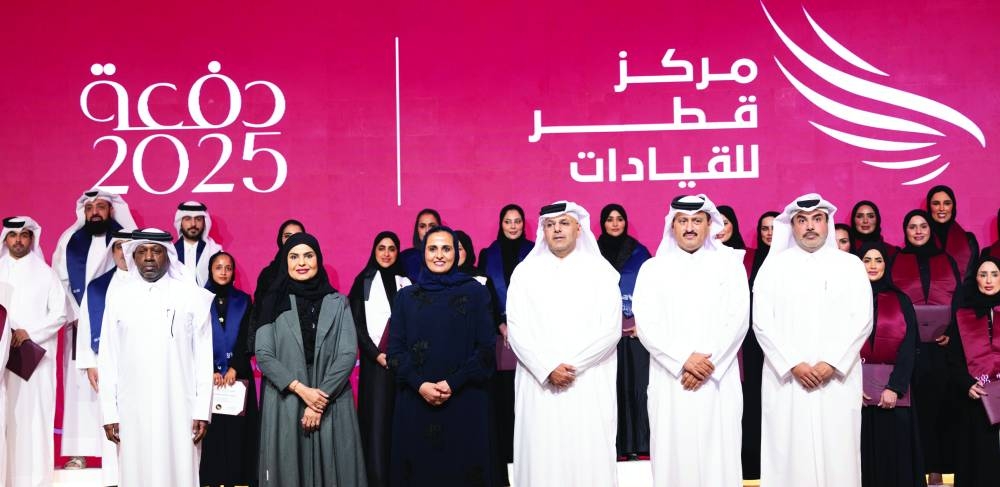
The Qatar Leadership Centre (QLC) celebrated the graduation of its 12th cohort (Class of 2025) on Monday under the patronage of the chairperson HE Sheikha Al Mayassa bint Hamad bin Khalifa al-Thani.The batch included 142 national graduates, both male and female, representing various government and private entities in the country.The ceremony witnessed the graduation of 127 participants from the National Leadership Programmes, in addition to 15 graduates from the Executive Master's Programme in Leadership.The ceremony was attended by a number of ministers, senior officials, faculty members, and families of the graduates, led by HE Sheikha Al Mayassa and QLC vice-president and managing director HE Sheikh Abdullah bin Ali bin Saud al-Thani.In her speech, HE Sheikha Al Mayassa addressed the role of the QLC in supporting the state's vision towards a knowledge-based economy by establishing a model of ethical and inspiring leadership.She said that this celebration is not merely an individual tribute, but an embodiment of a national vision that believes in the importance of building leaders."Leadership is not a position, but rather an inspiration for others to dream, learn, and work,” HE Sheikha Al Mayassa said. “Qatar believes in you and awaits your creativity."She also emphasised the values of leadership."Leadership is integrity in one's stance, courage in change, steadfastness in times of crisis, and humility in success,” HE Sheikha Al Mayassa said.She affirmed that this year's graduates represent an extension of Qatar's development journey, and stressed their role in preserving the country's gains and actively contributing to achieving Qatar National Vision 2030.HE Sheikha Al Mayassa highlighted the country's achievements in the fields of education, economy, and diplomacy, as well as its leadership in launching innovative initiatives.She spoke about Qatar's efforts to empower the Arab voice in the media, arts, and culture to be present and influential on the global stage.Founded in 2008 at the initiative of His Highness Sheikh Tamim bin Hamad al-Thani, the QLC is a national platform for leadership development, working in partnership with leading international universities and institutes to prepare future leaders and enhance Qatar's global standing.

Gulf Times
Qatar
The ‘Hour and Hour’ programme celebrates Eid at the Pearl

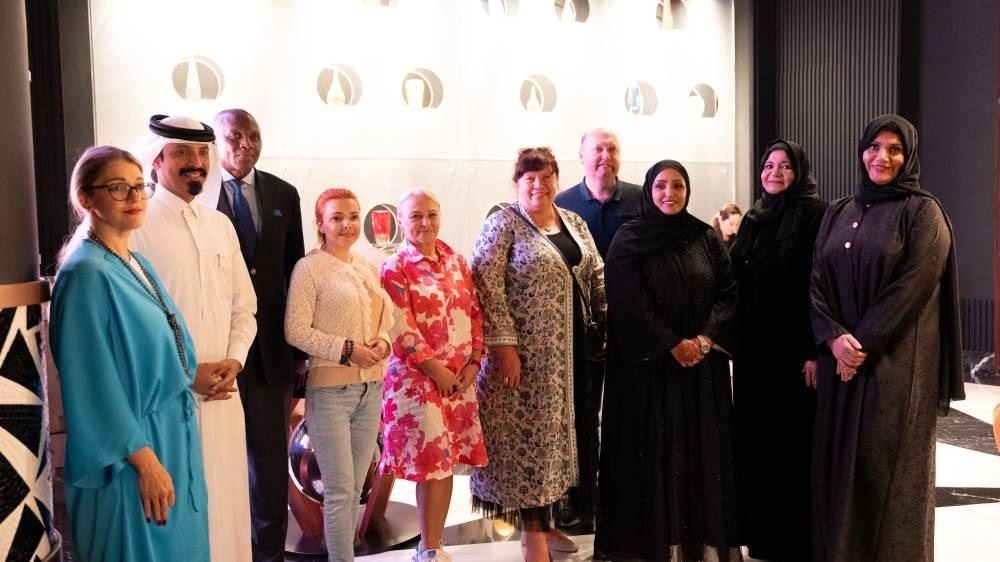
Under the theme “You made us enjoy our Eid” the “Hour and Hour” programme, in co-operation with United Development Company and the Youth Department of Al-Sailiya Sports Club, organised an Eid al-Fitr event at Porto Arabia-Pearl Island.The event was attended by a large crowd, and visitors enjoyed a variety of heritage, cultural, and artistic activities that reflected the joy and atmosphere of Eid. The event was attended by Erika Bernhard, ambassador of Austria; Lancin-Anne Toure, former ambassador of Guinea; Fabien Chauvin, representative of the French Language in the World, Qatar Branch, and President of the Francophone Chamber in Qatar; and Farhan Sheikh al-Sayed, founder and patron of Arts, Fashion, and Cultural Diplomacy, Founder and Member of the Executive Committee of the Doha Ambassadors Football Club; Rodica Grigorita, wife of the ambassador of Moldova to Qatar; Kristina Libaric, a diplomat from North Macedonia and Dr Mervat Ibrahim, Qatar’s ambassador of Peace and CEO of Ready Future, a technology and educational consultancy.The event, held on the third day of Eid, focused on the social, religious, and heritage aspects of Eid al-Fitr celebrations, in addition to focusing on voluntary work. The event witnessed many distinguished performances, as the programme began with the Qatari Ardha, followed by artistic performances about Eid presented by the students. In addition to the Spacetoon songs choral performances and the anime musical piece, the “Think and Answer” cultural competition, also attracted significant audience interaction. The puppet show presented the story Haya’s Embroidered Dress.The event included a musical piece titled The Oud and Violin Melody, presented by the Music Affairs Center, as well as a unit featuring the characters from the series Siraj.Tamani al-Yafei, CEO of the Hour and Hour programme, expressed her happiness with the event’s success, saying: “We were keen to provide a comprehensive experience for this event that blends folk arts, family entertainment, and cultural and interactive activities. In partnership with a number of leading entities in the cultural, artistic and heritage fields.”She added, “Our goal was to revive Eid traditions, focusing on all its religious, heritage, and social aspects by spreading a festive atmosphere that enhances the spirit of communication among members of the community. We are delighted with the great interaction we witnessed from visitors.”Al-Yafei expressed her pride in co-operating with all participating entities, saying: “We are proud of the great support provided by various institutions and centres to make this event a success. We also appreciate the prominent role played by the Tamm Volunteer Network – Nama Center. I would also like to point out that this is our first collaboration with United Development Company and The Pearl Island, which opened their doors to us and hosted this event. We thank them for their great support, which contributed to attracting a large number of visitors and adding a special touch to the Eid celebrations.” Al-Yafei expressed her hope that this celebration had brought joy to families and spread happiness in everyone’s hearts, and she looked forward to more meaningful events in the future.

Gulf Times
Qatar
Oryx FM Radio highlights environmental conservation in Islam

As part of Oryx FM Radio’s programming for the holy month of Ramadan, through its Environment Magazine, the radio station addressed the importance of environmental preservation in Islam.The radio programme hosted Dr Muhammad al-Hajj, a specialist in Arabic-Islamic language and civilisation, who reviewed the principles of Islam related to the environmental aspect on the Environment Magazine weekly programme, which is prepared and presented by environmental journalist Dr Nebri Losak.During his segment, Dr al-Hajj emphasised the importance that Islam places on protecting the physical environment in which one lives.He stressed the great reward for those who strive to perform positive actions that preserve the environment.Dr al-Hajj cited examples from the Qur’an and the Prophet (PBUH)’s hadith, which highlight the forms of environmental tampering and the necessity of maintaining balance within it.He emphasised the special status Islam places on preserving the environment and its water, plants, animals, and other resources.The Environment Magazine programme is one of the oldest programmes presented by the Oryx FM Radio station, spanning 10 years across its various programming cycles.The radio station devotes slots to programmes related to environmental conservation through advocacy segments and readings on jurisprudential opinions, which cover laws that must be followed and applied during assessments, and through other programmes related to discovering and preserving the environment around us.

(From left) Media professionals Nour Haddad and Milad Hadchiti.
Qatar
'In the Shade of Jasmine' on Al Arabi 2 features Syria's prominent artists

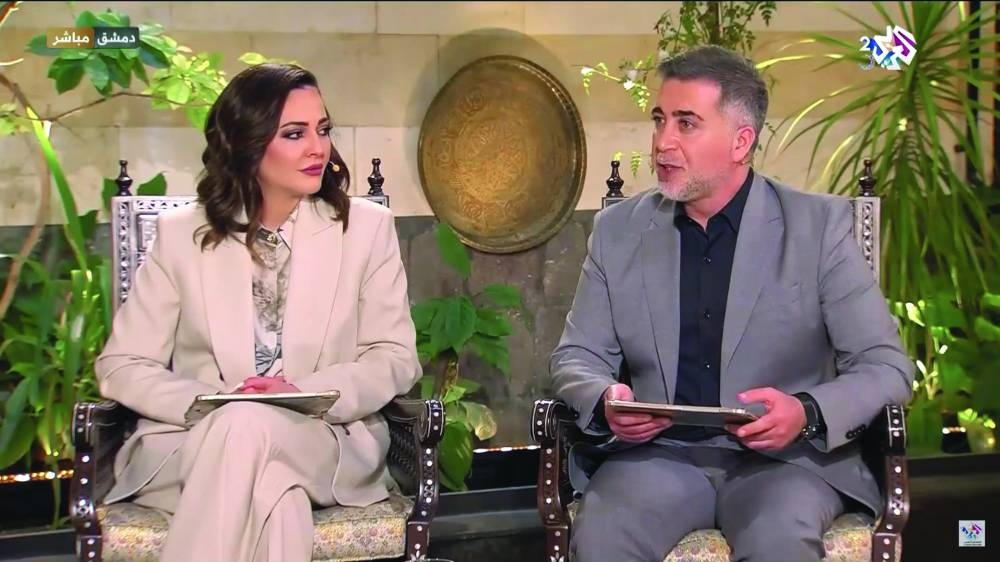
The programme "In the Shade of Jasmine," broadcast daily on Al Arabi 2 from the Syrian capital, Damascus, has attracted significant attention from Arab audiences, due to its unique topics and themes within the context of developments in Syria.During the first half of Ramadan, the programme hosted a group of the most prominent Syrian artists and cultural activists. They spoke with great candour about the period of artistic struggle against the Assad regime and the persecution and harassment they faced.Their experiences varied from arrest and torture, as happened with artist Bassam Dakak, to displacement, or leaving for fear of their lives. Or being banned from entering Syria, as happened with a number of actors, including Samer al-Masry, Sawsan Arshid, Abdul Hakim Qatifan, Yara Sabri, director Maher Salibi, singer Ahmed al-Qassim, and others.The programme also addressed the enormous challenges facing the Syrian people in building a civil state that accommodates all segments of the Syrian population and provides a decent living for its citizens. The programme's guests also discussed the challenges that have been faced and will face the art industry in general, and the drama industry in Syria in light of the transitional conditions.The programme's episodes included numerous exclusive and powerful statements about Syria's past and present. Actor Mazen al-Nazour sent a strong message to artists supporting the Bashar al-Assad regime, urging them to remain silent.Actor Abdel Hakim Qatifan indicated the possibility of producing a new season of the series "Smile, General," which aired exclusively on Al Arabi 2 during Ramadan 2023 and achieved record viewership even within Syria despite severe security restrictions on its distribution.The programme presented by media professionals Milad Hadchiti and Nour Haddad, will continue airing during the second half of Ramadan with new guests. The programme airs daily at 9pm Qatar time, exclusively on Al Arabi 2 and via the Al Arabi+ app.

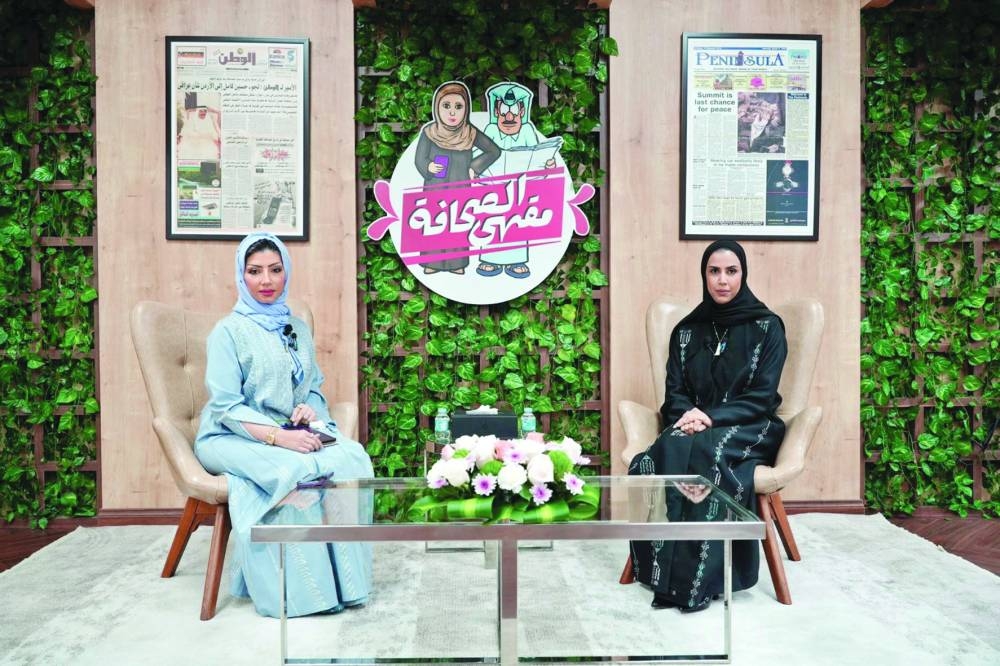
From left: Amal Abdulmalik and Sheikha al-Ziyara
Qatar
QPC: ‘Press Café’ reviews reality, challenges of children’s literature

The Qatar Press Center (QPC) organised a session titled ‘Creativity and Imagination in Children’s Stories’ as part of its Press Café sessions. The session addressed the reality, challenges, and future of children’s literature at the local level. Qatari writer Sheikha al-Ziyara, author of 50 children’s fiction titles and a judge in numerous children’s writing competitions, spoke during the 8th session of the Press Café. The session was moderated by media personality Amal Abdulmalik, and attended by a group of writers, intellectuals, journalists, and critics interested in children’s literature. At the opening of the session Saad bin Mohammed al-Rumaihi, Chairman of the Board of Directors of the Qatar Press Center, praised the works of writer Sheikha al-Ziyara. He emphasised that children’s literature is one of the most difficult fields of writing due to the nature of children. Sheikha al-Ziyara began with her passion for writing, when she was a student in school, where she was among her friends who loved reading, learning and writing the most. She used to write down some thoughts in a small notebook, which made her discover that she had a talent for writing. So, she took a bold step in 1997, to write under a pseudonym and send it to one of the local newspapers that published it. This was the first step towards the path of writing, before she turned to writing in children’s literature. Al-Ziyara said: “When I became a mother, I started searching for valuable stories to tell my children before bedtime. However, it was not easy, so I started crafting stories for my children to tell them at bedtime, and they liked them. However, at that time, I did not think about writing for everyone.” She added: “I had an electronic blog where I shared my ideas and stories. At that time, I wrote “When will the dream come true?” I meant the dream of actually writing and producing stories. The beginning was by producing ‘Princess Amina’, as it is the first story. I published it in co-operation with Asala Publishing House, which is one of the publishing houses specialising in children’s literature.” Al-Ziyara went on to talk about the importance of focusing on the quality of content that includes writing directed at children. It is important for the writer to feel responsible for what he/she writes for children. Regarding the messages conveyed in her short stories, al-Ziyara explained that each of her stories contains a moral and educational message. Therefore, the focus is on values that build a person and answer the questions: “Who am I?” and “What is the world?” These types of questions shape awareness and understanding in children. Al-Ziyara addressed a message to critics, questioning their role in criticising what is published, especially by younger generations. She emphasised their responsibility to enhance the quality of Arabic content, which can only be enhanced through criticism and by not deviating from customary writing standards. Al-Ziyara suggested establishing a cultural centre for children that would nurture artistic and literary talents. She also hoped that children’s literature would be highlighted in print media, which is important for shaping awareness among generations. At the end of the session, Abdullah bin Hayi al-Sulaiti, Vice-Chairman of the Board of Directors of the QPC, questioned the reasons behind the high prices of children’s stories and literature, emphasising the urgent need to reconsider the pricing of children’s books to facilitate their acquisition.

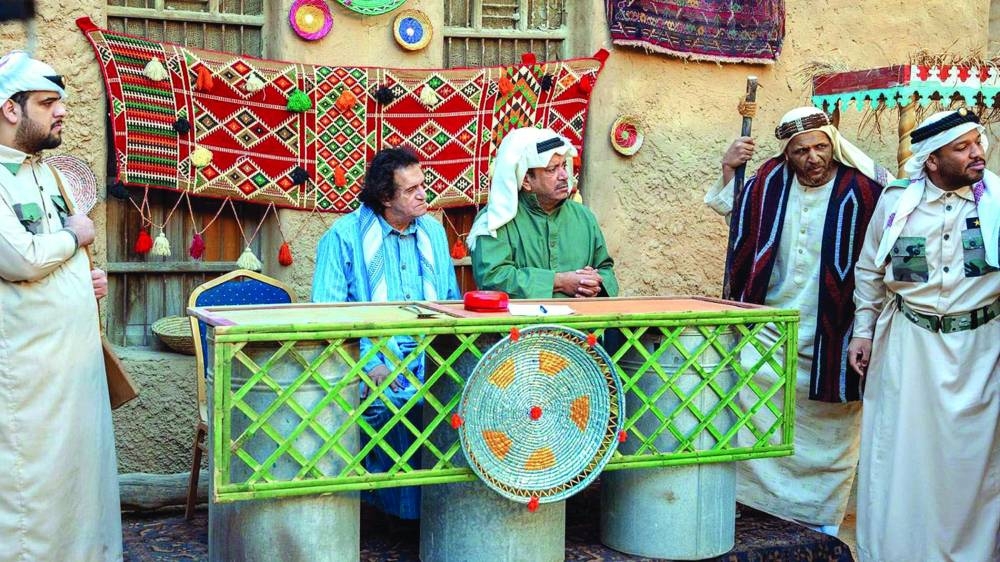
Screen shot from the series
Qatar
Qatar TV airs “Mardi Wa Daham”, a traditional comedy with a new approach

The series “Mardi Wa Dahham” returns with a second season full of comic situations and new ideas, to reaffirm its position in the Gulf drama arena. Through its connected and separate episodes, the series continues to present social issues in an enjoyable comic format inspired by the traditional Gulf neighborhood.While employing a broad imagination that attracts viewers from different generations. We cannot talk about the success of “Mardi Wa Dahham” without praising the role played by Qatar TV in supporting Gulf drama works. It has proven through this huge production that it is a renewed platform that seeks to provide diverse content that combines entertainment and quality.Directors Abdullah al-Arak and Malek Sabah succeeded in presenting an integrated directorial vision that combines a fast pace and visual angles that serve comedy. Their focus was on the interaction between the characters in a way that makes the viewer involved in the atmosphere of the neighborhood as if it were real.The directing also maintained the simplicity of the visual narrative, with the clever use of lighting and shadows to enhance the spirit of the traditional story with a fantasy character.As for the decorations, they played an essential role in establishing the environment in which the events take place, as they reflected the designs of the Gulf neighborhood with great skill. The old-style houses, the women’s café, and the narrow alleys all helped create a sense of time and place, making the visual experience more realistic and connected to the popular heritage.The work was distinguished by the use of costumes that reflect the identity of the characters and contribute to drawing their dramatic features.The costumes were consistent with the nature of the traditional neighborhood, with the addition of some simple exaggerations in the designs of the characters of "Mardi and Daham".While the star Abdel Nasser Darwish continued to shine in the character of "Mardi", with his spontaneous and smooth embodiment of the role of the deceitful person in a likable comedic style. While Ahmed al-Aounan presented the role of "Daham" with brilliance that embodies the comic chemistry between the duo, which made the viewers attached to them since the first part.

The Qatar National Archives building.
Qatar
Qatar National Archives launches 2nd heritage competition

The Qatar National Archives has announced the launch of the second edition of the “Bishtakhta Al Dar” interactive competition, which aims to encourage the public to explore Qatar’s history and research heritage documents and collectibles.The competition gives participants the opportunity to win a weekly cash prize of QR2,000 by finding the Bishtakhta and answering the question attached to it with private messages.*Bishtakhta is an old term of non-Arabic origin, which means gramophone.The Qatar National Archives is inviting the public to access its official accounts to follow the hints that help them find the location of the *Bishtakhta, and then send the correct answer before the weekly draw, which takes place every Sunday at 10pm.This initiative is an innovative way to enhance interest in national heritage and stimulate research and exploration in an interactive and fun way.The Qatar National Archives has revealed the conditions for participating in the competition.The participant must be a follower of all social media platforms of the Qatar National Archives, and be a citizen or resident of Qatar.The participant must search for the location of the *Bishtakhta through the hints in the competition post, then answer the question inside it with a correct answer.They must take a clear photo of the location where the *Bishtakhta was found, and send the answer in a private message to the Qatar National Archives accounts.The "Bishtakhta Al Dar" competition comes within the framework of the Qatar National Archives' efforts to raise awareness of the importance of historical documents and their role in preserving the national identity.

Researcher Abdulaziz al-Buhashem al-Sayed holding the 18th issue of the magazine, published in 1960.
Qatar
Al Arabi magazine 'embodies soft power of Arab unity'

The Qatar Press Centre (QPC) organised a lecture on Al Arabi magazine and its historical role in documenting Arab cities, presented by Professor Abdulaziz al-Buhashem al-Sayed, a researcher in history and heritage.The evening began with a speech by QPC vice-chairman Professor Abdullah bin Hayi al-Sulaiti.He stressed that Al Arabi magazine, published from Kuwait, played a prominent role in spreading Gulf, Arab and Islamic culture, and contributed to documenting Arab cities and cultural heritage over decades.Al-Sayed spoke about the journey of Al Arabi, the first issue of which was published in December 1958, and how its reach extended from the Gulf, even to remote cities.He said that the magazine represented the soft power of Arab unity, and was a cultural dream that started from Kuwait to the Arab world.As the objective was a comprehensive Arab cultural magazine, Kuwaiti poet and writer Ahmed al-Saqqaf spent a whole year touring Arab capitals to select the magazine's staff.“All capabilities were harnessed to make the magazine a success from the very first issue,” al-Sayed said. “As 30 thousand copies were distributed, and the magazine sought to be a comprehensive cultural platform, it was therefore called ‘Diwan Al-Arab’.”He said that the choice of its first editor-in-chief, Professor Ahmed Zaki, who was the Cairo University president at the time, gave the magazine a global vision, one that drew inspiration from the *National Geographic magazine.Al-Sayed added that the magazine’s sections were carefully chosen to be an integrated cultural, literary and scientific platform.Articles were written by the most prominent Arab thinkers and writers, such as Naguib Mahfouz, Taha Hussein, Raja al-Naqqash, Anis Mansour, Farouk Shousha, Abdul Wahab al-Bayati, and Ghassan Kanafani.Al-Sayed explained that the magazine was not limited to spreading Arab culture; its message extended to the younger generations through the publication of the magazine *Al Arabi Al Sagheer, which was a window for creativity, allocating sections for drawings by, and innovation for, children.The symposium also addressed the role of *Al Arabi magazine in documenting Arab heritage by monitoring the social and economic life, and the urban development of Arab cities. Including Qatar, which received extensive coverage in the magazine, with 7-8 issues covering different aspects of the lives of Qataris.Al-Sayed referred to the 18th issue of the magazine, published in 1960, which shed light on life in Qatar over 45 pages.It documented the economic and social life, through the camera lens, of Souq Waqif and the fish market.It also monitored the divisions of the markets at that time, and the beginnings of Doha Port.The cover of the issue carried a picture of a Qatari girl named Moza Fakhro.“The issue also reviewed pearl diving trips, which were one of the most important pillars of the Qatari economy before the discovery of oil,” Al-Sayed said.He stressed that the magazine was vital, in terms of documentation and history, at a time when it was not easy to document the history of cities in the region.“The coverage was not limited to the markets ... it extended to the environment unique to Qatar,” al-Sayed added. “The magazine presented one of the most beautiful documented pictures of the ‘Dahl al-Hamam’ area, which is one of the most prominent geological landmarks in the country.”“In addition to the fish market, the vegetable market, and agricultural life, it showed how the local economy depended mainly on Qatari agricultural products,” he continued.The magazine also highlighted Qatari social life, as its crew visited old Qatari majlis, including the taking of rare pictures of a group of more than 50 young Qataris in Al Wakrah.“The visit of *Al Arabi magazine team to Qatar coincided with the presence of the Danish archaeological mission,” al-Sayed said. “This gave them a unique opportunity to document the antiquities discovered by the mission, in one of the most prominent historical stations that contributed to shaping the features of the ancient Qatari heritage.”He added that the magazine did not ignore the development of education in Qatar during the 1950s.The magazine documented how the number of schools at that time reached more than 84 schools, the development of girls’ schools, and how the state became interested in educating its daughters.This, al-Sayed said, indicated that education was not limited to boys, which reflects the early educational renaissance in the country.“The magazine also highlighted the efforts of Qatar’s founder Sheikh Jassim bin Mohammed bin Thani, and his role in preserving the environment and establishing reserves, and the many documentations that highlight a number of facts about the history of Qatar,” he added.“*Al Arabi magazine has provided a lot of good information to bloggers, researchers and historians who wish to document the various time periods of Qatar,” al-Sayed concluded.

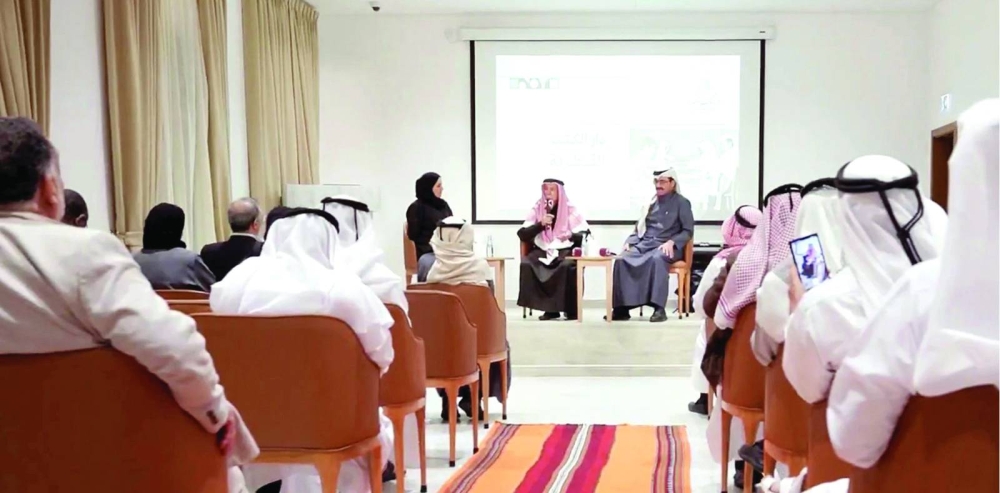
From left: Hanan al-Emadi, HE Dr Mohammed Abdul Rahim Kafoud, HE Dr Mohammed bin Saleh al-Sada, and a section of the audience.
Qatar
NLQ: A cultural, educational legacy to enhance knowledge

The National Library of Qatar (NLQ) organised a cultural seminar titled “The NLQ and its efforts in supporting education” as part of its cultural programme aimed at shedding light on its historical and pivotal role in enhancing the educational process. It supports researchers and students, and provides sources of knowledge. The seminar was attended by a group of prominent figures whose scientific and cultural journey was greatly influenced by NLQ. During the seminar, which was presented by media figure Hanan al-Emadi, HE Dr Mohammed Abdul Rahim Kafoud, former Minister of Education, and HE Dr Mohammed bin Saleh al-Sada, former Minister of Energy and Industry, spoke. HE Dr Mohammed Kafoud, recalled his memories with NLQ, referring to its great role when he was a graduate student during the seventies. He said: “I remember this house in the seventies when I was a student, and at that time there were no cameras. So the library was the only refuge for researchers and students who spent long hours browsing references and benefiting from the treasures of knowledge it contained." HE Dr Mohammed bin Saleh al-Sada, emphasised the historical symbolism that the NLQ carries, not only for Qatar, but for the entire Gulf states. He said: “The NLQ has a historical symbolism linked to Qatar and the Gulf states, and the reopening of the house in a new guise will add a lot to everyone.” He added: “This house represents a special memory for every Qatari, as the area in which the house is located has always been an attractive educational environment. This is where students used to gather to study and research, which enhanced the spirit of learning among different generations.” Researcher Ali Abdullah al-Fayyadh stressed that the NLQ has always been the first source for every student and researcher. He said: “It is the source for every reader and student, and it was the first national library in the Arabian Gulf. Its reopening reflects Qatar's commitment to developing the cultural scene and enhancing the role of libraries in society.” The NLQ was recently opened after a comprehensive development process, aiming to enhance its role as a modern cultural and knowledge centre. It is now equipped with the latest technologies and services that meet the needs of readers and researchers. The library will also focus in the coming period on expanding its educational and cultural programmes, to be a beacon of science and knowledge in Qatar and the region.

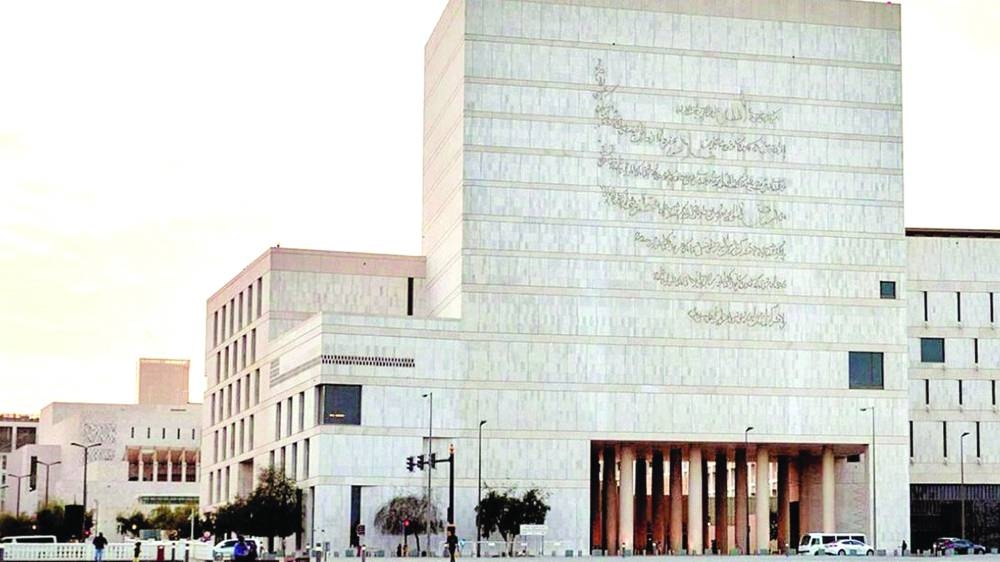
NLQ after completion of restoration, development works
Qatar
New-look NLQ opens after restoration completion

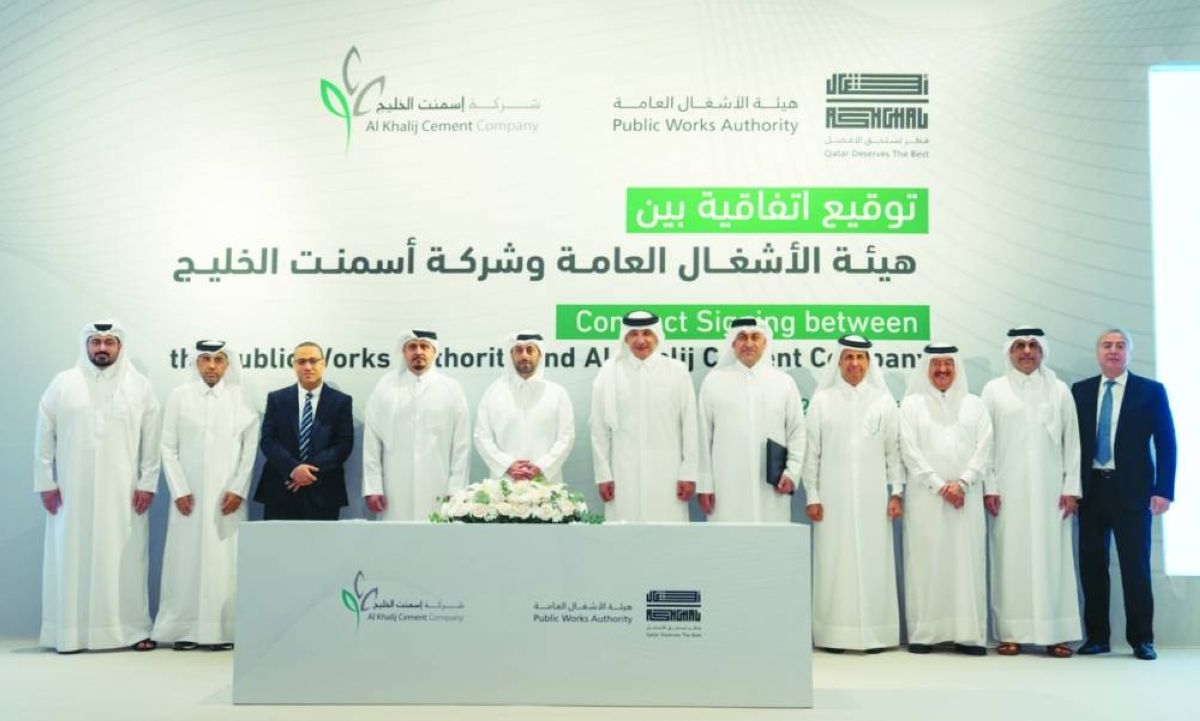
The Ministry of Culture on Monday opened the new building of the National Library of Qatar (NLQ) after the completion of restoration and development works carried out by the Public Works Authority (Ashghal).This project comes as part of the ministry's efforts to preserve cultural heritage and enhance national identity, as the National Library of Qatar is one of the oldest national libraries in the region.The restoration works included internal and external updates to the building, with the development of the surrounding square, which was named "Read Square" to provide a suitable environment for lovers of books and reading. The square was distinguished by a design inspired by heritage, as old doors were recycled and used in the main path under the title "Doors to Knowledge" to enhance the concept of sustainability and preserve cultural identity.The opening of the new building of the NLQ is an important step towards promoting reading and spreading knowledge among members of society. It is expected to contribute to attracting more researchers and readers. It will provide advanced facilities that keep pace with the needs of the digital age, including an electronic archive and multi-purpose halls for holding seminars and cultural events.Established in 1962, Dar Al Kutub Al Qatariyya (Arabic for National Library of Qatar) houses a rare collection of manuscripts and books, some of which date back more than 850 years. It has also played a pivotal role in launching the Doha International Book Fair since 1972, which has become a prominent annual cultural event in the country.The Ministry of Culture continues its efforts to support cultural projects, affirming its commitment to Qatar National Vision 2030, which aims to build a knowledge-based society and enhance national identity through arts and literature.

A Qatari official visiting the Sharjah pavilion
Qatar
Qatari participation praised at conclusion of Sharjah Heritage Days

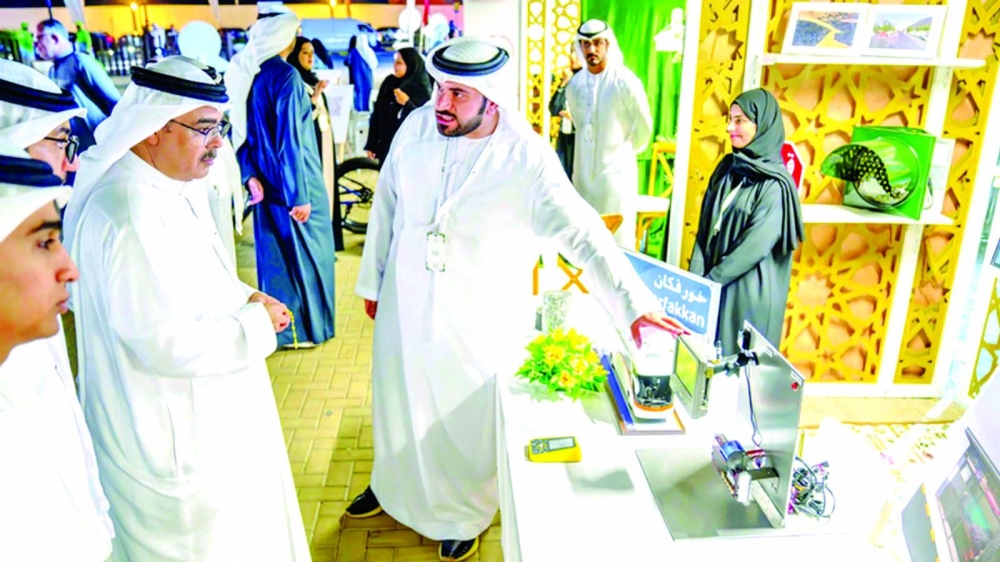
Qatari participation at the 22nd Sharjah Heritage Days has been praised by event officials at the conclusion of the exhibition this year.Events co-ordinator Abu Bakr al-Kindi said Qatari participation had been prominent, presenting Qatar’s cultural heritage, which included traditional crafts and arts shows.He said the current edition witnessed the introduction of modern technologies, such as giant screens in the “Cinema of the Beautiful Time”, and an electronic plan that allows visitors to easily locate events.Al-Kindi also mentioned the use of artificial intelligence (AI) to display the events agenda and facilitate communication with the public via social media.He added that public interaction had been impressive, saying that the Sharjah Institute for Heritage relies on advanced mechanisms to measure public opinion and collect feedback, with the aim of continuous development, and enhancing the experience of attendance in future sessions.Sharjah Institute for Heritage president Dr Abdulaziz al-Musallam said the current session was focused on highlighting local, Gulf and Arab heritage.The addition of the heritage area outside the wall, he said, constituted an important development in the infrastructure, as it provided a wider space for live shows and direct interaction between the audience and craftsmen.Dr al-Musallam revealed plans for the establishment of a special office for Sharjah Heritage Days to work throughout the year to develop the upcoming editions.