
Author

Sunday, February 08, 2026 | Daily Newspaper published by GPPC Doha, Qatar.
Gulf Times
Business
QSE crosses 10,700 mark as Gulf funds up buying support; M-cap adds QR5.23bn

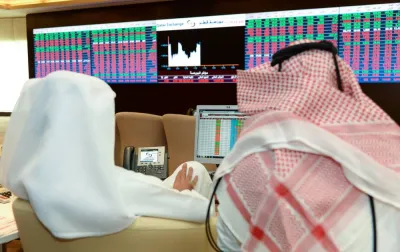
The Qatar Stock Exchange (QSE) on Monday crossed the 10,700 mark, having gained more than 69 points, propelled notably by the industrials, banking and telecom sectors. The Gulf institutions were increasingly net buyers as the 20-stock Qatar Index rose 0.65% to 10,710.09 points, although it touched an intraday high of 10,737 points. The Arab individuals were also increasingly bullish in the main market, whose year-to-date gains widened further to 1.31%. About 64% of the traded constituents extended gains to investors in the main bourse, whose capitalisation added QR5.23bn or 0.83% to QR633.26bn on the back of midcap segments. The foreign funds continued to be net buyers but with lesser intensity in the main market, which saw as many as 0.02mn exchange traded funds (sponsored by AlRayan Bank) valued at QR0.05mn trade across six deals. The local retail investors’ net profit booking was seen strengthening marginally in the main bourse, whose trade turnover and volumes were on the increase. The Islamic index was seen gaining slower than the other indices of the main market, which saw no trading of treasury bills. The domestic institutions were seen increasingly net sellers in the main bourse, which saw no trading of sovereign bonds. The Total Return Index gained 0.65%, the All Islamic Index by 0.55% and the All Share Index by 0.7% in the main market. The industrials sector index rose 0.94%, banks and financial services (0.88%), telecom (0.86%), consumer goods and services (0.56%) and real estate (0.05%); while insurance and transport declined 0.47% and 0.27% respectively. Major gainers in the main market included Industries Qatar, Ooredoo, QIIB, Estithmar Holding, Qatar Cinema and Film Distribution, Medicare Group, Qatari Investors Group, Mannai Corporation, Qatar Islamic Bank, Dukhan Bank, Baladna, Al Faleh Educational Holding, QLM and Mazaya Qatar. In the junior bourse, Techno Q saw its shares appreciate in value. Nevertheless, Doha Bank, Milaha, Qatar Insurance, Al Mahhar Holding, AlRayan Bank, United Development Company and Vodafone Qatar were among the shakers in the main market. The Gulf institutions’ net buying increased substantially to QR31.42mn compared to QR5.8mn the previous day. The Arab individual investors’ net buying strengthened noticeably to QR10.13mn against QR3.78mn on May 18. However, the Qatari individuals’ net selling expanded marginally to QR37.71mn compared to QR36.24mn on Sunday. The domestic institutions’ net profit booking grew significantly to QR24.4mn against QR1.93mn the previous day. The foreign institutions’ net buying decreased perceptibly to QR18.57mn compared to QR25.8mn on May 18. The foreign individual investors’ net profit booking eased marginally to QR2.32mn against QR2.5mn on Sunday. The Arab institutions’ net buying weakened markedly to QR0.37mn compared to QR1mn the previous day. The Gulf retail investors’ net profit booking was rather flat at QR0.71mn. The main market witnessed a 36% surge in trade volumes to 292.09mn shares and 75% in value to QR732.05mn on more than doubled deals to 32,431. In the venture market, a total of 94,413 equities valued at QR0.26mn changed hands across 16 transactions.

Ismail Vural, secretary-general, TKBB.
Business
Qatar, Turkiye urged consider joint sukuk issuance and cross-listing on Borsa Istanbul and QSE

Ankara and Doha need to consider joint issuance of sukuks and their cross-listing on Borsa Istanbul and the Qatar Stock Exchange (QSE) to attract a broader investor base, according to a top official of Participation Banks Association of Turkiye (TKBB), a public entity with a mandate to represent the participation banking sector both nationally and internationally.Both Turkiye and Qatar should also prioritise Shariah-compliant debt market development, fintech, digital driven innovations, and sustainable Islamic finance; Ismail Vural, secretary-general, TKBB, said in a report of the Qatar Financial Centre (QFC).Turkiye has a well-established sukuk market, ranking fifth globally in sukuk issuance over the past five years, he said, quoting data from London Stock Exchange Group (LSEG).Enhancing co-operation in this area, he said, can create new opportunities for financing large-scale infrastructure, energy, and trade projects."Joint sukuk issuances can provide a powerful financing tool, while cross-listing sukuk on both Borsa Istanbul and the QSE can attract a broader investor base," Vural said.Additionally, he said, regulatory harmonisation between the two countries would facilitate seamless cross-border sukuk deals, further strengthening the market."To strengthen collaboration in Islamic finance over the next five years, Turkiye and Qatar may prioritise sukuk market development, fintech- digital driven innovations, and sustainable Islamic finance," according to him.Finding that fintech and digital Islamic banking are also set to play a crucial role in shaping the future of financial collaboration; he said blockchain-based Islamic finance solutions, such as smart contracts, can improve the efficiency and security of Shariah-compliant transactions.With two digital participation banks already operating in Turkiye, supporting digital-only Islamic banks and fintech startups will enhance access to mobile-based participation banking services and promote greater financial inclusion, he said."Additionally, the development of seamless, Shariah-compliant cross-border digital payment systems will further deepen financial ties between Turkiye and Qatar," he added.Sustainable Islamic finance is emerging as a key priority, and stronger collaboration between Turkiye and Qatar can accelerate progress in this field, Vural said.Developing innovative Islamic banking products that integrate both Shariah principles and ESG (environment, social and governance) considerations will be vital for the future of the sector, according to him.Turkiye’s participation banking sector, led by TKBB, has already placed sustainability at the centre of its strategy, taking significant steps to promote ESG-aligned financial practices."Strengthening collaboration between Turkiye and Qatar in this area will further leverage Islamic finance for the achievement of SDGs (sustainable development goals) and drive meaningful progress in sustainable finance," he said."By focusing on these strategic areas, Turkiye and Qatar can reinforce their leadership in Islamic finance, foster deeper economic co-operation, and promote sustainable growth within the sector," he added.The growing collaboration between the Islamic finance of Turkiye and Qatar has "significantly" strengthened sectoral ties and "is fostering financial integration and expanding opportunities for both economies", according to him. In this regard, he cited the signing of a MoU between TKBB and QFC in 2023.Aligned with Qatar’s National Vision 2030, this cooperation presents significant opportunities. Turkiye’s participation banks, with their expertise in export financing and SME or small and medium enterprises support covering 30 industrial sectors, play a crucial role in strengthening financial ties between the two countries, he said.Turk Eximbank, in collaboration with TKBB, has introduced a suite of participation-based financial products, including participation-based receivables insurance, sales financing with profit declaration, interest-free pre-shipment export financing, and interest-free financial leasing."These tailored solutions will contribute to expanding Turkiye’s foreign trade volume and enhancing the global competitiveness of Turkish exporters, including in the Qatari market," he said.

The foreign funds were increasingly net buyers as the 20-stock Qatar Index rose 0.63% to 10,640.71 points, recovering from an intraday low of 10,573 points.
Business
Strong oil prices help QSE gain 66 points; Islamic equities outperform

Stronger oil prices had its reflection on the Qatar Stock Exchange, which on Sunday opened the week on a stronger note with its key index gaining more than 66 points and capitalisation adding more than QR3bn.The foreign funds were increasingly net buyers as the 20-stock Qatar Index rose 0.63% to 10,640.71 points, recovering from an intraday low of 10,573 points.The telecom and banking counters witnessed higher than average demand in the main market, whose year-to-date gains widened to 0.66%.More than 69% of the traded constituents extended gains to investors in the main bourse, whose capitalisation added QR3.41bn or 0.55% to QR628.03bn on the back of small and midcap segments.The Arab retail investors were seen bullish in the main market, which saw as many as 0.04mn exchange traded funds (sponsored by AlRayan Bank and Doha Bank) valued at QR0.1mn trade across 15 deals.The foreign individuals turned net buyers in the main bourse, whose trade turnover declined amidst higher volumes.The Islamic index was seen outperforming the other indices of the main market, which saw no trading of treasury bills.The Gulf institutions were seen net buyers in the main bourse, which saw no trading of sovereign bonds.The Total Return Index gained 0.63%, the All Islamic Index by 0.81% and the All Share Index by 0.55% in the main market.The telecom sector index shot up 1.31%, banks and financial services (0.72%), realty (0.58%), industrials (0.49%) and consumer goods and services (0.46%); while transport and insurance declined 0.52% and 0.21% respectively.Major gainers in the main market included Lesha Bank, Mannai Corporation, Medicare Group, Inma Holding, Doha Bank, Qatar Islamic Bank, Estithmar Holding, Ezdan and Ooredoo.Nevertheless, Beema, QLM, Milaha, Qatar Insurance, Al Meera, Qamco and Nakilat were among the shakers in the main bourse.In the venture market, Techno Q saw its shares depreciate in value.The foreign institutions’ net buying increased noticeably to QR25.8mn compared to QR16.87mn the previous trading day.The Arab retail investors turned net buyers to the tune of QR3.78mn against net sellers of QR6.5mn on May 15.The foreign individuals were net buyers to the extent of QR2.5mn compared with net sellers of QR7.72mn last Thursday.The Arab institutions turned net buyers to the tune of QR1mn against no major net exposure the previous trading day.The domestic institutions’ net profit booking weakened markedly to QR1.93mn compared to QR9.78mn on May 15.However, the Qatari individual investors’ net selling expanded significantly to QR36.24mn against QR6.47mn last Thursday.The Gulf retail investors’ net profit booking strengthened marginally to QR0.71mn compared to QR0.4mn the previous trading day.The Gulf institutions’ net buying weakened considerably to QR5.8mn against QR14mn on May 15.The main market witnessed a 27% surge in trade volumes to 214.34mn shares but on 6% decline in value to QR419.27mn and 31% in deals to 15,435.In the venture market, a total of 25,650 equities valued at QR0.07mn changed hands across five transactions.

Sheikh Mohamed bin Faisal al-Thani, Aamal Company vice-chairman and managing director.
Business
Aamal Company sets eye on high-growth sectors; strengthens diversification: Sheikh Mohamed

Aamal Company has set its eyes on industrial manufacturing, healthcare and other high-growth sectors like maritime and realty, as it seeks to reap advantage of the growth opportunities enabled by the Third National Development Strategy (NDS3)."In Aamal, we are in the real estate, industrial and healthcare. These are the main sectors that we focus on and enhancing investments," Aamal Company vice-chairman and managing director Sheikh Mohamed bin Faisal al-Thani told the media.Highlighting the underlying principle of 'strength through diversity'; he said the company's strategy has always been to diversify investments.Earlier focusing on the real estate investments, he said over the course of a few years, it started looking more at the industrial sector, especially on kind of investments that will cater to the infrastructure projects.Elsewedy Cables Qatar – a subsidiary of Senyar Industries Qatar Holding, one of Qatar’s leading industrial groups, in which Aamal is a 50% shareholder – had been awarded a three-year contract worth QR1.2bn in 2024 by Kahramaa for the supply of low and medium voltage cables within six months of starting production, he said.Since then, Aamal has upped investments in the industrial sector, Sheikh Mohamed said, adding, "We see a great opportunity (in the industrial sector), regardless of some of the projects being completed for the World Cup."Aamal will also take advantage of the investment opportunities in the manufacturing sector under Tawteen programme, he said, adding the opportunities would mostly stem from current and upcoming projects planned in the energy and renewable energy sectors.This includes the ongoing liquefied natural gas projects in the North and South Fields as well as the Al Kharsaah photovoltaic solar power plants, which is expected to contribute significantly to reducing Qatar's environmental footprint, according to its 2024 annual report.About the involvement in the North Field projects, he said Elsewedy Cables is expanding its presence in Qatar's growing oil and gas sector.Doha Cables played a critical role in supplying medium and low voltage cables to key national energy infrastructure projects, including the North Field Expansion - the world largest liquefied natural gas project - supporting Qatar's efforts to increase its gas production capacity, he said.To meet increasing demand in the transmission sector, Doha Cables is investing in new CCV line machinery at its Mesaieed facility. This upgrade will expand production capabilities from 132kV to 400kV, ensuring it can serve the evolving needs of the transmission industry. The new facility is expected to be operational by the fourth quarter of 2025.Aamal Energy was established in 2023 as a fully owned subsidiary of Aamal Company to capture opportunities in the energy, renewable energy and oil and gas sectors.On renewable energy, Sheikh Mohamed said, the company is looking through at some of the projects, especially because of the increased focus now on the development of solar energy. "This is something we see a good potential in Qatar over the next few years," he said, adding it would be on supplying and installing side.On a query whether the industrial sector would also look at the overseas markets, he said Doha Cables has already been exporting to Iraq, the UAE, Saudi Arabia and other neighbouring countries and "we are also looking to grow our export business in the industrial sector."Finding budget allocation of QR22bn for the healthcare sector, the board report had said it would help the growth of its trading and distribution division, particularly Aamal Medical and Ebn Sina Medical.Highlighting that one of the important sectors for it is the medical arm; Sheikh Mohamed said Aamal will participate in new hospital projects and the enhancement of existing medical facilities, which require medical equipment, pharmaceutical and related services.With improvement in sea trade links in the region and the Far East, bulk cargo freight services offered by Aamal Maritime are expected to have a strong demand, the board viewed.In this regard, Sheikh Mohamed said the subsidiary is exploring options on adding more vessels to meet the increasing demand “but only after carefully assessing supply chain challenges.”

The foreign institutions were increasingly net buyers as the 20-stock Qatar Index gained 0.52% this week
Business
US-China trade deal lifts QSE as foreign funds play active role; M-cap adds QR6bn

The US-China trade deal had its overarching influence in the Qatar Stock Exchange (QSE), which closed this week on a higher note with market capitalisation adding more than QR6bn.The foreign institutions were increasingly net buyers as the 20-stock Qatar Index gained 0.52% this week which saw the US President Donald Trump’s historic visit to Qatar.The insurance, industrials and banking counters saw higher than average demand this week which saw the Ministry of Commerce and Industry showcased its bespoke services available for the family businesses to transform into listed companies.The Gulf institutions were seen increasingly net buyers in the main bourse this week which saw the Islamic Financial Services Board view that Qatar offers "significant" growth opportunities for the Shariah-compliant finance industry.The domestic institutions’ substantially weakened net selling had its influence on the main bourse this week which saw a total of 0.26mn AlRayan Bank-sponsored exchange traded fund QATR worth QR0.58mn trade across 73 deals.More than 66% of the traded constituents extended gains to investors in the main market this week which saw as many as 0.01mn Doha Bank-sponsored exchange-traded fund QETF valued at QR0.07mn change hands across 14 transactions.The Gulf individuals’ lower net profit booking had its marginal effect on the main bourse this week which saw no trading of sovereign bonds.However, the local retail investors turned bearish in the main market, which saw no trading of treasury bills.The Arab individuals were seen increasingly into net selling in the main bourse this week which saw the Qatar Financial Markets Authority suggest creating a resilient financial sector for long term growth.The Islamic index was seen gaining slower than the other indices of the main market this week, which saw the Qatar Electricity and Water Company (QEWC) sign an agreement to build Ras Abu Fontas Power and Water Facility with a capacity of 2,400 MW of electricity and 110 MGD of water.Market capitalisation added QR6.03bn or 0.97% to QR624.62bn on the back of large and midcap segments this week which saw the industrials, banking and consumer goods sectors together constitute more than 76% of the total trade volumes.Trade turnover and volumes were on the increase in both the main and ventures markets this week which saw an international rating agency Moody’s confirm the credit rating of AlRayan Bank at 'A2' with a "stable" outlook.The Total Return Index rose 0.52%, the All Islamic Index by 0.47% and the All Share Index by 0.79% this week which Moody’s also confirm QIIB’s credit rating at 'A2/Prime-1' with a "stable" outlook.The insurance sector index surged 3.12%, industrials (1.86%), banks and financial services (0.93%) and consumer goods and services (0.28%); while transport declined 0.36%, real estate (0.94%) and telecom (0.43%) this week.Major movers in the main market included Estithmar Holding, Lesha Bank, Qatar Insurance, Gulf International Services, Mannai Corporation, QNB, Alijarah Holding, Dukhan Bank, Qatar Oman Investment, Salam International Investment, Baladna, Al Faleh Educational Holding, Industries Qatar, Qamco, QEC, Qatar Insurance, Barwa and Ezdan.Nevertheless, Qatar Cinema and Film Distribution, Nakilat, Doha Bank, Beema, Gulf Warehousing and Al Mahhar Holding were among the shakers in the main bourse. In the venture market, Techno Q saw its shares depreciate in value this week.The foreign institutions’ net buying increased noticeably to QR168.97mn compared to QR156.83mn the previous week.The Gulf institutions’ net buying strengthened significantly to QR31.11mn against QR20.26mn the week ended May 8.The domestic institutions’ net profit booking weakened drastically to QR53.08mn compared to QR133.42mn a week ago.The Gulf individual investors’ net selling eased marginally to QR2.42mn against QR3.6mn the previous week.However, the Qatari individuals’ net selling grew substantially to QR109.43mn compared to QR41.31mn the week ended May 8.The Arab retail investors were net sellers to the tune of QR22.71mn against net buyers of QR3.04mn a week ago.The foreign individuals’ net profit booking expanded perceptibly to QR11.68mn compared to QR1.81mn the previous week.The Arab institutions turned net sellers to the extent of QR0.76mn against no major net exposure the week ended May 8.The main market saw 20% surge in trade volumes to 1.09bn shares, 20% in value to QR2.34bn and 9% in deals to 96,142 this week.In the venture market, trade volumes jumped six-fold to 0.12mn equities and value by more than six-fold to QR0.33mn on almost tripled transactions to 42.

Azman Mokhtar, chairman, Malaysia International Islamic Financial Centre Leadership Council.
Business
'Qatar and Malaysia should facilitate blockchain solutions for sukuk contracts'

Qatar and Malaysia should tap synergies in the Islamic finance to jointly facilitate blockchain-based innovations for smart sukuk contracts, according to a top official of Malaysia International Islamic Financial Centre (MIFC) Leadership Council."Fintech accelerator programmes and Malaysia’s regulatory sandbox initiatives could facilitate joint blockchain-based innovations for smart sukuk contracts," Azman Mokhtar, chairman, MIFC Leadership Council said in a report of the Qatar Financial Centre (QFC).This partnership is further enriched by a shared vision for harmonising Shariah-compliant standards and leveraging technology to improve transparency and efficiency in financial transactions and charitable distributions, such as modernising Zakat and Waqf platforms, he said in the Qatar Islamic Finance Report 2025."The synergy between Malaysia’s digital Islamic banking leadership and Qatar’s flourishing Islamic fintech ecosystem suggests a fertile ground for co-developing solutions that address the pressing needs of today while paving the way for a future-ready Islamic finance," he said.In the area of Islamic finance, Mokhtar said the unfolding relationship between Malaysia and the Gulf Cooperation Council or GCC, with Qatar, as one of the key players, is "emerging as a frontier of immense potential."This collaboration is driven by a shared commitment to fostering a robust, sustainable, and innovative global Islamic finance sector, according to him.Mokhtar's comments assume significance in view of the QFC launching its Digital Assets Framework, a comprehensive and innovative regime for the creation and regulation of digital assets in the QFC.Malaysia, with its commanding presence in the global sukuk market -- holding nearly 50% of all global issuances and $329bn in outstanding sukuk as of 2024 -- and Qatar, with its pioneering efforts in integrating ESG (environment, social and governance) principles, including the $467mn Al Kharsaah Solar Plant, possesses unique strengths."When combined, these strengths offer unprecedented opportunities for growth and innovation," he said.Such a collaborative endeavour has the potential to achieve "significant" milestones, including advancements in green sukuk frameworks to tap into the ESG investment market, which is projected to reach $50tn by 2025.Additionally, he said, the exploration of blockchain technology for financial services underscores the potential to not only enhance financial inclusivity but also drive positive environmental impacts."As we look to the future, it is imperative that our policies and initiatives continue to align with the goal of nurturing a resilient and competitive Islamic finance sector," Mokhtar said.Key areas for us to concentrate on include regulatory alignment to ease cross-border transactions, human capital development, and fostering innovation through technology. "These priorities will undoubtedly propel us towards achieving a more inclusive and sustainable global financial system," he said, adding the collaborative journey between Malaysia and Qatar serves as a shining example of global cooperation in Islamic finance."Steered by shared interests and mutual respect, our partnership not only enhances the economic well-being of our respective nations but also contributes significantly to the global Islamic finance architecture, setting a precedent for future collaboration," he added.

Gulf Times
Business
QSE sees 62% of stocks in the red; index loses 19 points

The Qatar Stock Exchange (QSE) on Thursday fell about 19 points on selling pressure especially in the real estate, industrials, and transport sectors.The foreign individuals were increasingly net sellers as the 20-stock Qatar Index shed 0.18% to 10,574.59 points, although it touched an intraday high of 10,606 points.The foreign institutions’ weakened net buying had its influence on the main market, whose year-to-date gains truncated to 0.03%.About 62% of the traded constituents were in the red in the main bourse, whose capitalisation shed QR0.94bn or 0.15% to QR624.62bn on the back of microcap segments.The Gulf retail investors were seen increasingly net profit takers in the main market, which saw as many as 0.05mn exchange traded funds (sponsored by AlRayan Bank and Doha Bank) valued at QR0.13mn trade across 15 deals.The domestic funds continued to be net sellers but with lesser intensity in the main bourse, whose trade turnover and volumes were on the decline.The Islamic index was seen declining faster than the other indices of the main market, which saw no trading of treasury bills.The local retail investors continued to be bearish but with lesser vigour in the main bourse, which saw no trading of sovereign bonds.The Total Return Index was down 0.18%, the All Islamic Index by 0.25% and the All Share Index by 0.15% in the main market.The realty sector index shrank 1.08%, industrials (0.7%), transport (0.23%) and banks and financial services (0.11%); whereas telecom gained 1.64%, insurance (0.17%) and consumer goods and services (0.14%).Major losers in the main market included Qatar Electricity and Water, Barwa, Ezdan, Alijarah Holding, Estithmar Holding, Dukhan Bank, Salam International Investment, Gulf Warehousing and Milaha. In the junior bourse, Techno Q saw its shares depreciate in value.Nevertheless, Lesha Bank, Medicare Group, Mannai Corporation, Vodafone Qatar and Ooredoo were among the movers in the main market.The foreign individual investors’ net selling grew noticeably to QR7.72mn compared to QR3.06mn on Wednesday.The Gulf retail investors’ net profit booking expanded marginally to QR0.4mn against QR0.32mn the previous day.The foreign institutions’ net buying decreased substantially to QR16.87mn compared to QR34.76mn on May 14.However, the Gulf institutions’ net buying increased considerably to QR14mn against QR2.86mn on Wednesday.The domestic institutions’ net selling weakened markedly to QR9.78mn compared to QR13.79mn the previous day.The Arab retail investors’ net profit booking declined noticeably to QR6.5mn against QR11.72mn on May 14.The Qatari individual investors’ net selling eased perceptibly to QR6.47mn compared to QR8.76mn on Wednesday.The Arab institutions had no major net exposure against net buyers to the tune of QR0.03mn the previous day.The main market witnessed a 23% contraction in trade volumes to 169.12mn shares and 4% in value to QR446.69mn but on 3% jump in deals to 22,508.In the venture market, a total of 3,883 equities valued at QR0.01mn changed hands across four transactions.

Yousuf Mohamed al-Jaida, chief executive officer of QFC
Business
QFC welcomes US President; visit to become pivotal in deepening US-Qatar economic and strategic relations

Yousuf Mohamed al-Jaida, chief executive officer of the Qatar Financial Centre (QFC), which is home to more than 170 American companies, has termed the US President Donald Trump's visit to Doha as “pivotal” in deepening economic and strategic relations."This visit underscores the strength of our bilateral ties and highlights Qatar’s role as a gateway for American businesses into the GCC (Gulf Cooperation Council) and beyond," al-Jaida told Gulf Times.The visit of the US President to Qatar marks a pivotal moment in the deepening of the US-Qatar economic and strategic relations, he said, adding "at the QFC, we are proud to host a growing number of US companies, reaching more than 170 entities that are leveraging our platform to expand their footprint in the region."The QFC remains committed to facilitating seamless market entry and operational excellence for the US firms, particularly in the financial services sector."As we witness renewed momentum in trade and investment dialogue, this visit serves as a catalyst for greater collaboration, innovation, and capital flow between the two countries. We look forward to building on this historic occasion to further enhance our shared economic prosperity," according to him.The US President's visit to Qatar underscores more than 50 years of diplomatic partnership and strategic cooperation.Reports suggest that more than 900 US companies operate in Qatar with the US foreign direct investment to the tune of $110bn and bilateral commercial relationship valued at $200bn.The QFC and the American Chamber of Commerce Qatar (AmCham Qatar) had in 2023 signed a memorandum of understanding (MoU) to enhance bilateral trade and investment relations between the two countries.The QFC had a pact with the US-Qatar Business Council (USQBC) to expand collaboration between the two organisations and promote business between the countries.

Sheikh Mohamed bin Faisal al-Thani, vice chairman of Al Faisal Holding. PICTURE: Thajudheen
Business
US President's visit to Qatar paves way for strong bilateral cooperation and new strategic partnerships

Sheikh Mohamed bin Faisal al-Thani, vice chairman of Al Faisal Holding, on Wednesday welcomed the historic visit of the US President Donald Trump to Qatar and said it will pave way for strengthening bilateral cooperation and opening new horizons for strategic partnerships.Terming the visit as a “significant" milestone reflecting the strength and depth of Qatari–US relations across all levels; he said the US has long been a key economic partner for Qatar, encouraging many private sector companies to expand their presence in the wider American market.Among them is Al Faisal Holding, whose investments in the US span four major states: Washington, New York, Florida (Miami), and Illinois (Chicago), primarily in the hospitality sector."We have built strong strategic relationships with leading American hotel management companies, and our partnerships with these global operators extend beyond the US, as we also operate hotels across Europe, the Middle East, and North Africa," Sheikh Mohamed said.In addition to hospitality, Aamal Company has successfully attracted prominent American companies to the Qatari market in various sectors, most notably in healthcare and other vital industries, further deepening the economic and commercial ties between the two countries, according to him."We are confident that this visit will contribute to strengthening bilateral cooperation and opening new horizons for strategic partnerships, including at the private sector level," he said."At Al Faisal Holding, we look forward to expanding our presence in the U.S. market and exploring new investment opportunities," he added.US President Donald Trump arrived in Qatar, his second stop on a three-day tour of the Gulf. His visit comes as part of his first foreign tour since assuming office this January.Several American companies operate in many key sectors in Qatar, particularly energy, information technology, and communications, contributing to the goals of Qatar National Vision 2030.

IFSB secretary-general Dr Ghiath Shabsigh.
Business
Qatar's Islamic finance offers significant growth opportunities: IFSB

The Shariah-compliant finance industry in Qatar presents "significant" growth opportunities and position the country as a global hub for Islamic finance, according to a top official of Malaysia-based the Islamic Financial Services Board (IFSB)."The Islamic finance industry in Qatar presents significant opportunities for growth, driven by increasing demand for Islamic financial products, government support, and technological advancements," IFSB secretary-general Dr Ghiath Shabsigh said in a report published by the Qatar Financial Centre (QFC).With greater awareness and preference for ethical finance, he said Islamic banking, takaful, and sukuk investments are gaining traction among both domestic and international investors.Qatar National Vision 2030, which emphasises economic diversification and innovation, positions Islamic finance as an important pillar for sustainable development and growth. Furthermore, the Qatar Central Bank is aiming, under its third strategic plan, to give the industry clear direction, support innovation, and promote and raise awareness of Islamic financial services, according to him.These factors create important opportunities for Qatar’s Islamic financial institutions to expand regionally and internationally, and to position the country as a global hub for Islamic finance.Since the QFC Regulatory Authority or QFCRA became a member of the IFSB in 2006, and the QFC an observer in 2018, the collaboration has contributed to the development of robust regulatory standards, ensuring a sound and resilient Islamic financial sector, Shabsigh said.The QFCRA has actively participated in the development of IFSB standards, shaping IFSB policy discussions, and aligning international best practices with industry needs, including standards such as the Core Principles for Islamic Finance Regulation, Conduct of Business Supervision in Takaful Undertakings, and several other standards. Additionally, the QFCRA’s involvement in capacity-building initiatives such as training programmes, workshops, and experience- and knowledge-sharing forums has helped enhance Islamic finance regulatory expertise and institutional capabilities across IFSB membership.Qatari IFIs (Islamic financial institutions) voluntarily adopt Shariah standards set by the Accounting and Auditing Organisation for Islamic Financial Institutions (AAOIFI).This voluntary adoption of standards provides flexibility while ensuring that the IFIs adhere to internationally recognised Shariah principles.The approach to Shariah governance allows Qatari IFIs to tailor their operations to meet both domestic and global customer and investor expectations.Qatar has become a key player in the global Islamic finance sector, leveraging its strong financial infrastructure and strategic initiatives to drive growth and innovation.The country has a dynamic Islamic finance industry, with a broad range of Shariah-compliant products. It is a major regional player, hosting two of the region’s 10 largest Islamic banks by asset size.The Islamic finance industry is considered a vital part of the country’s financial system. Traditional Islamic finance assets reached QR684bn by the end of 2024, constituting 27% of Qatar’s total traditional financial system assets.

The Arab individuals were increasingly net sellers as the 20-stock Qatar Index shed 0.22% to 10,585.58 points
Business
QSE snaps three-day bull-run; index falls 24 points

Snapping three consecutive days of bullish run, the Qatar Stock Exchange (QSE) on Tuesday lost about 24 points and its key index retreated below 10,600 points.The Arab individuals were increasingly net sellers as the 20-stock Qatar Index shed 0.22% to 10,585.58 points, although it touched an intraday high of 10,650 points.The telecom and transport counters witnessed higher than average selling pressure in the main market, whose year-to-date gains truncated to 0.14%.About 55% of the traded constituents were in the red in the main bourse, whose capitalisation shed QR0.49bn or 0.08% to QR623.85bn on the back of microcap segments.The domestic institutions turned net profit takers in the main market, which saw as many as 0.19mn exchange traded funds (sponsored by AlRayan Bank and Doha Bank) valued at QR0.43mn trade across 49 deals.The foreign funds’ weakened net buying had its influence on the main bourse, whose trade turnover and volumes were on the increase.The Islamic index was seen declining faster than the other indices of the main market, which saw no trading of treasury bills.The local retail investors continued to be net profit takers but with lesser intensity in the main bourse, which saw no trading of sovereign bonds.The Total Return Index shed 0.22%, the All Islamic Index by 0.33% and the All Share Index by 0.17% in the main market.The telecom sector index declined 1.35%, transport (0.7%), banks and financial services (0.16%) and real estate (0.11%); while insurance gained 0.47%, consumer goods and services (0.17%) and industrials (0.13%).Major losers in the main market included Qatar General Insurance and Reinsurance, Vodafone Qatar, Milaha, Lesha Bank, United Development Company, Doha Bank, Al Faleh Educational Holding, Qatar Insurance and Ooredoo. In the junior bourse, Techno Q saw its shares depreciate in value.Nevertheless, Estithmar Holding, Gulf International Services, Ezdan, Alijarah Holding, Qatar Insurance, Qatar Electricity and Water, Aamal Company and Mazaya Qatar were among the gainers in the main market.The Arab retail investors’ net selling increased noticeably to QR6.41mn compared to QR2.64mn the previous day.The Gulf individual investors’ net profit booking rose marginally to QR1.68mn against QR1.39mn on Monday.The domestic institutions turned net sellers to the tune of QR1.59mn compared with net buyers of QR9.2mn on May 12.The Arab institutions were net profit takers to the extent of QR0.79mn against no major net exposure the previous day.The foreign institutions’ net buying decreased substantially to QR35.78mn compared to QR74.8mn on Monday.The Gulf institutions’ net buying weakened perceptibly to QR1.77mn against QR10.25mn on May 12.However, the Qatari retail investors’ net selling shrank significantly to QR26.46mn compared to QR85.98mn the previous day.The foreign individual investors’ net profit booking eased markedly to QR0.63mn against QR4.25mn on Monday.The main market witnessed a 13% surge in trade volumes to 267.81mn shares, 6% in value to QR565.26mn and less than 1% in deals to 20,630.In the venture market, a total of 24,978 equities valued at QR0.07mn change hands across 10 transactions.

The domestic institutions were increasingly net buyers as the 20-stock Qatar Index rose 0.06% or six points to 10,531.81 points, recovering from an intraday low of 10,475 points.
Business
US-China trade deals lift sentiments in QSE as index gains 77 points; M-cap adds QR5.72bn

The US-China trade deal had its positive influence on the Qatar Stock Exchange (QSE) on Monday as its key index gained 77 points to cross the 10,600 levels.The foreign funds were increasingly net buyers as the 20-stock Qatar Index rose 0.73% to 10,609.25 points, although it touched an intraday high of 10,636 points.The industrials, banks and insurance counters witnessed higher than average demand in the main market, which for the first time this year turned black as it reported 0.36% gains year-to-date.About 68% of the traded constituents extended gains to investors in the main bourse, whose capitalisation added QR5.72bn or 0.92% to QR624.34bn on the back of large and small cap segments.The Gulf institutions were increasingly net buyers in the main market, which saw as many as 0.03mn exchange traded funds (sponsored by AlRayan Bank and Doha Bank) valued at QR0.62mn trade across 12 deals.The domestic funds were seen bullish in the main bourse, whose trade turnover and volumes were on the increase.The Islamic index was seen gaining slower than the indices of the main market, which saw no trading of treasury bills.However, the local retail investors turned net profit takers in the main bourse, which saw no trading of sovereign bonds.The Total Return Index rose 0.73%, the All Islamic Index by 0.65% and the All Share Index by 0.85% in the main market.The industrials sector index shot up 1.72%, banks and financial services (0.9%), insurance (0.81%), transport (0.49%), consumer goods and services (0.24%) and real estate (0.18%); while telecom declined 0.99%.Major movers in the main market included Qatar Electricity and Water, Estithmar Holding, Industries Qatar, Widam Food, QNB, Qamco, QIIB, Salam International Investment, Al Faleh Educational Holding, Baladna, Gulf International Services, Mesaieed Petrochemical Holding, Milaha and United Development Company. In the junior bourse, Techno Q saw its shares appreciate in value.Nevertheless, Qatar Cinema and Film Distribution, Vodafone Qatar, Commercial Bank, Qatar Oman Investment and Ooredoo were among the shakers in the main market.The foreign institutions’ net buying increased substantially to QR74.8mn compared to QR6.76mn on Sunday.The Gulf institutions’ net buying expanded significantly to QR10.25mn against QR2.21mn the previous day.The domestic institutions turned net buyers to the tune of QR9.2mn compared with net sellers of QR37.12mn on May 11.However, the Qatari retail investors were net sellers to the extent of QR85.98mn against net buyers of QR18.23mn on Sunday.The foreign individuals were net sellers to the tune of QR4.25mn compared with net buyers of QR3.98mn the previous day.The Arab individual investors turned net profit takers to the extent of QR2.64mn against net buyers of QR4.57mn on May 11.The Gulf retail investors were net sellers to the tune of QR1.39mn compared with net buyers of QR1.38mn on Sunday.The Arab institutions had no major net exposure for the fifth straight session.The main market witnessed a 24% surge in trade volumes to 237.29mn shares, 61% in value to QR535.28mn and 96% in deals to 20,585.In the venture market, a total of 57,602 equities valued at QR0.16mn change hands across 12 transactions.

Jean-Jacques Valery Dandrieux, co-chief executive officer of QFC unit of EnergyX.
Business
South Korea's EnergyX incorporates QFC entity

South Korea's EnergyX, a global leader in AI-driven energy self-sufficiency solutions for zero-energy buildings (ZEBs), has officially incorporated its Qatar entity, under the Qatar Financial Centre (QFC) licence.This strategic move establishes a permanent foothold for the company in one of the region’s most innovation-driven markets and initiates the next phase of its global expansion.The newly incorporated entity will serve as the company’s dedicated base for research and development (R&D) in Qatar, enabling the localisation and advancement of its energy optimisation technologies.With EnergyX now established in Qatar, the company is poised to advance its vision of intelligent infrastructure through strategic growth — combining world-class R&D with high-precision capital strategy to expand its regional and global footprint.The decision to formalise operations in Qatar follows EnergyX’s February announcement at Web Summit Qatar 2025, where the company outlined its commitment to working with local partners to scale intelligent infrastructure solutions across the country.During the Web Summit Qatar 2025, EnergyX had disclosed its plans to establish a major R&D centre in Qatar, committing to invest more than $100mn in the GCC (Gulf Co-operation Council) over the next five years.“Establishing EnergyX is a foundational step in our long-term strategy to deepen R&D and drive scalable energy transformation in Qatar,” said Sean Park, global chief executive officer of EnergyX.Alongside the incorporation, EnergyX has appointed Jean-Jacques Valery Dandrieux as co-chief executive officer of QFC unit of EnergyX.Dandrieux will also serve as chief strategy officer of EnergyX globally, with a mandate focused on accelerating the company’s strategic growth through mergers and acquisitions, cross-border partnerships, and high-impact capital deployment.Now in an operating role, Dandrieux’s focus will centre on inorganic growth—leading acquisitions, structuring sovereign partnerships, and building the cross-border frameworks necessary to integrate EnergyX’s energy intelligence technologies into large-scale infrastructure platforms.“Qatar presents a uniquely advanced ecosystem for deploying next-generation infrastructure technologies,” said Dandrieux.EnergyX (QFC) will act as the anchor for executing a targeted M&A and partnership strategy, consolidating Qatar’s energy optimisation value chain and scaling its platform in alignment with Qatar’s long-term development goals, he added.With over 2,000 projects completed across the globe and 285 proprietary intellectual property assets, EnergyX enables developers and building owners to transform real estate assets into energy self-sufficient, high-efficiency systems.EnergyX’s offerings are anchored in two core solutions — EnergyX Zero (AI-powered software and consulting for architectural design and operations) and EnergyX Systems (customisable Building-Integrated Photovoltaics) — enabling clients to meet global standards such as Zero-Energy Building (ZEB), LEED, RE100, and broader ESG (environment, social and governance) goals.

The local retail investors turned bullish as the 20-stock Qatar Index gained 0.12% to 10,532.25 points
Business
US-China trade talks lift QSE 12 points; Islamic equities outperform

The US-China trade talks instilled confidence among investors as the Qatar Stock Exchange (QSE) on Sunday opened the week with more than 12 points gains in index; even as capitalisation was rather seen flat.The local retail investors turned bullish as the 20-stock Qatar Index gained 0.12% to 10,532.25 points, although it touched an intraday high of 10,589 points.The insurance, real estate, industrials and consumer goods sectors witnessed higher than average demand in the main market, whose year-to-date losses truncated further to 0.37%.About 53% of the traded constituents extended gains to investors in the main bourse, whose capitalisation however remained rather flat at QR618.62bn amidst buying in microcap segments.The foreign individuals were increasingly net buyers in the main market, which saw as many as 1,918 exchange traded funds (sponsored by AlRayan Bank and Doha Bank) valued at QR0.02mn trade across six deals.The Gulf individual investors were also increasingly net buyers in the main bourse, whose trade turnover and volumes were on the decline.The Islamic index was seen outperforming the other indices of the main market, which saw no trading of treasury bills.The foreign funds continued to be net buyers but with lesser intensity in the main bourse, which saw no trading of sovereign bonds.The Total Return Index rose 0.12%, the All Islamic Index by 0.35% and the All Share Index by 0.1% in the main market.The insurance sector index gained 0.56%, realty (0.38%), industrials (0.37%), consumer goods and services (0.31%) and banks and financial services (0.06%); while telecom and transport declined 0.7% and 0.22% respectively.Major movers in the main bourse included Qatar General Insurance and Reinsurance, Qatar Oman Investment, Lesha Bank, Al Faleh Educational Holding, Baladna, Salam International Investment, Al Mahhar Holding, Vodafone Qatar and Milaha. In the venture market, Techno Q saw its shares appreciate in value.Nevertheless, Ooredoo, Widam Food, Nakilat, Al Meera and AlRayan Bank were among the shakers in the main market.The Qatari retail investors turned net buyers to the tune of QR18.23mn compared with net sellers of QR3.38mn last Thursday.The foreign individual investors’ net buying increased noticeably to QR3.98mn against QR0.86mn the previous trading day.The Gulf retail investors were net buyers to the extent of QR1.38mn compared with net sellers of QR0.44mn on May 8.The domestic institutions’ net profit booking eased marginally to QR37.12mn against QR38.79mn last Thursday.However, the foreign institutions’ net buying weakened substantially to QR6.76mn compared to QR24.26mn the previous trading day.The Arab individual investors’ net buying weakened noticeably to QR4.57mn against QR10.3mn on May 8.The Gulf institutions’ net buying decreased perceptibly to QR2.21mn compared to QR7.19mn last Thursday.The Arab institutions had no major net exposure for the fourth straight session.The main market witnessed a 3% fall in trade volumes to 191.06mn shares, 23% in value to QR331.62mn and 49% in deals to 10,502.In the venture market, a total of 31,828 equities valued at QR0.01mn change hands across 15 transactions.

The foreign institutions were increasingly net buyers as the 20-stock Qatar Index settled 0.69% higher this week.
Business
QSE key index gains 72 points; M-cap adds QR3.61bn

Investors pinned hopes on the proposed US-China trade talks as the Qatar Stock Exchange (QSE) closed this week on a higher note with its key index gaining as much as 72 points and capitalisation add in excess of QR3bn.The foreign institutions were increasingly net buyers as the 20-stock Qatar Index settled 0.69% higher this week which saw Al Mahhar Holding Company evaluate two potential acquisition opportunities as part of its strategic growth agenda.The transport, real estate, banks and telecom counters witnessed higher than average demand this week which saw Fitch, a global credit rating agency, forecast Qatar to see a fiscal surplus of 2.5% and debt/GDP (gross domestic product) to remain broadly stable at 49% in 2025.The Arab retail investors were seen net buyers in the main bourse this week which saw the Qatar Central Bank maintain status quo in its interest rates, mirroring the US Federal Reserve’s decision.The local individuals’ weakened net profit booking had its influence on the main bourse this week which saw a Qatar Financial Centre report that said Islamic finance assets in the country reached QR694bn by the end of 2024, with Islamic banking and sukuk making up 97% of the total.More than 60% of the traded constituents extended gains to investors in the main market this week which saw a total of 0.1mn AlRayan Bank-sponsored exchange traded fund QATR worth QR0.22mn trade across 45 deals.The Gulf individuals’ lower net selling had its marginal effect on the main bourse this week which saw as many as 927 Doha Bank-sponsored exchange-traded fund QETF valued at QR0.01mn change hands across seven transactions.However, the domestic funds were seen net profit takers in the main market this week which saw no trading of sovereign bonds and treasury bills.The foreign individuals’ increased net profit booking had its impact on the main bourse this week which saw Lesha Bank's subsidiary Lesha Capital receives an “in-principle” approval from Saudi Arabia's Capital Market Authority to manage investments and operate funds and advising.The Islamic index was seen gaining slower than the other indices of the main market this week, which saw Elsewedy Cables Qatar, a subsidiary of Aamal Company, sign a QR1bn contract with Qatar General Electricity and Water Corporation.Market capitalisation added QR3.61bn or 0.59% to QR618.59bn on the back of mid and small cap segments this week which saw the industrials and banking sectors together constitute more than 61% of the total trade volumes.Trade turnover and volumes were on the decline in both the main and ventures markets this week.The Total Return Index was up 0.69%, the All Islamic Index by 0.59% and the All Share Index by 0.71% this week.The transport sector index surged 4.05%, realty (1.1%), banks and financial services (1.07%) and telecom (0.74%); whereas industrials declined 1.17%, insurance (1.07%) and consumer goods and services (0.11%) this week.Major movers in the main market included Vodafone Qatar, Lesha Bank, Nakilat, Doha Bank, Qatar General Insurance and Reinsurance, QNB, AlRayan Bank, Dukhan Bank, Qatari German Medical Devices, Salam International Investment, Widam Food, Qamco, United Development Company, Mazaya Qatar and Milaha this week.Nevertheless, Beema, Inma Holding, Qatar Insurance, Qatar Electricity and Water, QIIB, Ooredoo, Mannai Corporation, Qatari Investors Group and Industries Qatar were among the shakers in the main bourse. In the venture market, Techno Q saw its shares depreciate in value this week.The foreign institutions’ net buying increased noticeably to QR156.83mn compared to QR109.19mn the week ended May 1.The Gulf institutions turned net buyers to the tune of QR20.26mn against net profit takers of QR3.91mn the previous week.The Arab retail investors were net buyers to the extent of QR3.04mn compared with net sellers of QR23.15mn a week ago.The Qatari individual investors’ net selling declined substantially to QR41.31mn against QR91.98mn the week ended May 1.The Gulf retail investors’ net profit booking eased marginally to QR3.6mn compared to QR3.77mn the previous week.However, the domestic institutions turned net sellers to the tune of QR133.42mn against net buyers of QR14.98mn a week ago.The foreign individual investors’ net selling expanded perceptibly to QR1.81mn compared to QR1.3mn the week ended May 1.The Arab institutions had no major net exposure.The main market saw a 3% fall in trade volumes to 905.37mn shares, 6% in value to QR1.96bn and 12% in deals to 88,298 this week.In the venture market, trade volumes plummeted 86% to 0.02mn equities, value by 87% to QR0.05mn and transactions by 64% to 16.

Quoting the latest GDP data, Cushman and Wakefield Qatar said it confirms that the Qatari economy picked up at the end of last year as GDP grew by 6.3% year-on-year in the fourth quarter of 2024, owing to a supportive base and implying 2.6% expansion last year, above a 1.9% projection
Business
'Prime office rents will need to increase from current levels' as economy poised to expand fast: CWQ

Prime office rents will need to increase from the current levels with economy poised to expand fast, which also exerts pressure to grow for new office development in prime areas, according to Cushman and Wakefield Qatar (CWQ)."As the economy grows, we expect the case for new office development in prime locations to emerge," CWQ said in its latest report, adding to justify new development, prime office rents will need to increase from current levels.Quoting the latest GDP (gross domestic product) data, CWQ said it confirms that the Qatari economy picked up at the end of last year as GDP grew by 6.3% year-on-year in the fourth quarter of 2024, owing to a supportive base and implying 2.6% expansion last year, above a 1.9% projection.Ahead of the escalation in tariffs introduced by the US administration in April, Oxford Economics had raised its 2025 GDP growth forecast for Qatar to 2.6% and further to 5% in 2026. The upgrade to their near-term outlook reflected "better-than-expected" growth at the end of 2024 and positive activity indicators at the start of this year.The report highlighted that after several years of oversupply, the pipeline of new office development in Doha is “minimal”.While the availability of prime office space has reduced, this has yet to be reflected in rental growth across the board, it said, adding Prime CAT A office space typically commands rents between QR100 and QR140 per sq m per month, with larger floorplates of more than 1,000 sqm usually available for less than QR100 per sq m per month.Supply of modern office buildings in Lusail, West Bay, The Pearl Island and Msheireb Downtown has reached 3mn sq m; representing approximately 55% of all purpose-built office supply in Doha.The recent increase in the take-up of offices in prime areas has seen Grade A office availability fall to 10%, it said, adding overall availability in the office sector is estimated to be closer to 20%.Outside of West Bay, Lusail and Msheireb Downtown, the office market is relatively subdued, which is reflected in the lack of take-up and the quoted rents for available space.Office space in secondary locations can be secured for as little as QR50-60 per sq m per month, reflecting the high vacancies and low demand in some of these areas. In many older buildings, rents are inclusive of service charge contributions.Recent activity remains dominated by government bodies acquiring office space in Lusail and West Bay, with more than 150,000 sq m being leased in the past eighteen months.To reduce reliance on the public sector for office demand, Qatar has been promoting the growth of private sector through various initiatives.The Web Summit successfully inaugurated its Qatar edition in 2024 and held its second conference in February of this year. The first two Web Summit events have reportedly seen several companies, particularly those in e- commerce, payment solutions, and digital marketing, laying the groundwork for setting up in Qatar.In February 2025, HSBC joined a growing list of companies that announced relocating to MDD or Msheireb Downtown. The bank, which is moving headquarters to MDD, will occupy about 3,000 sq m.

Gulf Times
Business
Hotel apartments perform 'beyond expectations'; hospitality sector sees 41,000 keys: CWQ

The performance of hotel apartments has improved "beyond expectations" over the past year, even as the overall supply of hotel accommodation in Qatar surpassed 41,000 keys amid international visitors to the country crossing 5mn for the first time, according to Cushman and Wakefield Qatar (CWQ).The overall supply of hotel accommodation in Qatar has now surpassed 41,000 keys, representing a 3.7% increase in supply over twelve months, CWQ said in its latest report, unveiled Wednesday.Highlighting that supply remains dominated by luxury hotels; it said as many as 19,800 hotel rooms are classified as 5 Star, while only 3,038 hotel rooms in Qatar classified as 3 Star or below.International visitors to Qatar surpassed 5mn for the first time last year, reflecting demand for more than 10mn hotel nights, boosting hotel occupancy rates.Visitor arrivals reflected a 25% increase from 2023, with 41% of visitors coming from other GCC or the Gulf Co-operation Council countries, while 23% arrived from Europe.The growth in the tourism sector underpinned improved performance metrics for hotels, with overall occupancy for the year up by 11% to 68.8%, while overall average daily rates for the industry increased 8% to QR442.In March 2025, Qatar Tourism announced a record performance in the hotel sector in the first two months of this year. The number of hotel nights occupied in January and February reached 1.95mn, while the occupancy rate for hotels in February jumped to 81%, up from 69% in the same month last year. Over the entire quarter, the average occupancy rate was 71%, according to STR Global.Finding that the performance of hotel apartments has improved "beyond expectations" over the past year; it said the current supply, estimated to be 9,900 units, enjoyed occupancy of 74.6% in 2024, higher than any hotel star classification. It reflected an increase of 14% from 2023.Qatar Tourism's annual performance report for 2024 was released in the first quarter or Q1 of 2025 and provided details behind the encouraging headlines for the hotel sector that were released at the end of the year.The pipeline of upcoming hotel supply in Doha is relatively small, which could cause performance metrics to improve further if the upward curve in tourism is sustained, according to CWQ.The most noteworthy development proposal in Qatar's hotel sector is the Simaisma Project. On completion, the project led by the Ministry of Municipality and developed by Qatari Diar will include 16 resort hotels, a theme park, an international standard golf club, a yacht club and marina, and significant retail and restaurant provisions.

Gaurav Borikar, Executive Director, Al Asmakh Real Estate Development Company
Business
Better urban planning helps Qatar rewrite affordable housing narrative, says Al Asmakh official

Better urban planning helped Qatar rewrite its affordable housing narrative and avoid the trap of oversupply and commuter strain, as rental pressure eased up to 25–35% against 2014 benchmarks, according to a top official of Al Asmakh Real Estate Development Company.“Stability, with selective rental uplift in under-supplied, well-connected communities,” Gaurav Borikar, Executive Director, Al Asmakh Real Estate Development Company, told Gulf Times when asked about the outlook of the Qatar’s realty sector.Qatar’s residential real estate market is entering a mature, demand-led phase, marked by occupancy stability and clear pricing segmentation across submarkets.While residential supply has expanded steadily since FIFA 2022, market absorption and tenant preferences are now defining performance, he said, adding rents remain aligned with affordability thresholds.With fewer large-scale launches ahead and a shift toward liveability, he said the market is now in optimisation mode; where asset quality, service delivery, and integrated amenities define long-term value.Projects like Barwa Madinatna (with more than 6,700 units), Ezdan Oasis (8,700+ units), and the Ezdan Villages and surroundings across Al Wakra and Al Wukair (15,000+ units combined) didn’t just offer roofs; rather they offered residential ecosystems, according to him.In this regard, he highlighted zoned districts for families and singles; schools, clinics, mosques, supermarkets — built in; road infrastructure connected to growth zones and industrial corridors.Developments such as Barwa Madinatna, Ezdan Oasis, and Ezdan Villages, together serve a large portion of Qatar’s mid-income population, and are operating at more than 75% occupancy, he said. To Page 4