


Agencies/New Delhi
One of New Delhi’s most famous monuments, a mausoleum that inspired the Taj Mahal, was officially unveiled yesterday after a five-year refit that has seen it restored to its original form.
Humayan’s Tomb, completed in 1570 by the Mughal dynasty that ruled most of northern India for more than three centuries, is a Unesco World Heritage site and one of the biggest draws for visitors to the Indian capital.
About 1,500 craftsmen have worked on the tomb and its onion-shaped white dome since 2008, restoring it to its 16th-century glory in a project funded largely by the Aga Khan Trust.
Project director Ratish Nanda said the work had relied on India’s rich but increasingly neglected craft industry, while occasionally requiring imported skills for tasks such as traditional plaster and tile-making.
“Until the 18th century, Humayun’s Tomb was kept in good nick. But with the decline of the Mughal empire, neglect set in,” he said.
“It’s a huge building and it had been badly mutilated by really inappropriate repairs.”
The tomb and its gardens have been partly open to visitors during the refit. It was inaugurated yesterday by Prime Minister Manmohan Singh and the Aga Khan, a Swiss-born philanthropist and spiritual leader.
“India has one of the richest repositories of heritage anywhere in the world and it is critical that we find practical and innovative ways to preserve and maintain this heritage,” Singh said while inaugurating the refurbished monument.
He Singh said there was a need for India to evolve a more holistic understanding of conservation that combines preservation efforts with the social and economic needs of communities that surround these historic monuments.
“Going by what I have seen and heard today, I think we have found a good model in the public-private partnership that has restored this great monument to its earlier glory.
“The increase in visitor numbers to this world heritage site will also translate into greater income through tourism,” he said.
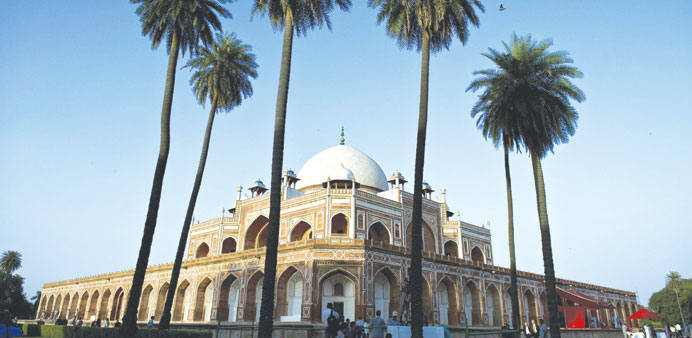
Humayun’s Tomb is pictured prior to the inauguration ceremony in New Delhi yesterday.