


The Kazakh tenge lost almost a fifth of its value after the central bank devalued it, taking the wind out of the sails of speculators and weighing on other regional currencies including Ukraine’s hryvnia.
The Nigerian naira hit a two-year low against the dollar as weakening global commodity demand raised concerns about the country’s economic outlook and the ability of the central bank to support the currency in the face of falling reserves.
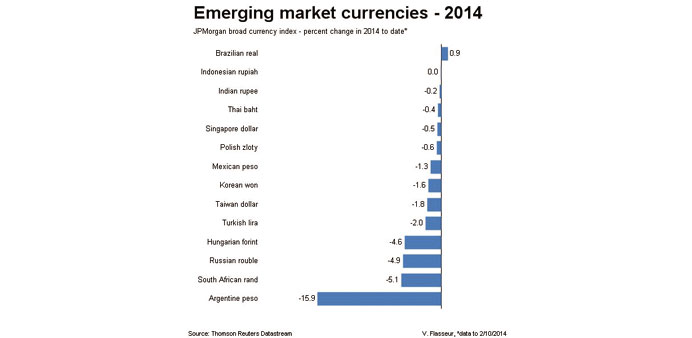
Benchmark emerging stocks bounced higher, helping currencies with heavy reliance on external capital, such as the Turkish lira and South African rand, which have been under heavy selling pressure in recent weeks.
The tenge traded at 186 per dollar after the central bank said it would devalue the currency by 19% because of a decline in other emerging market currencies and to try to prevent large-scale market speculation.
“Given the pressure we have seen in emerging markets and the pressure on the rouble, the downward pressure on commodity prices from a slowdown in Chinese growth, this had to happen,” said Lars Christensen, chief emerging market strategist at Danske Bank.
“If they had not devalued, there would have been serious problems for the Kazakh economy.”
The devaluation lifted Kazakh stocks, with the local market rallying 12%. London-listed Kazakhmys jumped more than 25%.
Many ex-Soviet Union countries are under pressure to contain a spillover from a sharp fall in the currency of their main trade partner Russia.
The rouble has fallen 5% against the dollar this year because of concerns over the country’s slowing economic growth and high inflation.
The rouble eased 0.2% to the dollar before erasing losses.
Ukraine, where anti-government protests are weighing on the economy, last week imposed new capital controls to support the hryvnia. But in the week prior to that the central bank had allowed the currency to depreciate.
The hryvnia was down 1.9% on the day at 8.57 per dollar, having fallen as low as 8.87 last week, levels not seen since September 2009.
Banks said capital controls were likely to cripple trade and lead to a currency black market.
The naira hit a fresh two-year low of 164.85 per dollar.
The oil-rich Nigeria’s central bank announced new rules on Friday requiring currency dealers to put naira in their accounts at the bank two days before bidding in its forex auctions. Nigeria has been selling dollars directly to lenders to prop up the naira, which has lost 2.9% this year as the US Federal Reserve started withdrawing monetary stimulus, leading offshore investors to pull money out of local bonds.
“Commodity exporters, with the exception of pegged currencies – most are falling. It’s a catch-up with what’s happened elsewhere,” Christensen said.
A weaker currency worsens the inflation outlook as Nigeria depends on imports for almost 80% of goods sold in the country.
Nigeria’s foreign reserves fell 7% to $42.69bn in February from a year earlier, raising doubts over the ability of the central bank to support the currency.
The benchmark MSCI emerging equity index was up 0.7% as investors looked to Fed chair Janet Yellen to clarify uncertainties about the central bank’s plan to withdraw stimulus but support the recovering US economy.
The lira was up 0.7% at 2.20 per dollar and the rand added 1.8% to 10.98. Emerging sovereign dollar bond spreads tightened 4 basis points to 368 bps over US Treasuries.
The Hungarian forint erased early losses to gain 0.7% to 308.80 per euro, trading just off recent two-year lows.
The currency had been under pressure in recent weeks as expectations grew the central bank may cut interest rates further at next week’s monetary policy meeting.
But interest rate markets believe the central bank may need to make a policy U-turn, and are pricing in rate rises of 85 bps over the next 9 months, according to Standard Bank.