


AFP
Manila
Philippine inflation shot up to a nearly three-year high of 4.9% in July, as millions of poor Filipinos endured steep price rises for essential foods, official data showed yesterday.
The consumer price increase was the highest since it spiked by 5.2% in October 2011.
“This was mainly due to the jump in the growth of the heavily-weighted food and non-alcoholic beverages index,” the National Statistics Office said in a statement.
Also on the uptrend were housing, tap water, electricity and petrol prices, as well as transport costs and tuition fees, it added.
The Philippines has in recent years had one of the fastest-growing economies in Asia, growing by 7.2% in 2013 then slowing slightly to 5.7% in the first quarter. But President Benigno Aquino’s government has been criticised for failing to combat deep poverty, with much of the country’s new found wealth being soaked up by the nation’s elite.
About one quarter of the country’s 100mn people lived below the poverty line in 2012, according to government data, and recent surveys have shown the poor do not feel they are benefiting from the fast growth.
Fifty-five per cent of Filipino families rated themselves as “poor” in a June survey, up three percentage points from the 2013 average, according to independent Manila pollster Social Weather Stations.
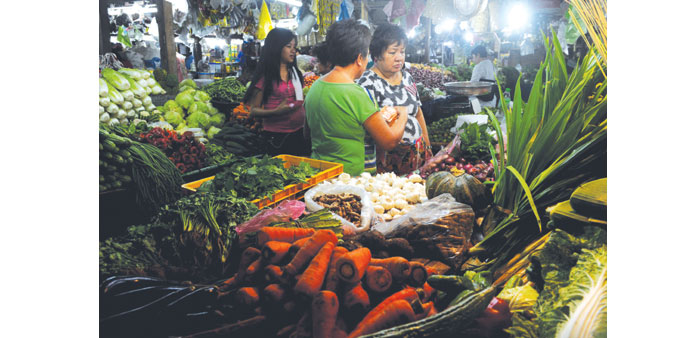
Sharply rising food prices have been one of the biggest concerns.
“They say the economic growth is surging, but we don’t feel it,” Manila waitress and mother-of-one Lally Vivar, 25, told AFP yesterday as she tried to buy a week’s worth of provisions for her family with just 300 pesos ($6.80) at a wet market. “We’ve had to reduce meat consumption by half.”
The price of rice, the staple cereal in the Philippines, went up 14.4% last month from its year-earlier level, the government said yesterday. The price of garlic also more than tripled to 300 pesos a kilogram last month, while the price of ginger rose nearly seven-fold, Manila market vendors told AFP.
“I had to stop selling garlic for a month because no one could afford them,” Manila vendor Dolly Padua said.