


A bespectacled intellectual with a low-key public image, Michael Gove emerged as an unlikely force behind the Brexit campaign and a Machiavellian political player after rebelling against his former friend and ally, Prime Minister David Cameron.
In a statement outlining his reasons for breaking with Cameron, who instead led efforts for Britain to stay in the EU, the soft-spoken Gove said it had been the “most difficult decision of my political life”.
On a human level, it was a bitterly personal decision. Gove and Cameron met when they were both young men and rising through Conservative Party ranks.
He was godfather to Cameron’s late son Ivan, who was born severely disabled, and their wives were close friends before the current Westminster drama.
Gove performed his second act of betrayal yesterday when he announced a surprise bid to succeed Cameron, undermining the chances of former London mayor and fellow Brexit campaigner Boris Johnson.
He again spoke of misgivings, saying: “I have come, reluctantly, to the conclusion that Boris cannot provide the leadership or build the team for the task ahead”. In a shock move, Johnson promptly announced he was pulling out of the contest. While he campaigned hard in the referendum, the 48-year-old is seen as more of a behind-the-scenes operator and intellectual than a grassroots politician who can win over Conservative Party members.
Gove said his lifelong hatred for the European Union began when the EU forced the closure of his father’s fish processing business in Scotland — even though his own father denied that it was true.
Born in 1967 in Edinburgh, Gove was four months old when he was adopted by a Labour-supporting couple. At school, he stood out for his intellectual prowess.
Gove went on to study at Oxford University, where he became president of the prestigious Oxford Union debating society — seen as a crucible for many political careers in Britain and beyond.
After graduating, he tried to join the Conservative Party but was judged “insufficiently political” and “insufficiently Conservative” at his interview, according to an article in the Guardian newspaper.
He opted for a career in journalism instead and returned to Scotland to work for The Press and Journal in Aberdeen. He went on to work for the BBC and The Times, becoming a columnist for the daily.
In 2002, he took part in the launch of the Policy Exchange think tank, which has become a breeding ground for young Conservatives. It was around this time that he first met Cameron.
Gove was elected to parliament in 2005, the first step in a rapid career helped by his proximity to Cameron. In 2010, he was named education minister after Cameron won a general election.
He was reshuffled out of the post in 2014 after coming in for heavy criticism for policies that were seen as too divisive and ideological.
After the 2015 election, Cameron appointed him justice minister — which was interpreted as an attempt to placate Gove. Months later, he announced he would campaign for Brexit.
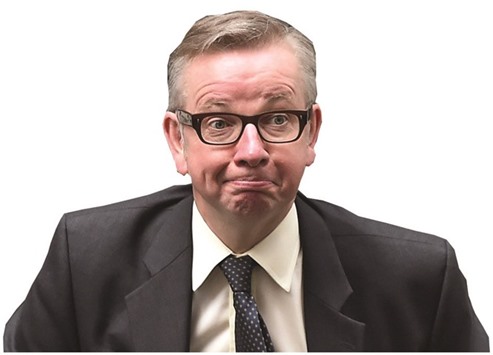
Michael Gove