


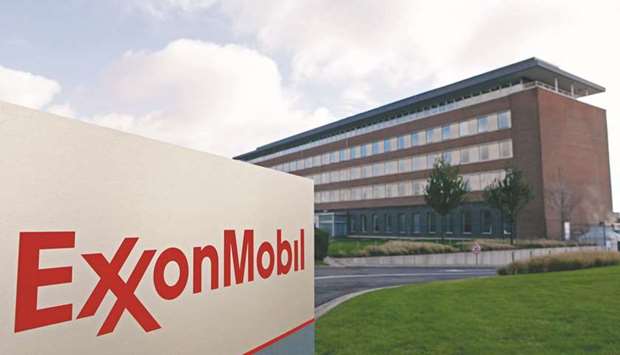
Shares of Irving, Texas-based Exxon fell about 1.9% in premarket trading to $79.30.
While Exxon’s US portfolio, including its shale projects, lost money, Exxon’s gas and oil operations across the world posted a 69% jump in profit.
The company sold more gasoline and kerosene in the quarter, boosting the bottom line as well, but sales of chemicals slipped due in part to plant maintenance costs and weak margins.
“Our job is to grow long-term value by investing in our integrated portfolio of opportunities that succeed regardless of market conditions,” chief executive Darren Woods said in a statement.
The company posted second-quarter net income of $3.3bn, or 78 cents per share, compared to $1.7bn, or 41 cents per share, a year earlier. Analysts expected earnings of 84 cents per share, according to Thomson Reuters I/B/E/S.
Production fell about 1.0% to 3.9mn barrels of oil equivalent per day. The results come as Exxon battles its shareholders and others over climate change issues.
Exxon has been locked in an aggressive back-and-forth skirmish over climate change documents with New York State Attorney General Eric Schneiderman, who has sought to punish the oil producer for what he says are misleading public disclosures.
Exxon’s shareholders in May approved a resolution in May that called for the company to issue a report on how climate change affects operations.
Rockwell
Aircraft components maker Rockwell Collins yesterday posted adjusted earnings that beat expectations, sending its shares up sharply after its first results including recently acquired aircraft interiors maker B/E Aerospace.
The acquisition, which closed in April, had raised concern about how aircraft interiors and seats would complement Rockwell’s broad avionics business, which spans commercial jetliners, business jets and fighter aircraft.
But analysts pointed to a relatively strong quarter for Rockwell, which produced 5% sales growth without B/E Aerospace.
Rockwell also reported higher profit margins and more cash than expected, and sounded an optimistic note about the depressed business-jet market.
“Don’t fall off your chair when I say this, we’re actually going to see growth in our (sales to) bizjet (manufacturers)” in 2019, chief executive Kelly Ortberg said on a conference call with analysts.
Adjusted earnings at the Cedar Rapids, Iowa-based company fell to $1.64 a share in the fiscal third quarter ended June 30, from $1.67 a year ago, but beat analysts’ estimates of $1.58.
Prior-year third-quarter earnings included a tax benefit of 31 cents a share, the company said.
Sales were reduced somewhat by production problems with heads-up displays for fighter aircraft. Net income fell to $179mn, or $1.12 a share, from $214mn, or $1.63 a share, a year earlier.
American Airlines
American Airlines Group yesterday reported quarterly revenue and adjusted profit that beat analyst projections, helped by strong passenger demand and improving average fares.
The No 1 US airline by passenger traffic said total operating revenue grew to $11.11bn in the second quarter through June 30, from $10.36bn a year earlier.
The figure beat analysts’ expectations for $11.07bn.
However, operating expenses swelled, increasing 11.1% to $9.6bn, on the back of higher fuel and labour costs.
For the third quarter, American said it expects to see its total revenue per available seat mile inch up between 0.5% and 2.5%. The airline’s pretax margin is forecast to land between 10% and 12% for the late summer period.
On an adjusted basis, American Airlines earned $1.92 per share, topping analysts’ consensus forecast of $1.87 per share, according to Thomson Reuters I/B/E/S.
American surprised investors earlier this year by offering an unexpected mid-contract pay increase to its pilots and flight attendants, at an estimated expense of $230mn for 2017.
With the pay hike, which frustrated Wall Street and at the time sent American’s stock spiralling downwards, flight crew received on average 5% to 8% salary increases in hourly pay, in an adjustment to match rival carriers.