


Dominic Cummings is facing a possible parliamentary inquiry following claims No 10 is exerting excessive control over ministers’ special advisers, the Guardian has learned.
The FDA union, which represents more than a dozen “spads”, has asked the public administration and constitutional affairs committee to investigate why the prime minister’s chief of staff has been given extra powers.
It follows concerns that Cummings, on behalf of Boris Johnson, has centralised power in No 10 and is impeding the roles of cabinet ministers and parliament.
According to latest government figures, there were 109 special advisers in December, more than half of whom were new to government, costing just under £10mn a year.
In the past, cabinet ministers typically hired and oversaw their own special advisers, who are political appointees paid from the public purse, though the prime minister approved all appointments.
Since September, the Cabinet Office has required advisers to sign new contracts, which say the responsibility for their conduct and discipline will be jointly held between the appointing minister and the PM’s chief of staff.
Dave Penman, general secretary of the FDA, has written to William Wragg, chair of the committee, saying there is mounting evidence that the role of ‘spads’ has been radically altered to break the link with ministers and put Cummings in charge.
“We have a cadre of special advisers with little security of employment and who are being directly managed by No 10 through the PM’s chief of staff.
“Even without the concern over how this power over employment is being deployed, it is clear that there is a deliberate approach from No 10 to fundamentally change the nature of the role,” he wrote.
The committee has agreed to examine the complaint, which could result in Cummings being asked to give evidence to MPs.
The FDA letter claimed that weekly meetings for special advisers, chaired by Cummings, are being used to enforce the idea that ‘spads’ are now run from Downing Street, not by ministers.
“There was a consistent message that special advisers were being directed in their work and essentially centrally run.
“The conduct of these meetings was also criticised as being overly confrontational,” Penman wrote.
Following the election, Penman added, ‘spads’ were being used as a central resource and moved around different departments by No 10.
“This resulted in some special advisers being left without posts, and concern that the process for determining who stayed, moved or left not only lacked transparency, but was being used to exert control and dilute the relationship between minister and adviser,” he wrote.
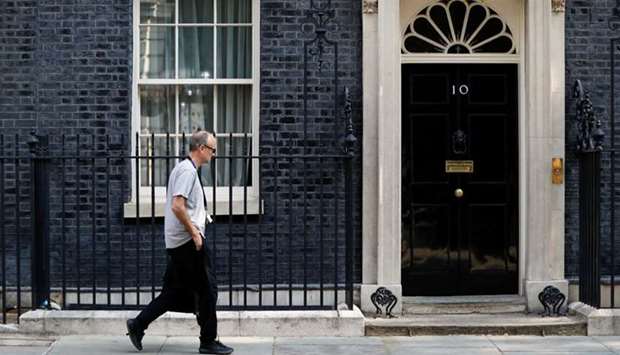
Dominic Cummings, special adviser to Prime Minister Boris Johnson, arrives in Downing Street in London yesterday.