


In support of the Skin Cancer Awareness Month, held annually in June, dermatology experts at Hamad Medical Corporation (HMC) joined healthcare organisations worldwide to raise awareness. They emphasise regular self-checkups to search for early signs of skin cancer and highlight the importance of seeking prompt medical assistance if symptoms appear.
Among all types of skin cancer, melanoma is the most dangerous form. It can develop on a newly appearing mole or a pre-existing one; it can seem like a dark or multi-coloured spot on any skin part, including nails.
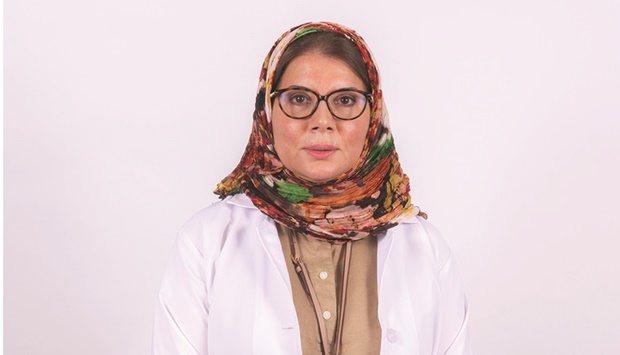
Dr Nazeeha al-Hayki, senior consultant, chair of Skin Cancer Multidisciplinary Team and chair of National Clinical Advisory Group of Dermatology at HMC’s Rumailah Hospital said: "We have advanced imaging technology in Foto-finder and Confocal Microscope for early skin cancer detection. The most common cause of skin cancer is exposure to ultraviolet radiation in sunlight. Although anyone can be affected by skin cancer, people with fair and lighter skin and those with a family history of skin cancer are more likely to develop the disease.
"It is crucial to check all the skin, including the back, soles of feet, between fingers and toes, and under the nails. People should also regularly check the skin for any changes using the mirror, especially in patients with multiple moles; if any change appears, the person should seek immediate medical assistance and get a referral to see an expert dermatologist. Any existing moles, a new spot or an existing spot that changes in colour, size or shape, bleeding, or itching is a sign of concern."
Dr al-Hayki advised people to avoid prolonged exposure to the sun between 10am to 4pm and especially during peak temperatures.
“When people go out, they should wear sun protective clothing covering as much skin as possible. Another good way to protect oneself from being affected is wearing a hat with a broad brim that covers the face, head, neck, and ears. People should also apply broad-spectrum, water-resistant sun block of SPF 30+ or higher at least 20 minutes before going outdoors and repeat application every three hours," she added.
Additionally, Dr al-Hayki encourages the public to use the ABCDE checklist of skin cancer to spot changes as early as possible.
• Asymmetry – one half of the mole doesn't match the other
• Border irregularity – the outer edges are uneven
• Colour that is not uniform – dark black or multiple colors
• Diametre greater than 6mm – about the size of a pencil head eraser
• Evolving – change in size, shape, or colour
If any unusual spots appear on the skin, people must take a quick visit to the nearest primary healthcare centre for a check-up by a physician. If the physician has any suspicions regarding the spot, he will refer the patient immediately to a skin cancer expert in the dermatology department at Rumailah Hospital of HMC for further investigation.
Patients seeking a medical consultation at the dermatology outpatients can obtain a referral from PHCC or a private clinic or call the HMC Nesma'ak team on 16060 to book an appointment.
Dr Nazeeha al-Hayki, senior consultant, chair of Skin Cancer Multidisciplinary Team and chair of National Clinical Advisory Group of Dermatology at HMC’s Rumailah Hospital said: "We have advanced imaging technology in Foto-finder and Confocal Microscope for early skin cancer detection. The most common cause of skin cancer is exposure to ultraviolet radiation in sunlight. Although anyone can be affected by skin cancer, people with fair and lighter skin and those with a family history of skin cancer are more likely to develop the disease.
"It is crucial to check all the skin, including the back, soles of feet, between fingers and toes, and under the nails. People should also regularly check the skin for any changes using the mirror, especially in patients with multiple moles; if any change appears, the person should seek immediate medical assistance and get a referral to see an expert dermatologist. Any existing moles, a new spot or an existing spot that changes in colour, size or shape, bleeding, or itching is a sign of concern."
Dr al-Hayki advised people to avoid prolonged exposure to the sun between 10am to 4pm and especially during peak temperatures.
“When people go out, they should wear sun protective clothing covering as much skin as possible. Another good way to protect oneself from being affected is wearing a hat with a broad brim that covers the face, head, neck, and ears. People should also apply broad-spectrum, water-resistant sun block of SPF 30+ or higher at least 20 minutes before going outdoors and repeat application every three hours," she added.
Additionally, Dr al-Hayki encourages the public to use the ABCDE checklist of skin cancer to spot changes as early as possible.
• Asymmetry – one half of the mole doesn't match the other
• Border irregularity – the outer edges are uneven
• Colour that is not uniform – dark black or multiple colors
• Diametre greater than 6mm – about the size of a pencil head eraser
• Evolving – change in size, shape, or colour
If any unusual spots appear on the skin, people must take a quick visit to the nearest primary healthcare centre for a check-up by a physician. If the physician has any suspicions regarding the spot, he will refer the patient immediately to a skin cancer expert in the dermatology department at Rumailah Hospital of HMC for further investigation.
Patients seeking a medical consultation at the dermatology outpatients can obtain a referral from PHCC or a private clinic or call the HMC Nesma'ak team on 16060 to book an appointment.