


Agencies/Ahmedabad
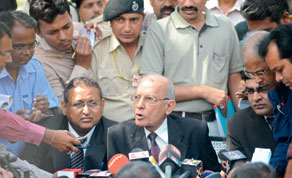
Defence Lawyer I M Munshi (centre) speaks to journalists following the verdict on the 2002 Godhra train incident at a special court inside the Sabarmati Central Jail in Ahmedabad yesterday
A court yesterday handed 11 death sentences and 20 life terms to people convicted of burning 59 Hindus alive in a train fire which triggered revenge attacks that killed 2,000 people.

Last week, 31 Muslims were found guilty on murder and conspiracy charges for causing the 2002 train fire in the western state of
Fifty-nine Hindu pilgrims perished in the blaze at Godhra station, sparking an anti-Muslim backlash that resulted in some of
Hindu mobs hungry for revenge rampaged through Muslim neighbourhoods in several cities during three days of bloodshed.
A total of 94 people, all Muslims, had stood trial at a court in
Responsibility for the fire has been the subject of fierce dispute between Hindu and Muslim communities, and the trial verdicts supported Hindu claims that it was a planned attack rather than a result of mob violence.
Previously, a national inquiry concluded that the fire was an accident and an investigation by news magazine Tehelka has also cast serious doubt on the neutrality of the police and the quality of their witnesses.
The judge felt the crimes fell “under the category of the rarest of the rare,” special public prosecutor J M Panchal told reporters outside the court, meaning the death sentence could be pronounced.
“There was an active role, as far as these people are concerned, in the conspiracy and also setting fire to the coach,” Panchal said.
Defence lawyer I M Munshi said all the men would appeal against the punishment in the Gujarat High Court. “It is very difficult to swallow,” he said.
Muslims have always denied setting the train ablaze on
Tehelka has run a series of articles questioning the testimony of witnesses who corroborated the idea of a premeditated attack by Muslims.
In 2007, the investigative magazine filmed local Hindu activists confessing to making up their statements to police, while other prosecution witnesses have admitted to pressure to give false accounts of the violence.
The chief investigating policeman was also caught on a hidden camera making a series of anti-Muslim remarks, the magazine claims.
Critics of the prosecution theory that the train attack was premeditated point to the fact that the alleged mastermind, Maulvi Umarji, was acquitted last week.
Modi has always denied the allegations. A Supreme Court panel last month criticised him for “partisan” handling of the unrest, but found no evidence to justify criminal prosecution of him.
Extra police had been put on duty across
Local authorities had also banned television stations and newspapers from broadcasting or printing the many graphic images taken during the riots to avoid stirring up religious tensions.
During the 2002 slaughter in Ahmedabad and elsewhere, witnesses said baying Hindu mobs surrounded and raped Muslim women, then poured kerosene down their throats and their children’s throats and threw lit matches at them.